Drug-Related IE Now Majority Of Valve Surgeries In Some US Areas
Once rare, infective endocarditis from injecting drugs is now a leading cause of heart valve surgery in many
 Written and medically reviewed byDr. Abu BakarContributing writer · PharmD, PhD (Pharmacology)
July 30, 2026 · 6 min read
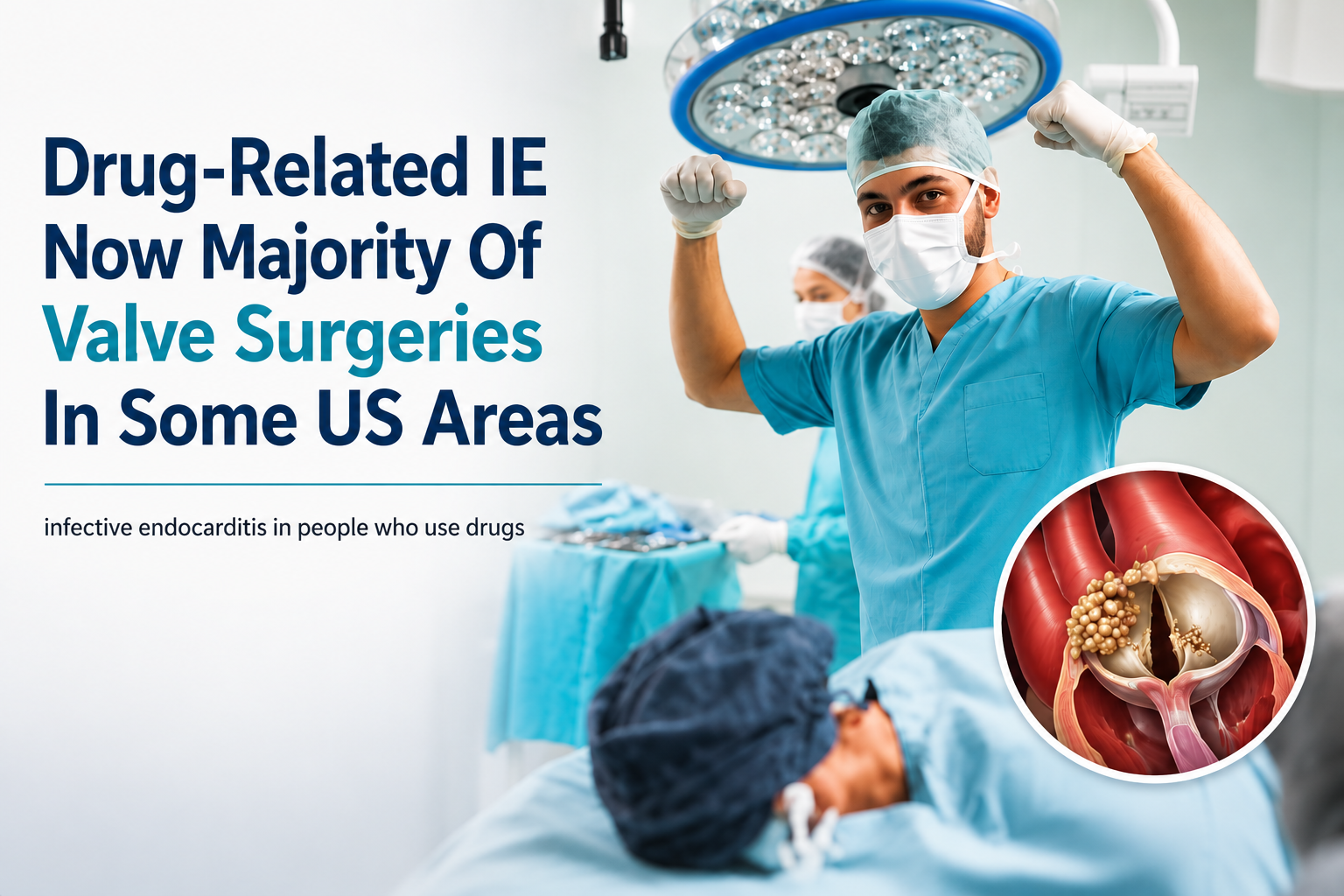
Once rare, infective endocarditis from injecting drugs isnow a leading cause of heart valve surgery in many U.S. regions. In some areas, people with drug-related endocarditis make up more than one-third of valve operations for this infection and that share keeps growing. This shift forces hospitals, surgeons, addiction specialists and policymakers to tackle a tough reality: they must treat a dangerous heart infection while also addressing the patient’s addiction.
Why It Matters
In people who inject drugs, infective endocarditis often causes severe heart valve damage. These patients may spend weeks in the hospital for surgery and then months on IV antibiotics during recovery. It’s becoming common now about one in three valve surgeries for endocarditis involves drug use. In some states, hospitalizations for drug-related endocarditis have jumped more than tenfold in recent years. That explosion of cases means more work for surgical teams and tougher decisions about who needs a valve replacement.
The impact goes far beyond the operating room. Treating these cases well requires addressing the addiction too. Without addiction care, many patients return with repeat infections and need another surgery. That cycle drives up costs and strains hospital resources. For example, one report found that in a single state the costs of drug-related endocarditis hospitalizations rose from about 1 million to over 22 million in just five years. These cases often hit rural and safety net hospitals hardest, since many patients rely on Medicaid or have no insurance.
And there is a human cost that doesn’t show up on a billing statement. Patients with drug-related endocarditis tend to be much younger often in their 20s or 30s than the typical valve surgery patient, who is usually in their 50s or 60s. Many of these young patients arrive very ill, often because stigma or lack of access delayed their care. Families watch in real time as loved ones fight a life-threatening infection far earlier than expected. Hospital staff carry the emotional weight of operating on someone decades younger than usual, knowing the surgery will only help if the addiction is also treated. Every case is technically demanding and emotionally heavy, especially when the same patient might come back with another infection if substance use isn’t addressed.
Who It Affects
At the center are people who inject drugs and have substance use disorders. With each injection, there is always a possibility of entry of bacteria into the blood stream, which leads to the infection of the heart. These individuals usually encounter great obstacles to accessing health services because they are either uninsured or underinsured, do not have steady housing arrangements, or reside at a great distance from health facilities. In such a situation, it becomes exceedingly difficult for them to adhere to the 6-week course of intravenous antibiotics.
Healthcare teams of all kinds are feeling the strain. Heart surgeons report seeing many more 20 and 30 year olds with badly damaged valves from endocarditis. Infectious disease doctors have to manage long antibiotic regimens and figure out how to safely finish treatment after discharge, knowing a patient could misuse a central line. Addiction medicine specialists often start opioid addiction treatment in the hospital, then race to arrange follow-up in the community. Nurses, case managers and social workers quietly do crucial work behind the scenes: they arrange safe discharges, set up home health or rehab for antibiotic infusions, and connect patients to support services like syringe exchange programs, counseling and recovery groups.
Hospitals and health systems are also stretched. Centers in areas hit hard by opioid use must juggle urgent valve surgeries with limited ICU beds and operating rooms. Smaller rural hospitals often without addiction medicine experts on staff feel this strain acutely. Meanwhile, insurers and policymakers have tough questions. They watch the rising costs and ask how best to pay for these long stays and surgeries, and whether to invest more in prevention efforts (like syringe services and addiction treatment programs) that could reduce new infections. The trend of drug-related endocarditis is exposing gaps in how our healthcare system handles infection and addiction together.
What Changes
- Integrated care pathways: Hospitals should build formal protocols so that cardiac surgeons, infectious disease teams, and addiction specialists work together. For example, an endocarditis care team might include an addiction consult by default. Every patient having valve surgery for endocarditis could start addiction treatment (such as buprenorphine or methadone for opioid use disorder) in the hospital and have a clear follow-up appointment in a treatment program. This ensures the heart infection and the addiction are treated as one coordinated plan, not separately.
- Safer antibiotic strategies: The traditional six-week IV antibiotic plan may need alternatives. Instead of automatically sending someone home with a PICC line (which they could misuse), hospitals can use new approaches: give long-acting injectable antibiotics (which require only a few doses), use supervised infusion clinics, or admit the patient to a short-term rehabilitation facility to complete therapy. These hybrid strategies let patients leave sooner while still staying on track with treatment and monitoring.
- Insurance and payment reform: Payment models should support these complex cases. Currently, hospitals might lose money for keeping a patient longer to stabilize their addiction or arrange safe discharge. Reimbursement could change to encourage longer stays when needed, or to cover inpatient addiction consults and post-discharge supports. For example, insurance could pay for a hospital’s addiction medicine team or for housing assistance and home health care after discharge. Aligning financial incentives with good outcomes will help prevent repeat infections and readmissions.
- Harm reduction and prevention: Communities must expand harm reduction services and make addiction treatment easily accessible. This means funding syringe exchange programs, naloxone distribution, and mobile clinics, and ensuring patients can get to addiction treatment without delay. The easier it is for someone to access clean needles, overdose rescue, and medications for opioid use disorder, the fewer new infections we will see. Policymakers should recognize these investments not as handouts but as smart prevention that keeps people out of hospitals.
- Collaborative decision-making: Deciding when and how to operate requires a team approach. Before surgery, cardiologists, surgeons, infectious disease experts, addiction counselors, and social workers should review each patient’s case together. They must consider not just the medical need to fix the valve, but also whether the patient has the support and resources to avoid drug use afterward. Hospitals with formal endocarditis teams or protocols often report better outcomes: lower mortality, higher rates of surgery when needed, and fewer delays to care. This collaborative approach helps ensure surgery goes hand in hand with a realistic plan for addiction follow-up.
- Addressing stigma: Stigma remains a major barrier. Patients often delay seeking help because they fear judgment. Clinicians can change this dynamic by treating substance use disorder as a medical condition, not a moral failing. Simple steps help: always offer addiction counseling and medications (like buprenorphine or naltrexone), prescribe naloxone for overdose prevention, and educate patients about safer injection practices. By being nonjudgmental and proactive, healthcare providers can encourage patients to come in sooner and stay in care longer.
- Long-term focus on integration: In the bigger picture, tackling drug-related endocarditis means investing in integrated solutions now. Hospitals that combine surgical care with robust addiction treatment are already seeing promise: patients are healthier, readmissions fall, and repeat surgeries drop. Treating both the heart infection and the underlying addiction together will save lives and reduce costs over time. The choices hospitals and communities make today whether to invest in integrated teams, harm reduction programs, and addiction services will shape patient outcomes and healthcare resilience for years to come.
References
- Geirsson, A., Schranz, A., Jawitz, O., Mori, M., Feng, L., Zwischenberger, B. A., et al. The Evolving Burden of Drug Use Associated Infective Endocarditis in the United States. Annals of Thoracic Surgery. 2020. https://www.ncbi.nlm.nih.gov/pmc/articles/PMC7502470/
- Fleischauer, A. T., Ruhl, L., Rhea, S., & Barnes, E. Hospitalizations for Endocarditis and Associated Health Care Costs Among Persons with Diagnosed Drug Dependence, North Carolina, 2010–2015. CDC Morbidity and Mortality Weekly Report. 2017. https://www.cdc.gov/mmwr/volumes/66/wr/mm6622a1.htm
- Baddour, L. M., Weimer, M. B., Wurcel, A. G., McElhinney, D. B., Marks, L. R., Fanucchi, L. C., et al. Management of Infective Endocarditis in People Who Inject Drugs: A Scientific Statement From the American Heart Association. Circulation. 2022. https://www.ahajournals.org/doi/pdf/10.1161/CIR.0000000000001090
- Dhanani, M., Goodrich, C., Weinberg, J., Acuna-Villaorduna, C., & Barlam, T. F. Antibiotic Therapy Completion for Injection Drug Use-Associated Infective Endocarditis at a Center with Routine Addiction Medicine Consultation: A Retrospective Cohort Study. BMC Infectious Diseases. 2022. https://www.ncbi.nlm.nih.gov/pmc/articles/PMC8818134/
One story a day
The story of the day, in your inbox
One health journey each morning — no advice, no alarm, just company for the road.