Intuitive Announces Da Vinci 5 Updates: Instruments & Security
Intuitive’s latest wave of updates for the da Vinci 5 surgical system focuses on two practical areas hospitals
 Written and medically reviewed byRayan SalihContributing writer · PharmD, RPh
May 29, 2026 · 7 min read
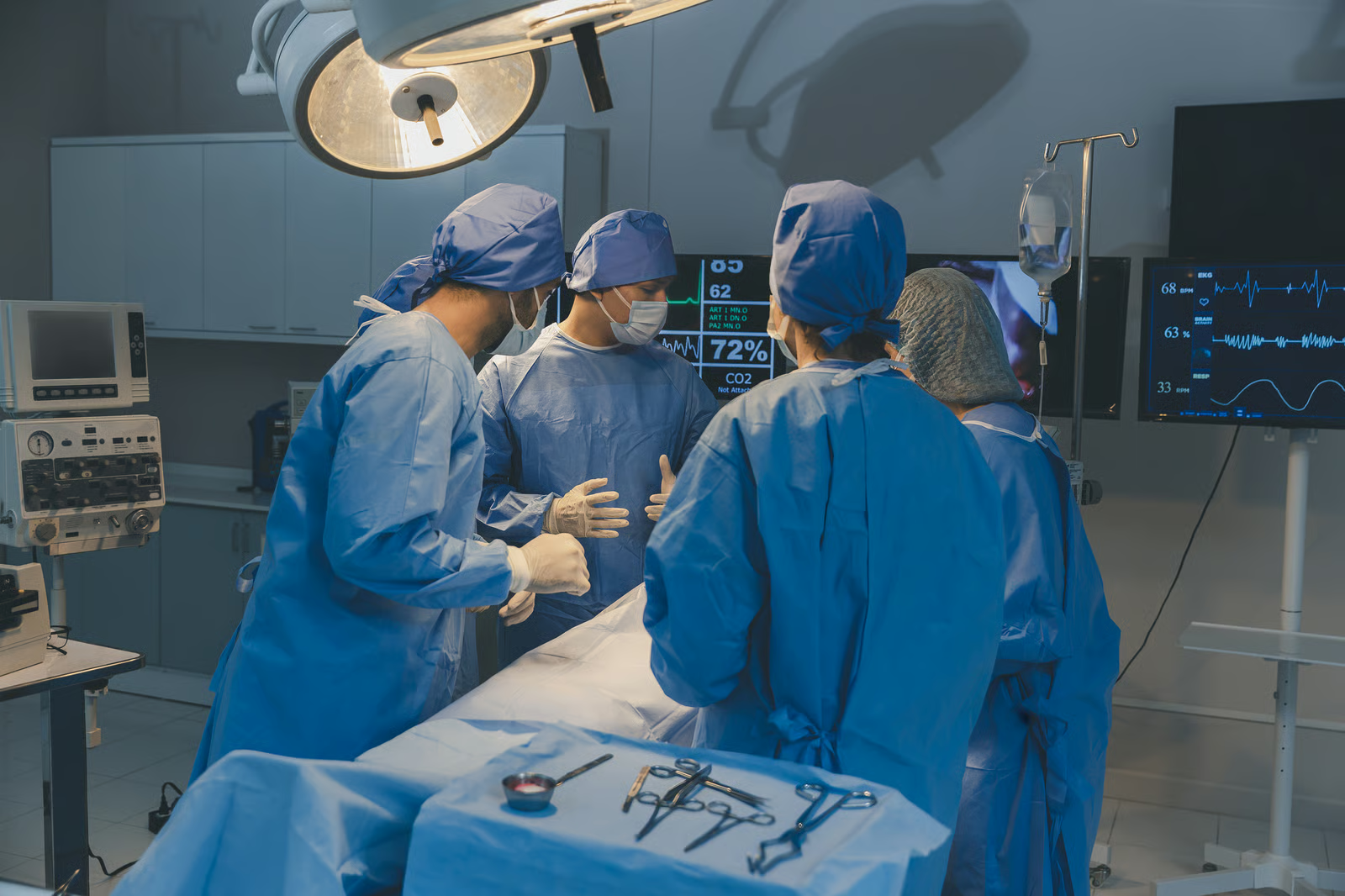
Intuitive’s latest wave of updates for the da Vinci 5 surgical system focuses on two practical areas hospitals care about: instruments that last longer and stronger protections for software and data. The changes aim to make robotic-assisted surgery more efficient, more secure, and easier to scale across health systems, but they also raise trade-offs around cost, training, and oversight that clinicians and administrators will need to manage.
Enhancements to the da Vinci 5 Ecosystem
Surgical robotics pioneer Intuitive Surgical has unveiled more than 100 updates and user experience improvements for its flagship da Vinci 5 robotic surgery platform and supporting digital ecosystem. This continuous cadence of innovation leverages the system’s advanced hardware, which features 10,000 times the computing power of its predecessor, the da Vinci Xi, to regularly integrate new functions based on clinical feedback.
The latest updates are designed to advance the “Quintuple Aim” of healthcare by enhancing clinical connectivity, lowering per-procedure costs, and expanding surgeon autonomy amidst growing industry competition.
Why It Matters
Surgical robotics are no longer an experimental add-on. They are core capital equipment in many operating rooms (OR). When a leading vendor announces upgrades to instrument durability and to cybersecurity, that affects clinical workflows, purchasing decisions, and patient safety across hospitals and outpatient surgery centers. Extending how many times an instrument can be used lowers per-procedure cost and waste, but it also shifts responsibility for monitoring wear and performance onto hospitals and vendor service teams.
Security is equally consequential. Modern surgical platforms are connected devices. They run software, exchange data, and increasingly permit remote collaboration. That connectivity brings benefits: real-time proctoring, centralized monitoring, and faster software updates. It also creates new attack surfaces. A vulnerability that affects a surgical robot is not just a data breach. It can interrupt scheduled cases, degrade trust in technology, and expose patients and systems to clinical harm if not managed correctly.
The updates Intuitive is rolling out are therefore not purely cosmetic. They speak to how robotic surgery will be delivered over the next several years: with more remote features, with instruments intended for extended service life, and with a stronger emphasis on product integrity and uptime guarantees. For hospital leaders, that mix promises savings and operational resilience. For clinicians, it promises smoother cases and new capabilities, but also requires new training, closer instrument surveillance, and clear policies about security and access.
Connectivity, Economy, and Security
The updates significantly expand the capabilities of Intuitive Telepresence, a real-time virtual tool that allows remote physicians to observe and mentor live operations. By introducing a new camera that provides full operating room (OR) visibility alongside a live cursor and upgraded audio, the ecosystem enhances situational context and global training capabilities.
Financially, Intuitive is addressing the total cost of care by increasing the allowable lifespan of five out of six Force Feedback instruments from six uses to 15 uses. This directly reduces per-procedure operational expenses for hospitals. To protect these advanced, high-computing assets, the platform is also implementing robust cybersecurity updates, including enhanced instrument encryption technology to safeguard product integrity and patient safety.
Who It Affects
Patients
Patients benefit in principle from any change that expands access to minimally invasive surgery and reduces complications and recovery time. If instruments can be used safely for more procedures without loss of function, patients may see lower procedural costs and more consistent availability of robotic options in community hospitals that previously could not absorb high per-case instrument costs.
Surgeons and Surgical Teams
Surgeons and surgical teams will be on the front lines of implementation. The updates directly optimize the workflow for on-site surgical teams and remote mentors. New features, such as a mobile login for the surgeon console and enhanced telepresence, change how cases are started and supervised. Surgeons will need to adapt to multi-factor authentication at the console, new intraoperative measurement tools, and the possibility of remote observation or guidance during a case. Trainees and practicing surgeons gain access to six new virtual reality simulation exercises on the SimNow 2 platform, featuring specialized warm-up and skills-maintenance playlists to support targeted learning. For the attending surgeon, a simplified mobile phone console login utilizes multi-factor authentication to streamline case access while maintaining hospital data compliance. These tools can improve communication, but they also introduce steps that must integrate cleanly into tight OR workflows.
Biomedical Engineers and IT Departments
Biomedical engineering and IT departments will shoulder much of the operational burden. Extended-use instruments mean revised maintenance schedules and more rigorous tracking of instrument performance. Improved encryption and real-time monitoring aim to reduce cybersecurity risk, but they require security teams to audit configurations, manage updates, and plan for contingency operations if connectivity is lost. Payers and hospital procurement teams will watch the economics closely. Reduced per-case instrument cost changes return-on-investment calculations for purchasing robotics platforms and affects negotiations around service contracts and warranty terms.
What Changes
- Longer instrument life. Instruments intended to be used more times reduce disposable waste and lower per-procedure costs. Hospitals will need clear protocols to track instrument cycles and inspect for wear. Expect more emphasis on predictive maintenance and vendor-supported monitoring to make extended use safe and reliable.
- Enhanced remote features. Real-time telepresence and full-OR camera views make it easier for remote mentors to guide cases and for teams to collaborate across sites. That can expand access to specialized care, but it also requires reliable bandwidth, secure connections, and clarified medicolegal responsibility when remote parties influence decisions.
- Stronger access controls. Mobile login and multi-factor authentication for surgeon consoles balance convenience with security. They reduce the chance of unauthorized access, but hospitals must update local policies for credential management, lost devices, and emergency access to ensure patient care is not delayed.
- Security and uptime commitments. Vendor promises about encryption, predictive performance monitoring, and near-continuous uptime change expectations for service delivery. Hospitals should translate those promises into measurable service-level agreements and test failover procedures to know what happens if software updates or a security incident temporarily limits system function.
Upcoming Precision Features
Several upcoming workflow-focused features are scheduled for measured launches in the United States:
- Digital Ruler: Enables an on-screen, intraoperative measurement capability (between 3 cm and 15 cm) to improve surgical sensing without interrupting the workflow.
- Surgeon-Initiated Tool Ejection: Grants surgeons the autonomy to initiate the removal of instruments or endoscopes directly from the console, minimizing reliance on floor staff.
- Multi-Arm Targeting: Maximizes operational efficiency by allowing multi-arm alignment to drastically simplify case setup and support multi-quadrant surgeries.
Why the trade-offs matter
Longer-lasting instruments and more software-driven functions are attractive for cost and capability reasons. But they make the surgical ecosystem more complex. Extended instrument use blurs the lines between device stewardship and clinical responsibility. Who verifies an instrument is still safe after 10 or 15 uses? How are instruments tracked across cases and campuses? Hospitals without robust tracking systems could see risk creep in despite vendor safeguards.
Security improvements are reassuring, yet they do not eliminate risk. Technical defenses like encryption and monitoring reduce the chance of a successful attack, but human and process vulnerabilities remain. Training, quick incident response, and tested contingency plans are essential. That means hospitals need to invest in IT and biomedical support as much as they invest in the robot itself.
The convenience of mobile console login is a real operational win. Surgeons often move between rooms and facilities. Faster sign-on saves time and reduces friction. At the same time, mobile authentication brings its own security hygiene requirements. Hospitals will need policies governing lost phones, shared devices, and how to authenticate in emergency scenarios when a surgeon cannot use a personal device.
Practical next steps for health systems
First, treat these updates as the start of a conversation, not the finish line. Health systems should schedule joint sessions with vendor representatives, surgical leaders, IT security, and biomedical engineering to map how the new instrument lifecycles and security features will work in practice. Simulated workflows and tabletop exercises can surface gaps before they affect patient care.
Second, update governance and documentation. Instrument-tracking protocols, maintenance logs, and criteria for retirement should be explicit. Security policies need to cover device authentication, software update cadence, and plans for degraded modes where networked features are unavailable.
Third, invest in staff training. Simulation environments and practice exercises built into the vendor platform can help surgeons and OR teams learn new features without risking patients. Training should also include nonclinical staff. IT and biomedical teams must be fluent in both the clinical implications of device downtime and the technical steps to restore function quickly and safely.
Looking ahead
These updates signal how surgical robotics will evolve: more software-defined capabilities, more emphasis on remote connectivity, and a commercial focus on reducing per-procedure costs. That pathway can broaden access to complex procedures in more hospitals and reduce the environmental footprint of single-use disposables. But it also raises important questions about regulation, oversight, and who is ultimately accountable when a connected device behaves unexpectedly.
Policymakers and payers will watch closely. If extended-use instruments and improved uptime materially lower costs and maintain outcomes, reimbursement and capital planning could shift. Regulators will likely scrutinize evidence supporting longer instrument lifespans and require transparent reporting of device failures and cybersecurity incidents.
For clinicians, the promise is tangible: tools that better connect teams, more precise intraoperative sensing, and instruments that feel more like extensions of a surgeon’s hands. For administrators, the promise is economic and operational: fewer interruptions, lower supply spend, and clearer service relationships. Getting there safely will require careful coordination, investment in workforce and systems, and continued attention to the human factors that ultimately determine whether a technological advance improves care.
Reference
- https://www.massdevice.com/intuitive-enhancements-da-vinci-5-ecosystem/
One story a day
The story of the day, in your inbox
One health journey each morning — no advice, no alarm, just company for the road.