Navigating the IV Fluid Shortage in Labor and Delivery
IV fluid shortages are affecting U.S. hospitals and raising questions about how routine childbirth care will be delivered.
 Written and medically reviewed byDr. Abu BakarContributing writer · PharmD, PhD (Pharmacology)
July 27, 2026 · 6 min read
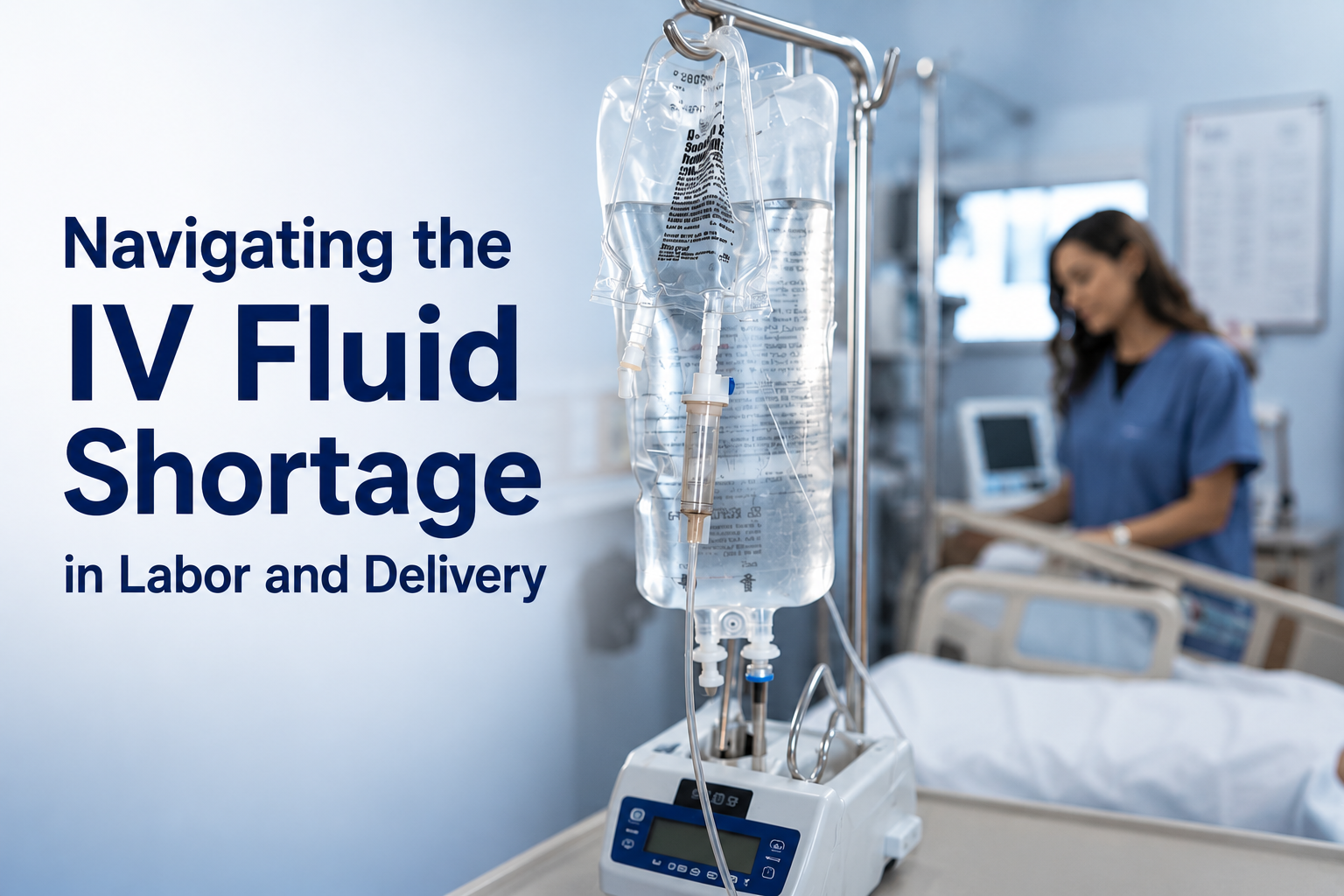
IV fluid shortages are affecting U.S. hospitals and raising questions about how routine childbirth care will be delivered. Even though IV bags seem like a basic supply, they are used in nearly every step of labor and delivery. Providers use them to keep women hydrated during long labors, to deliver medications like oxytocin for contractions, and to help manage blood pressure during an epidural. When supplies run low, nurses and doctors have to find workarounds for steps that normally feel routine. For example, after a major supplier plant went offline, some hospitals started rationing IV bags and adjusting workflows just to make sure each birth had the fluids it needed. This shows how even simple supplies can create challenges when they become scarce.
Why It Matters
IV fluids play a critical role in modern obstetric care. Providers use them to keep laboring women hydrated, especially if they have been fasting or are dehydrated from long labor. IVs also carry important medications: oxytocin (Pitocin) is given through an IV to strengthen contractions, antibiotics can be delivered when membranes rupture, and treatments like magnesium for preeclampsia are given through IV lines. When a woman chooses an epidural for pain relief, having IV fluid on board helps prevent the sudden drop in blood pressure that can occur with anesthesia. In practice, staff often run a small bag of saline just before or during the epidural to keep blood pressure stable.
Hospitals usually don’t stockpile large reserves of saline or other IV solutions. These are low-cost, perishable items, so most labor and delivery units keep a “just-in-time” inventory with little extra on hand. That means there typically isn’t a big backup of extra bags. But maternity care must be ready around the clock because births are unpredictable. A sudden surge in patients, a complicated delivery, or an urgent C-section can happen at any time. If a shortage hits, teams have to scramble and prioritize. For example, during an earlier IV shortage, some hospitals reported delaying elective cases and tightening triage protocols to save fluids. Hospitals might even review whether every patient truly needs an IV or if some could safely drink instead.
System-wide, the shortage exposes vulnerabilities in the supply chain. The current crisis began after a hurricane flooded a Baxter plant in North Carolina – one of the largest IV fluid suppliers in the nation. Production was halted, and many hospitals went from receiving full shipments to only partial deliveries (some got about half their usual supply). When fluids run low for weeks or months, hospitals must rethink their usual plans. Operating rooms may defer elective cases that need IVs, and labor floors might slow admissions to conserve stock. These changes can cause scheduling delays, longer hospital stays, and extra stress on already-busy care teams. In short, a simple bag of saline suddenly becomes a strategic resource when the supply is tight.
Who It Affects
Mothers and babies are at the forefront of any IV fluid shortage. Many women in active labor rely on IVs at some point – to treat dehydration (which can slow contractions), to receive medications, or to stabilize blood pressure during pain relief. In rare but serious cases, heavy bleeding after birth (postpartum hemorrhage) requires rapid IV fluid resuscitation to prevent shock. For newborns, IV fluids can be needed right away if a baby is born in distress or has low blood sugar. If supplies dwindle, doctors might even face the difficult choice of who receives the next IV bag in an emergency situation. Such triage decisions are stressful but necessary to save lives when resources are limited.
Labor and delivery teams also feel the impact. Nurses working a busy unit depend on predictable supplies so they can care for multiple patients at once. Anesthesiologists need fluids ready the moment they place an epidural or begin a cesarean to avoid sudden drops in maternal blood pressure. Neonatal nurses and pediatricians set up IV lines in delivery rooms for infants who need immediate support. When IV bags become scarce, staff may need to ration on the fly – deciding, for example, that a patient who can safely drink water will do so instead of getting an IV. These on-the-fly choices add extra stress for nurses and doctors, who coordinate constantly about who truly needs an IV at any given moment.
Smaller hospitals and rural clinics are especially vulnerable. They tend to have smaller budgets and smaller on-site inventories. A shortage that a large tertiary center can handle by calling multiple suppliers might hit a rural hospital hard. In extreme cases, a small hospital might transfer an expectant mother to a bigger facility just to ensure needed IV support, which adds time, expense, and anxiety for families. Insurance payers and health systems take note too: more transfers and longer stays drive up costs and strain the whole care network. In this way, a local shortage can ripple outward, affecting regional access to maternity services.
What Changes
- Clinical prioritization: Hospitals will focus on the highest-need cases first. This means mothers in active or stalled labor, anyone headed for a planned C-section, and anyone with significant bleeding will get IV fluids before lower-risk patients. Doctors and nurses might delay or cancel elective inductions or surgeries if fluids are short. For example, a laboring patient who can tolerate oral fluids may wait on an IV until later, while a scheduled cesarean for a high-risk case will still have an IV ready from the start. These shifts ensure that the limited supply is used where it’s needed most.
- Oral and alternative hydration: Care teams will encourage laboring patients to drink more if they can. Simple steps like offering ice chips, water bottles, or electrolyte drinks (e.g. sports drink or Pedialyte) are being used instead of the routine IV infusion. Some medications normally given in IV bags can be switched to other routes: providers might give pills (if available) or use IV push (injecting a drug with a syringe and a tiny saline flush) rather than running a full IV bag. For example, instead of running a liter of IV antibiotics, a nurse might give the dose slowly with a syringe (IV push), saving hundreds of milliliters of fluid.
- Different IV fluid options: When one solution is limited, hospitals will substitute another safe option. For example, if normal saline is scarce, staff might use lactated Ringer’s or another balanced crystalloid for some infusions. Each solution has a slightly different electrolyte mix, so caregivers will monitor patients’ labs more closely when making swaps. They will also ensure compatibility, since not every drug is compatible with every fluid. To stretch supplies further, teams may use smaller bag sizes for some purposes – for example, using a 250 mL bag for a slow drip or flush instead of a full 1000 mL, effectively halving the fluid used.
- Inventory and workflow changes: Hospitals will tighten how they manage IV stock. Supply teams will watch usage carefully and may limit how much each department can order at once to prevent hoarding. Some facilities may create special teams or daily huddles to plan conservation measures. Nurses and pharmacists will double-check IV lines: for example, converting an unneeded continuous drip into a saline lock (keeping the IV catheter in place but not running fluid) to avoid waste. Protocols may change too – for example, giving certain medications by IV push instead of drip so that each dose uses far less fluid. All of these steps aim to make the limited supply last until normal production recovers.
References
- U.S. Food and Drug Administration (FDA). Hurricane Helene: Baxter’s Manufacturing Recovery in North Carolina. FDA, 2024. Available at: https://www.fda.gov/drugs/updates-2024-hurricane-season/hurricane-helene-baxters-manufacturing-recovery-north-carolina
- Centers for Disease Control and Prevention (CDC). Disruptions in Availability of Peritoneal Dialysis and Intravenous Solutions from Baxter International Facility in North Carolina. CDC Health Alert, 2024. Available at: https://www.cdc.gov/healthcare-associated-infections/bulletins/shortage-of-iv-and-peritoneal-dialysis-solutions.html
- American College of Obstetricians and Gynecologists (ACOG). First and Second Stage Labor Management (Clinical Practice Guideline No. 8). ACOG, 2024. Available at: https://www.acog.org/clinical/clinical-guidance/clinical-practice-guideline/articles/2024/01/first-and-second-stage-labor-management
- Administration for Strategic Preparedness and Response (ASPR), U.S. Department of Health and Human Services. Operation Saline Shield: Preventing a Nationwide IV Fluid Shortage. ASPR, 2025. Available at: https://www.aspr.gov/readiness-response/medical-countermeasures-biodefense/ibmsc/operation-saline-shield
One story a day
The story of the day, in your inbox
One health journey each morning — no advice, no alarm, just company for the road.