New Blood Test May Help Predict Preeclampsia Risk Before Symptoms Appear
Preeclampsia risk is one of the most important safety questions in pregnancy care.
 Written and medically reviewed byDr. Abu BakarContributing writer · PharmD, PhD (Pharmacology)
May 31, 2026 · 9 min read
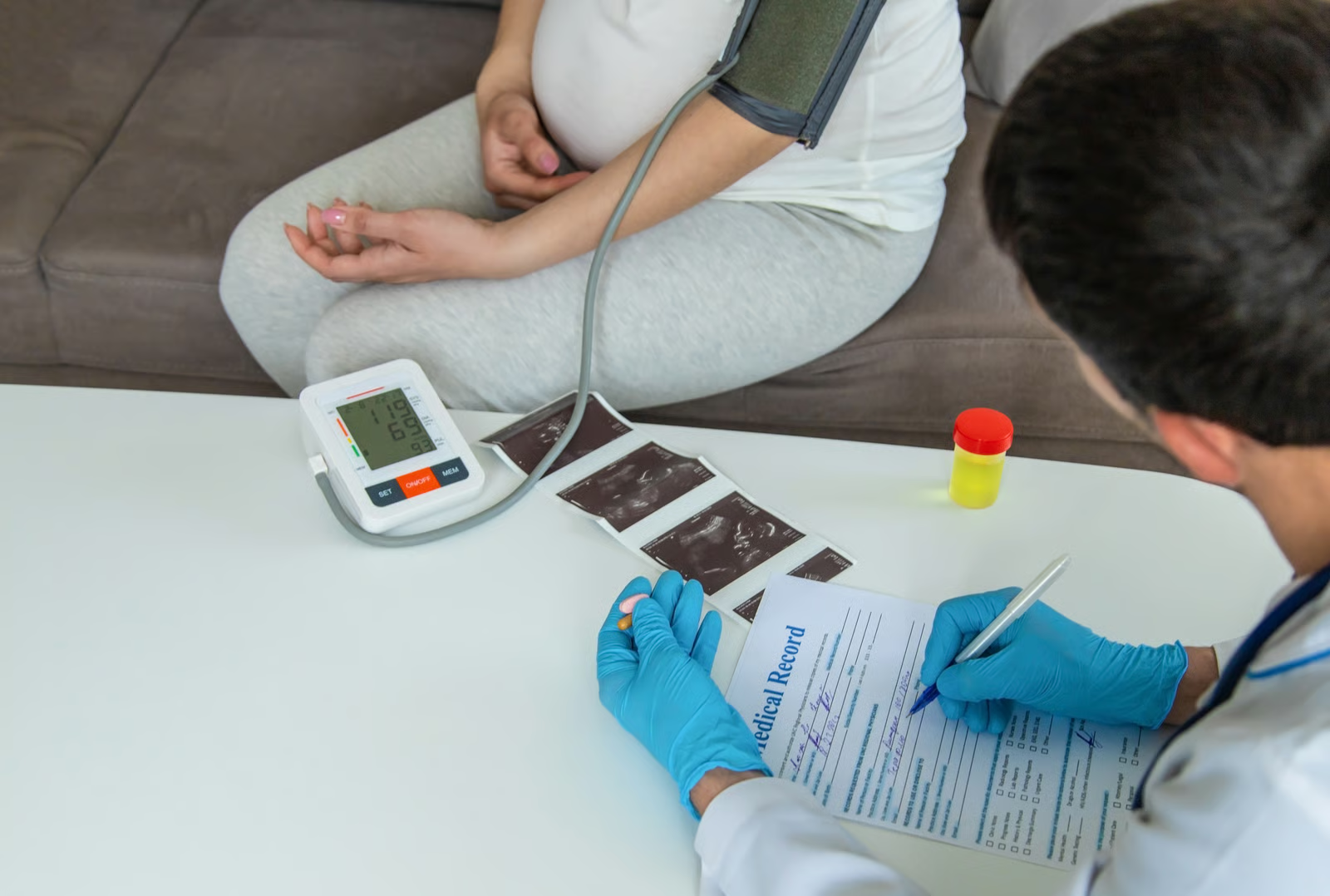
Preeclampsia risk is one of the most important safety questions in pregnancy care. A new prenatal blood test is designed to look for biological signals linked to the placenta before symptoms appear. The goal is to help clinicians identify pregnant people who may be more likely to develop preeclampsia later in pregnancy. If used carefully, this type of test could change how doctors, midwives and health systems monitor pregnancy risk. Instead of waiting for high blood pressure, urine protein or signs of organ stress, care teams may be able to spot warning signs earlier and plan closer follow-up.
Why It Matters
Preeclampsia is a serious pregnancy complication that can worsen quickly. It usually develops after 20 weeks of pregnancy and is often linked with high blood pressure and signs that organs such as the kidneys or liver are under stress. It can also affect the placenta, which may limit oxygen and nutrients to the baby. In severe cases, preeclampsia can lead to seizures, stroke, placental abruption, preterm birth, low birth weight, or life-threatening complications for the pregnant person and the baby.
One of the biggest challenges is timing. In many pregnancies, preeclampsia is recognized only after blood pressure rises or symptoms appear. By then, the condition may already be active. Clinicians can treat high blood pressure, watch lab results, and plan delivery when needed.But there has long been a need for better tools that help predict risk before the disease becomes obvious.
That is why a blood test focused on placental signals is getting attention. The placenta plays a central role in pregnancy. It supports the baby’s growth and communicates with the pregnant person’s body through hormones, proteins and genetic material released into the blood. Researchers are studying whether these blood based signals can show early patterns linked with later preeclampsia. Some tests examine cell free DNA, while others study cell free RNA or related molecular markers. These approaches are sometimes described as a “liquid biopsy” because they use a blood sample to learn more about what may be happening in the placenta. The obvious advantage of the test can be seen clearly. With a simple blood test, caregivers would be able to distinguish between the individuals at high risk from the ones at low risk. As for the former, medical practitioners can plan more aggressive monitoring and initiate early discussions regarding potential symptoms, in addition to initiating preventive measures where necessary, according to present-day recommendations. For the latter group of patients, it will simply prevent superfluous follow-up visits or even referrals.
Who It Affects
Pregnant people and babies are at the center of this issue. Any pregnant person can develop preeclampsia, even without obvious warning signs early in pregnancy. This is part of what makes the condition difficult. A patient may feel well at one visit and develop concerning blood pressure or symptoms later. Better risk prediction may give families and clinicians more time to prepare.
The test may be especially relevant for people who are not already labeled high risk. Many patients who later develop preeclampsia do not have the strongest classic risk factors. They may be in their first pregnancy, be older than average for pregnancy, have obesity, have a family history of preeclampsia or have other moderate risk factors. Some may have no clear risk factors at all. A blood test could help identify some of these patients earlier. People who already have high risk conditions still need close care. A new test would not remove the need for careful monitoring in patients with chronic hypertension, diabetes, kidney disease, autoimmune disease, a previous history of preeclampsia or a twin or higher order pregnancy. In these cases, clinicians usually already recommend closer follow-up. A predictive result may add information but it should not reduce standard care. Clinicians will need clear guidance. Obstetricians, family physicians, midwives, nurses, and maternal-fetal medicine specialists will need to understand what the test can and cannot tell them. A high risk result should not be presented as a diagnosis. A low risk result should not be presented as a guarantee. The result should be explained in plain language, with a clear plan for next steps.
Good counseling will be essential. Patients need to know what actions may follow a positive result. Will they need more visits? Should they check blood pressure at home? Will aspirin be discussed? Will they be referred to a specialist? Will the baby’s growth be monitored more often? These details matter because risk information without a plan can increase fear rather than improve care. There will also be impacts felt on health care systems. Just adding a new test does not involve just ordering another laboratory service. Clinics have to have the processes in place for drawing blood, sample transportation, receiving results, contacting patients, recording results, and following up with the patient. In cases where the patient gets flagged as high risk but follow-ups cannot be made, the value might be reduced.
Payers and policy-makers also play a part in this process. The issue of insurance coverage may become important in deciding the accessibility of the test. For example, if the test is going to be covered by only a few insurance plans, the test may only benefit those who are able to afford it. This would be especially troubling for maternal health, since inequities in access to care contribute to poor health outcomes. Insurance coverage decisions for this test must take into consideration the cost of the test as well as its ability to minimize complications, emergency care needs, preterm births, and prolonged hospitalization. Community-based and public health programs may be affected as well. Where specialists are lacking, the test may prove beneficial for determining which cases require specialist care. However, this depends on whether or not a referral system exists.
What Changes
- Earlier risk stratification. A midpregnancy blood test could flag people at higher risk of preeclampsia before the usual symptoms. This would let doctors step up care earlier. For example, if the test is positive, a patient might start or continue low-dose aspirin and have more frequent follow-up visits. Special monitoring (like extra ultrasounds to check baby’s growth and the placenta’s blood flow) could be added. In one recent example, combining first-trimester blood markers with ultrasound data achieved up to 90% sensitivity for predicting early preeclampsia – far better than guessing by history alone. In practice, a positive test would not replace the need for routine checks; rather, it would trigger a “next steps” care plan so that no time is wasted.
- Care protocols and pathways. Clinics will need clear guidelines for what to do with test results. If a patient tests positive (meaning “elevated risk”), practices should have a plan: perhaps a follow-up consultation with an obstetric specialist, starting preventive medication, and setting up a schedule for closer monitoring. A negative result shouldn’t change normal care – patients still need standard prenatal visits and screening. Essentially, positive results would add extra measures, while negatives would simply continue the usual protocol. Over time, best-practice protocols can evolve. For instance, some hospitals may create a standing order that any positive predictive test automatically leads to a maternal-fetal medicine consult or enrollment in a high-risk clinic. The key is to act promptly on the information without disrupting the regular care that all patients need.
- Access and equity considerations. Cost and coverage are big concerns. If the test is pricey (and often it is), patients with more resources may get it first. That risks a two-tier system where wealthier women get earlier intervention and lower-risk pregnancy paths, while others do not. To prevent widening gaps, insurers, policymakers, and public health programs will have to work on access. This might include pushing for insurance coverage, offering discounts or sliding scales, or using public funds to support testing in underserved communities. Public clinics and rural hospitals will need to think about how to deploy the test fairly. As one example, some companies now advertise insurance reimbursement or patient assistance programs for their tests, but that may not be enough. Equity-minded health systems should watch these developments closely to ensure the new technology benefits everyone.
- Regulation and evidence needs. Because new tests may come via different pathways, independent evaluation is crucial. Regulators and professional societies will ask for data: how well does the test predict true outcomes? Health systems should insist on peer-reviewed studies showing not just that the test is accurate in a lab, but that using it leads to better health outcomes. Cost-effectiveness research will also be important: does early detection really cut costs by preventing preterm births or ICU stays? Before widespread adoption, hospitals and insurers should look for clear proof of clinical utility – ideally from trials or real-world comparisons. This means asking vendors for published validation (for example, showing that women who got the test and followed its guidance had fewer complications than similar women who just had standard care). Communication and follow-up. Communication matters. Patients need clear explanations of what the test means. It’s vital to emphasize that a higher “risk score” is not a diagnosis – it doesn’t mean preeclampsia is certain, just that extra precautions are advised. Likewise, a low-risk result isn’t a free pass; routine care must continue. Providers should use plain language to discuss possible next steps. Shared decision-making is key, especially around preventive treatments like aspirin, which has its own small risks. For example, doctors might say: “This test suggests you have an increased risk of preeclampsia. If you’d like, we can start low-dose aspirin now to try to prevent it. The benefit is potential prevention; a small risk is a bit more bleeding, so let’s weigh what matters most to you.” Patients should feel involved and understand the plan. Operational workflow. The logistics will influence success. Some clinics may schedule the blood draw at the same time as other mid-pregnancy labs or glucose screening, to make it convenient. Others might contract mobile phlebotomy to reach patients at home, which could improve participation. Quick turnaround matters: results in a few days or weeks are useful; months-long waits defeat the purpose. Many vendors now promise results within two weeks. Systems should set up electronic alerts or flag systems so that when a test returns positive, the care team immediately sees it and takes action (for example, an EHR alert to schedule extra visits). Patient education materials should be ready – e.g., leaflets or app content explaining the test and its meaning. The smoother the process (from ordering to follow-up), the more likely the innovation will be effective. Research and policy priorities. This is a promising development, but it needs solid evidence. Ongoing research should compare pregnancies using the test versus standard care to confirm benefits. For example, hospitals could pilot the test in some clinics and track if those patients have fewer complications. Policymakers will want cost-effectiveness studies: does the expense of testing pay off by avoiding NICU stays or stroke? Early modeling in similar contexts suggests potential savings when serious outcomes are averted, but real-world data will strengthen the case. Regulators and guideline groups should keep an eye on this field: if evidence grows strong, at some point professional associations (like ACOG) might update recommendations. That, in turn, could influence insurance coverage decisions.
References
- World Health Organization. Pre-eclampsia. WHO Fact Sheets. 2025. View source [\[who.int\]](https://www.who.int/news-room/fact-sheets/detail/pre-eclampsia)
- American College of Obstetricians and Gynecologists. Low-Dose Aspirin Use for the Prevention of Preeclampsia and Related Morbidity and Mortality. ACOG Practice Advisory. 2021. View source [\[acog.org\]](https://www.acog.org/clinical/clinical-guidance/practice-advisory/articles/2021/12/low-dose-aspirin-use-for-the-prevention-of-preeclampsia-and-related-morbidity-and-mortality)
- Adil M, Kolarova TR, Doebley A-L, Chen LA, Tobey CL, Galipeau P, et al. Preeclampsia risk prediction from prenatal cell-free DNA screening. Nature Medicine. 2025. View article [\[pmc.ncbi.nlm.nih.gov\]](https://pmc.ncbi.nlm.nih.gov/articles/PMC12003088/)
- Shan Y, Cai R, Han M, Wang J, Zhang R, Liu S. Cell-free RNAs in maternal peripheral blood as potential biomarkers of preeclampsia: a review. Reproductive Biology and Endocrinology. 2025. View article [\[pmc.ncbi.nlm.nih.gov\]](https://pmc.ncbi.nlm.nih.gov/articles/PMC12625348/)
One story a day
The story of the day, in your inbox
One health journey each morning — no advice, no alarm, just company for the road.