Psilocybin-Assisted Therapy: Promise, Safety, and the Path to Clinical Adoption
Interest is rising in psilocybin as a potential treatment for hard-to-treat psychiatric conditions, and numerous clinical trials are
 Written and medically reviewed byDr. Abu BakarContributing writer · PharmD, PhD (Pharmacology)
April 10, 2026 · 7 min read
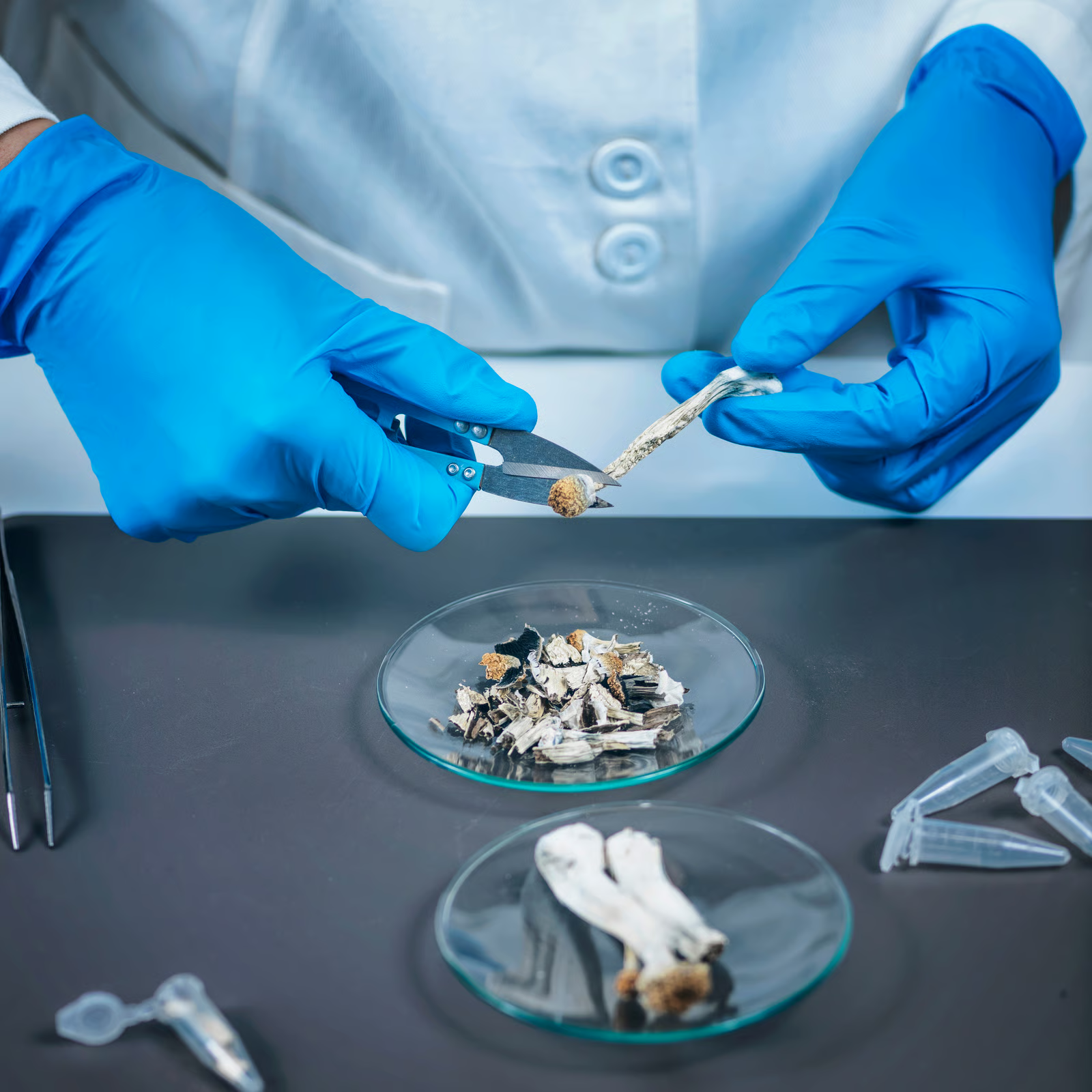
Interest is rising in psilocybin as a potential treatment for hard-to-treat psychiatric conditions, and numerous clinical trials are now testing whether the psychedelic compound can produce durable, meaningful improvement for people with depression and other disorders. Clinicians, health systems, and policymakers are watching because the results could reshape mental health care, but the path from controlled research to routine clinical use raises safety, training, access, and reimbursement questions that must be resolved.
Why It Matters
Psilocybin, the active ingredient which is present in a mushroom called as magic mushrooms.It is being evaluated not as a daily pill but as a occasion based intervention delivered alongside structured psychotherapy. That mix drug plus intensive therapeutic support represents a different care model from standard psychiatric practice. And has implications for how clinics are organized, who delivers care, and how payers determine value. If psilocybin proves effective and is authorized for clinical use. Then health systems will need to create new workflows for preparation, supervised dosing sessions, and follow‑up integration work.
It should also be noted that safety remains an important factor as well as ethics. Despite the fact that a large number of people taking part in trials find their experience life changing, there are some risks associated with participation in these trials, including psychological damage and other types of adverse reactions in people who suffer from some illnesses. Some people become fearful and confused at some moments and may find it difficult to cope with these sensations during the course of treatment. That is why pre-screening before entering a session is essential in order to rule out any danger. Reports of oversight authorities and clinicians point to the importance of monitoring adverse effects in some cases, obtaining informed consent from people, and protecting patients from unethical actions by professionals. Proper preparation, a comfortable setting, and proper aftercare are necessary measures for therapists. All this means that any shift towards widespread usage requires clear safety guidelines, professional education of practitioners, transparent monitoring, and unbiased supervision.
Regulatory environments are not developing in equal measure, which impacts patient access on the ground. Whereas some city or state officials are actively working toward regulation or decriminalization, federally in many locations, psilocybin remains accessible only within research environments. For patients and their families, it can be an overwhelming and anxious time, particularly if they need immediate treatment and receive conflicting information. The resulting scenario of access, research in certain jurisdictions, controlled access through community programs in others, and illicit access in others, presents problems around the standardization of patient treatment, equity of access, and safe consumption practices. Practical challenges such as inconsistent drug quality, lack of facilitator credentialing, and aftercare in cases where a negative experience is had must also be considered. Patients might travel great distances and incur significant out-of-pocket expenses to seek treatment. Consistent patient safety and dignity should be central to any future efforts to expand patient access.
Who It Affects
Patients with following conditions are considered especially relevant: people with chronic depression, people experiencing existential distress caused by having a terminal illness, as well as patients whose condition does not improve under the use of different conventional methods. In some cases, alternative methods of treatment may prove ineffective or unsafe for the patient, making the idea of applying an alternative option quite appealing. Patients usually mention the many years they spent taking medications that were changing, as well as the heaviness in their souls that they felt upon waking up every morning. The relatives and carers are desperate watching how their motivation fades away, how they stop engaging in any activities and how they cannot perform efficiently at work anymore. Given this background, participating in research would not just become an instant solution but a thoroughly thought-over step towards better physical and emotional well-being. Nevertheless, there are certain groups of people who would not be considered suitable participants in this research, namely, those suffering from psychosis or having serious cardiovascular issues.
Clinicians and the rest of the behavioral health workforce have taken on additional roles and responsibilities. For example, delivering psilocybin-assisted therapy entails clinicians who are capable of preparing the client psychologically, overseeing the altered state carefully, and facilitating the integration afterwards. The process of preparation involves expectation setting, training on grounding techniques, and discussing potential issues that may arise, such as feelings of sadness, shame, or trauma. During the dose administration process, the provider is required to be attentive for any potential signs of panic, dissociation, or changes in blood pressure while being present and stable throughout the process. Most programs advocate for co-facilitation, as it allows the other clinician to solely be responsible for ensuring safety. Lastly, the integration involves turning the insights gained from the treatment into practical actions such as improving relationships, changing routines, or going back to work. This combination involves additional education that surpasses standard curriculums for psychiatric or counseling practitioners. Supervisors and training programs are already beginning to develop specialized curriculums for this task.
Other stakeholders, including payers, employers, and administrators of the healthcare system, stand to gain from this as well. Whether reimbursement policies make psilocybin therapy widely available or keep it in its current state of limited availability as an out-of-pocket expense will depend on their decisions. For patients, the issue is cost; this may become just one more piece of news depending on how affordable the procedure is. Should coverage be an issue, insurance companies would assess the balance between clinical effectiveness and expenditures, including the amount of clinician’s time spent with each individual, specific premises necessary for performing the intervention, and monitoring costs. Other factors to consider are durability of effects and frequency of sessions, as well as the appropriateness of allocating additional resources for the provision of services. Finally, policymakers and regulatory agencies will have to take public safety into account and weigh the need for offering more therapeutic interventions to individuals with significant needs against the possibility of widespread fraud.
What Changes
- Clinical practice will need new infrastructure: space for supervised dosing, protocols for preparation and integration, and staff trained to manage altered states and emergent distress.
- Payer models will be tested: coverage decisions must account for costly, time‑intensive therapy components rather than a single prescription, affecting patient cost and system uptake.
- Access will be geographically uneven and potentially inequitable unless policymakers build frameworks that prioritize underserved populations and guard against market‑driven concentration in affluent areas.
- Regulatory and oversight mechanisms must be strengthened to manage safety risks, prevent misconduct, and ensure ethical practice as care moves beyond experimental settings.
Moving forward, several key considerations come into play. Firstly, the crucial issue is not just the effectiveness of psilocybin treatment but whether the benefits are sustainable and lead to positive functional outcomes. Secondly, any treatment approaches involving drug administration alongside expert guidance will continue to be the rule rather than the exception, since a purely medicinal method goes against the available data and current research standards. Finally, further scaling up would necessitate training, monitoring, and protection to avoid abuses.
There are important decisions to be made. Regulatory bodies can design ways to provide a balanced environment where the medication can be safely used only in certified programs and registries established for tracking of the results as well as adverse effects, and requirements for the education of clinicians and facilities will help ensure safety. Otherwise, a reality of two-tier treatment will develop, with wealthier individuals obtaining controlled access to psilocybin-assisted therapy and other seeking unlicensed professionals. Policy solutions can tackle cost issues and promote equality through demonstration projects or funding of training for clinicians.
In general, for physicians and healthcare leaders who are thinking about introducing psilocybin-based therapy into their work, it is crucial to proceed carefully. Professionals must adhere to guidelines on psilocybin use and seek proper training. Moreover, providers should be prepared to discuss the medication with patients honestly, as despite promising research findings, the benefits are still uncertain.
Ultimately, whether psilocybin rewrites the playbook for mental health care depends on rigorous outcomes that demonstrate durable benefit, robust systems that protect patients, and policy choices that shape equitable access. The coming years will be decisive: late‑stage clinical results, regulatory decisions, and real‑world implementation efforts will determine whether psilocybin takes the next step from a promising experimental therapy to an integrated option in the clinical arsenal—or remains confined to specialized research and limited programs. Stakeholders should plan now for both scenarios, prioritizing safety, transparency, and equity as this field matures.
Refferences
- U.S. Food and Drug Administration. (2023). FDA issues first draft guidance on clinical trials with psychedelic drugs. FDA Newsroom. https://www.fda.gov/news-events/press-announcements/fda-issues-first-draft-guidance-clinical-trials-psychedelic-drugs
- National Institute on Drug Abuse. (2024). Psilocybin (magic mushrooms). National Institutes of Health. https://nida.nih.gov/research-topics/psilocybin-magic-mushrooms
- VA Office of Research and Development. (2025). Psilocybin intervention for veterans overcoming treatment-resistant depression (PIVOT) (ClinicalTrials.gov Identifier: NCT07226232). ClinicalTrials.gov. https://clinicaltrials.gov/study/NCT07226232
- Poulin, J. M., Bigford, G. E., Lanctôt, K. L., Giacobbe, P., Schaffer, A., Sinyor, M., Rabin, J. S., Masellis, M., Singnurkar, A., Pople, C. B., Lipsman, N., Husain, M. I., Rosenblat, J. D., Cao, X., MacIntosh, B. J., & Nestor, S. M. (2024). Engaging mood brain circuits with psilocybin (EMBRACE): A study protocol for a randomized, placebo-controlled and delayed-start, neuroimaging trial in depression. Trials. https://pmc.ncbi.nlm.nih.gov/articles/PMC11221029/
One story a day
The story of the day, in your inbox
One health journey each morning — no advice, no alarm, just company for the road.