The End of the “Wait and See” Era: How Blood Tests Are Revolutionizing Neurology
No longer are decades of misdiagnosis of Alzheimer’s disease acceptable.
 Written and medically reviewed byRayan SalihContributing writer · PharmD, RPh
May 6, 2026 · 12 min read
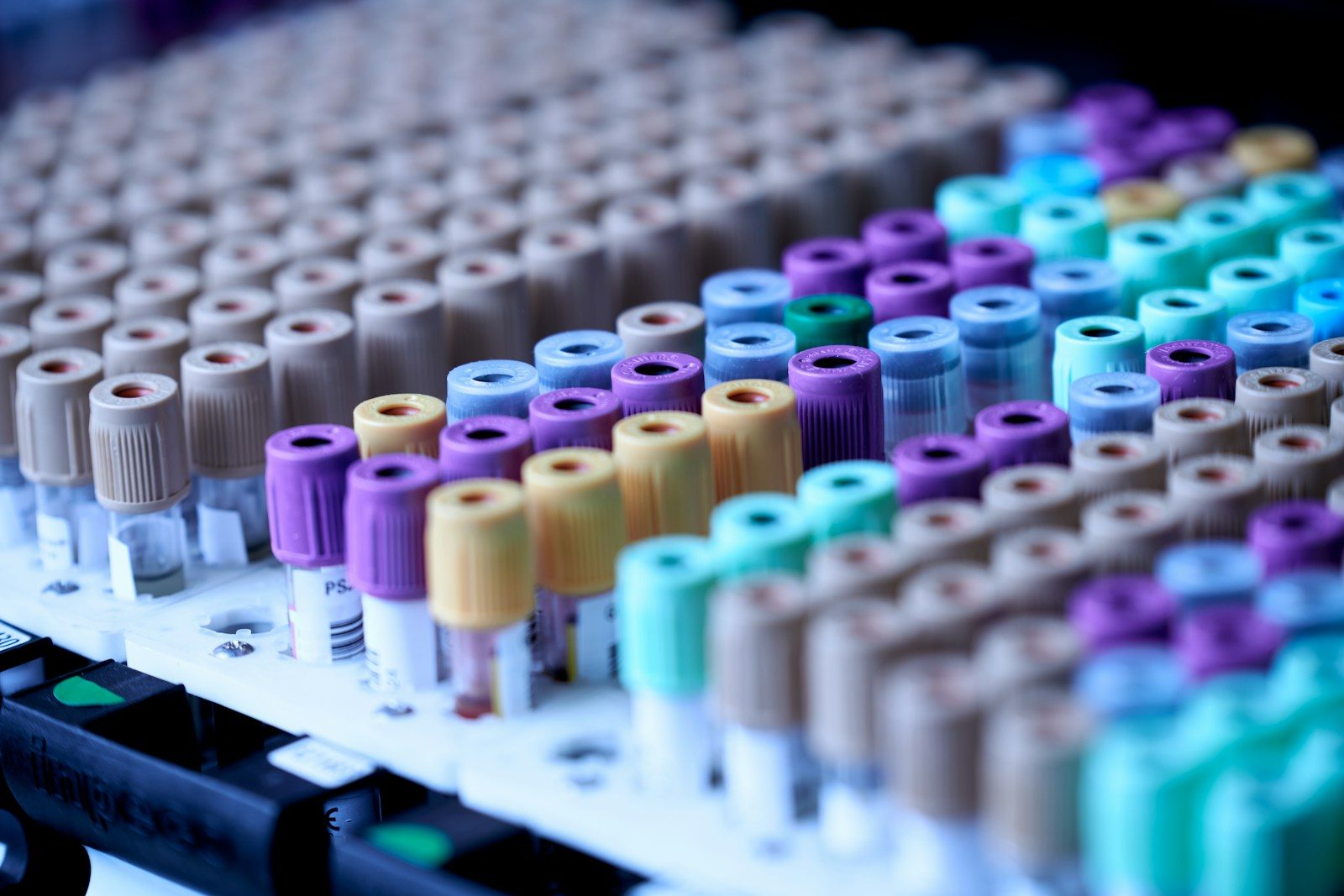
No longer are decades of misdiagnosis of Alzheimer’s disease acceptable. For too long a diagnosis of Alzheimer’s has been a diagnosis of exclusion and has led to long wait and see periods for individuals with early stage Alzheimer’s. Recently major breakthroughs have been made in imaging the living brain, and there are several measures that have been validated in the spinal fluid of individuals with Alzheimer’s. Unfortunately, the majority of measures have been too expensive and too invasive for general clinical use.
The Future of Alzheimer’s Diagnosis, From The Brief.
The era of the high-accuracy Alzheimer’s blood tests has dawned. The era where patients with concerns of dementia will no longer suffer through a frustrating ‘wait and see’ period of deteriorating cognitive function only to receive a late diagnosis of Alzheimer’s disease has finally arrived. The diagnosis of Alzheimer’s no longer needs to be a diagnosis of exclusion and will now more accurately be made on a biological basis using a simple blood test.
The New Blood Test for Alzheimer’s Disease using p-tau217 is highly accurate for diagnosis in Primary Care and is a game changer for Early and Accurate Diagnosis of Alzheimer’s Disease and thus for ensuring and enabling timely and accurate access to new life-changing Antiamyloid Therapies currently in pipeline such as lecanemab and donanemab which require definitive biomarker proof.
Beyond diagnosis, these biomarkers enable:
- Precision Staging: Treating Alzheimer’s as a biological rather than purely symptomatic condition.
- Global Accessibility: Providing a scalable solution for the projected 130 million dementia patients worldwide by 2050.
- Streamlined Research: Lowering the costs of clinical trials and allowing real-time monitoring of treatment efficacy.
Democratization of Neurology and the New Era of Brain Health Management through a Simple Blood Test.
Why This Matters
The Diagnostic Gap in Alzheimer’s Care
For decades, a diagnosis of Alzheimer’s has been challenging to give in a timely manner. In fact, for many years Alzheimer’s has been a diagnosis of exclusion. There are many causes of dementia and so it has been very challenging to determine when a person’s cognitive decline is due to Alzheimer’s. It has often been given late in the course of symptoms when there has been significant decline. In addition to the uncertainty of a late diagnosis, the period of time between the time that symptoms are first noted and a definitive diagnosis can be very challenging for both patients and their families. They are often left to deal with uncertainty, continued deterioration and the many challenges of symptoms during this time. Breakthroughs in medical imaging and in measurement of spinal fluid biomarkers for Alzheimer’s have provided great hope for earlier diagnosis. However, even with these advances, the cost of these tests and the invasive nature of spinal fluid tests have made them unavailable to most people.
While there have been many breakthroughs in Alzheimer’s diagnosis over the last few decades, the vast majority of patients with Alzheimer’s symptoms are treated by their primary care physicians. Misdiagnosis of Alzheimer’s is common even when a patient receives a diagnosis in a specialized clinic. A major challenge facing the pipeline of Alzheimer’s diagnostic tests is the lack of access to the current gold standard for reducing errors in such a diagnosis: biomarkers found in the cerebrospinal fluid (CSF) and/or images of the brain obtained using PET scans showing signs of Alzheimer’s disease. Such tests are typically used by a variety of specialists, and are not typically used by primary care physicians, due to the test’s high cost and invasiveness.
Even though there are now many drugs for Alzheimer’s disease in the market, almost all of these treatments are given to patients with symptoms of Alzheimer’s and are based on a diagnosis that is made with less than 100% accuracy. If a primary care physician gives a correct diagnosis to patients with Alzheimer’s symptoms 61% of the time on average, then it is extremely important for the most accurate Alzheimer’s test to be introduced into the primary care setting for the millions of patients and their families affected by this neurodegenerative disease. And, for the first time ever, patients and their families will have a test that will give them an accurate answer to whether or not a person has Alzheimer’s disease or not with greater than 90% accuracy in patients with symptoms of Alzheimer’s and those without symptoms of the disease.
New Treatments, New Obstacles
New treatments for Alzheimer’s disease, likely to be approved for market in the next few years and including two recently approved antiamyloid immunotherapies, will require proof of the patient’s Alzheimer’s pathology before prescription. For the millions of people with early symptomatic Alzheimer’s disease this will mean a blood test to confirm their diagnosis before they can be prescribed potentially very effective life-changing treatment. Without easy access to a reliable and accurate test, such as a blood test, for diagnosis of Alzheimer’s disease the health care system will hit a significant road block in delivering these potentially life-changing new treatments to the patients who need them most.
The biggest single obstacle to the treatment of people with early symptoms of Alzheimer’s with currently approved anti-ammyloid therapies is the lack of a simple, reliable, and accurate test for Alzheimer’s in the primary care setting. Although increasingly reliable tests for Alzheimer’s have been developed for use in secondary care, using for example PET and CSF, these tests are not currently available in primary care. A simple blood test that is even more accurate for the diagnosis of Alzheimer’s than current testing in specialist clinics would remove this biggest single obstacle to treatment of people with early symptomatic Alzheimer’s.
From Research Bench to Primary Care
The core of this medical revolution is one protein found in the blood of people with Alzheimer’s disease: p-tau217. It has recently been shown that measuring the levels of this single protein in the blood of patients can provide a diagnosis that is clinically equivalent to or superior to the invasive and very expensive tests currently used to establish a definitive Alzheimer’s disease diagnosis, including the gold standard tests of amyloid plaques in the brains of Alzheimer’s patients by means of expensive and invasive PET scans and the analysis of cerebrospinal fluid (CSF) which requires a painful and invasive tap into the fluid surrounding the brain.
The reasons behind the accuracy of the p-tau217 blood test in the diagnosis of Alzheimer’s will be elaborated on further below, including a comparison to current diagnostic tools.
- PET Scans: These involve injecting radioactive tracers to visualize amyloid plaques. They are highly accurate but cost thousands of dollars and require specialized facilities.
- Lumbar Punctures (Spinal Taps): These are used to collect cerebrospinal fluid (CSF). While effective, many patients are understandably hesitant to undergo a needle in the spine, and the procedure requires specialized clinical expertise.
This research enables a life changing simple blood test to be used in the primary care setting to open a window of earlier intervention for those suffering from Alzheimer’s as we enter the age of disease-modifying therapies such as lecanemab and donanemab, approved for the treatment of early symptomatic Alzheimer’s patients. The research has been shown to increase the accuracy of the diagnosis of Alzheimer’s in primary care patients to 90% or greater. For decades, the diagnostic process of symptomatic Alzheimer’s has been a process of elimination; and often expensive, specialized procedures such as a PET scan or a cerebrospinal fluid (CSF) draw have been required to confirm the diagnosis of Alzheimer’s. Recent research found that a single measurement of the protein p-tau217 in the blood of Alzheimer’s patients was found to be remarkably accurate for the reduction of errors in the diagnosis of Alzheimer’s pathology. This accuracy has been shown to increase the diagnostic accuracy of the diagnosis of Alzheimer’s in the primary care setting to 90% or greater.
Who it Affects
The effects from this research are far reaching affecting patients and health care providers all over the world in urban and rural health care settings.
Primary Care Patients and Physicians
Until recently, Primary Care Physicians had few options to test patients displaying early signs of cognitive decline. Current methods for testing patients for early stages of cognitive decline include using a series of simple pen-and-paper tests that are subjective and affected by factors such as a patient’s previous level of education and degree of anxiety about their symptoms. The study results of a major study released recently indicate that PCPs are correct in their diagnoses only approximately 61% of the time when utilizing these tests for testing Alzheimer’s disease.
By identifying Alzheimer’s disease at the earliest stages of cognitive decline, individuals will have the greatest opportunity to receive the most advanced treatment for the disease to alter the disease course. Studies have found that the blood test for p-tau217 can diagnose Alzheimer’s in individuals with Mild Cognitive Impairment (MCI) with 91% accuracy (\*JAMA study published in 2025). This is in stark contrast to the diagnostic accuracy for PCP’s for MCI which was found to be 61% in a recent study.
Those with “Atypical” Dementias
Biomarkers for hidden Alzheimer’s pathology in ‘atypical dementias’. For years, a group of dementias have been described as ‘atypical’ because they present in a variety of ways and often change as the disease progresses. They are caused by diseases that affect particular parts of the brain. Frontotemporal Lobar Degeneration (FTLD) is a particularly common form of dementia and is caused by a group of diseases that affect the front and/or temporal lobes of the brain. Another is Corticobasal Syndrome, a rare but devastating form of dementia that affects movement. Many of the atypical dementias mimic Alzheimer’s disease either completely or in part. In fact, many people with atypical dementias also have Alzheimer’s disease pathology. In a 2025 study, using blood biomarkers to detect Alzheimer’s pathology in people with dementia due to diseases other than Alzheimer’s revealed that the biomarkers performed accurately to identify the presence of Alzheimer’s pathology. This would have meant that such individuals could have been considered for treatment with Alzheimer’s disease medications as opposed to the many other dementia medications on the market. It would have saved them and their families a great deal of time and expense in a long and difficult diagnostic process.
The Healthcare System
New diagnostic blood tests for dementia can remove barriers to earlier intervention in Alzheimer’s disease and allow time for disease-modifying therapies to have an effect such as lecanemab (in Phase 3 trials) and donanemab (in Phase 3 trials).
In Alzheimer’s disease, traditionally a “best guess” on the part of the physician has led to the vast majority of senior’s with Senior Moments or Mild Forgetfulness to be told they have “Alzheimer’s” – a simple blood test can provide a more accurate diagnosis for millions of seniors of all ages to enable an era of precision medicine for Alzheimer’s to begin.
The Global Aging Population
The blood test is intended to help manage and treat a global health problem that affects an ever-increasing portion of the global population. By 2050 an estimated 130 million people will be suffering from Alzheimer’s disease – the vast majority of them coming from low- and middle-income countries and regions where sophisticated testing and best treatment using the latest neurology often are not available.
What Changes
Develop a set of guidelines for the application of the p-tau217 test and the other blood-based biomarkers for dementia as well as for their clinical use. Also, develop a “tool-box” for the biomarker-driven staging of Alzheimer’s-disease, for improved clinical trials as well as for the monitoring of the effects of Alzheimer’s-disease medication.
1) Biomarker-Driven Staging
The new era of a biology-driven model of care for Alzheimer’s and other neurodegenerative diseases is here and it’s going to redefine what the practice of Neurology is. We can now define dementia by the biology, and, as we have learned in cancer, measure decline in memory years before symptoms of decline manifest in a patient. This new era will allow for true preventive treatment for the first time in history.
2) Streamlining Clinical Trials
Screen-failing patients represent a large proportion of the current costs associated with clinical trials for Alzheimer’s disease and other neurodegenerative disorders. The use of blood biomarkers as a prescreen for potential study participants could save valuable time and money by pre-identifying individuals most likely to benefit from the development of new treatments.
3) Monitoring Treatment Response
The current crop of Alzheimer’s disease treatments that are aimed at reducing amyloid-beta in the brain are rapidly becoming more common. However, the only way to know whether a patient’s decreased symptoms are actually the result of the treatment is to be able to monitor amyloid levels or other biomarkers of neuronal injury over time. Since the use of expensive imaging with a PET scanner for multiple follow-up visits is not cost effective, it is likely that blood-based biomarkers will be used for this purpose.
The Challenges Ahead
However, as is often the case when new knowledge and methods are implemented, also in this case there are a few challenges to be met and overcome. The blood test method can sometimes give results that do not clearly indicate whether or not a person has Alzheimer’s. For approximately 6–13% of the individuals tested for Alzheimer’s, the results will fall into an intermediate zone that does not clearly indicate Alzheimer’s, and in these cases more traditional methods of diagnosis by means of a PET scan or a spinal tap may be required. It will also be important to standardize the blood tests in such a way that the results of tests conducted in different laboratories in different countries will mean the same. Thus, a result for a Swedish individual with symptoms of Alzheimer’s should mean the same as a result for an individual with similar symptoms living in St. Louis.
Conclusion: A New Dawn for Brain Health
A simple blood test can determine if a person has Alzheimer’s or not and is the biggest change in Alzheimer’s disease management in thirty years. There is a lot of fear around Alzheimer’s – it is the 3rd most feared disease worldwide – but now with a simple blood test taken arm’s length, patients and their families will no longer have to go through expensive and often invasive tests for a diagnosis of Alzheimer’s.
We now have the potential to save brain cells and to give people with Alzheimer’s and their families clarity rather than confusion as they search for answers to this disease. In addition, a blood test will be the basis of a new era of precision medicine for the brain, a biological and proactive approach to the management of this organ as opposed to the current mostly reactive and symptom driven neurocare that we have available today.
References
- Palmqvist S, Tideman P, Mattsson-Carlgren N, et al. Blood Biomarkers to Detect Alzheimer Disease in Primary Care and Secondary Care. JAMA. 2024;332(15):1245-1257. doi:10.1001/jama.2024.13855
- Barthélemy NR, Salvadó G, Schindler SE, et al. Highly accurate blood test for Alzheimer’s disease is similar or superior to clinical cerebrospinal fluid tests. Nat Med. 2024;30(4):1085-1095. doi:10.1038/s41591-024-02869-z
- VandeVrede L, Cho H, Sanderson-Cimino M, et al. Detection of Alzheimer Neuropathology in Alzheimer and Non-Alzheimer Clinical Syndromes With Blood-Based Biomarkers. JAMA Neurol. Published online February 10, 2025. doi:10.1001/jamaneurol.2024.5017
One story a day
The story of the day, in your inbox
One health journey each morning — no advice, no alarm, just company for the road.