Neurology
Wrap-Up: Vyvgart Targets Four Populations at AAN 2026
A Summary of the 2026 AAN Annual Meeting for Rare Diseases from a Managed Care Perspective – Myasthenia
Rayan Salih · April 30, 2026 · 9 min

Stories from people navigating Myasthenia Gravis — diagnosis, treatment, caregiving, and the ordinary days in between.
6 stories
Neurology
A Summary of the 2026 AAN Annual Meeting for Rare Diseases from a Managed Care Perspective – Myasthenia
Rayan Salih · April 30, 2026 · 9 min

Neurology
ADAPT Jr data show 80% of adolescent gMG patients achieved minimal symptom expression by cycle two with efgartigimod at AAN 2026.
Rayan Salih · 7 min read
Neurology
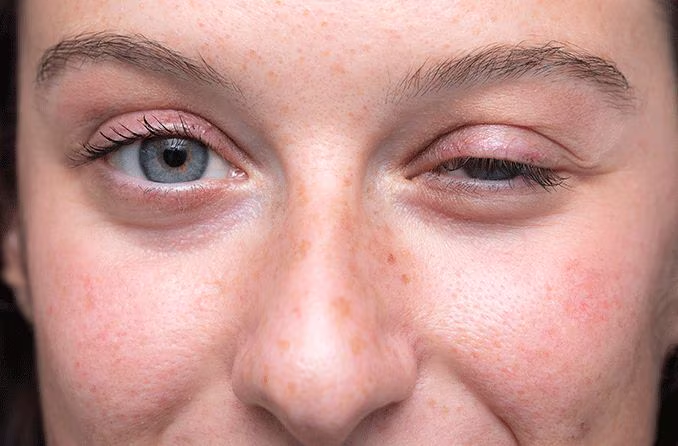
Phase 3 ADAPT OCULUS data at AAN 2026 show efgartigimod significantly improves ocular MG symptoms, supporting a planned FDA sBLA submission for the oMG indication.
Rayan Salih · 2 min read

Neurology
Phase 3 ADAPT SERON data at AAN 2026 show efgartigimod significantly improves MG-ADL scores in seronegative gMG patients, with FDA priority review targeting May 10, 2026.
Rayan Salih · 8 min read
Neurology
CAR-T cells that have been redirected to B cell maturation antigen (BCMA) may also be useful for treating
Rayan Salih · 3 min read

Neurology
Acetylcholine receptor-positive myasthenia gravis (AChR-positive MG) is an autoimmune disease that leads to Fatigable weakness, often fluctuating in
Dr. Abu Bakar · 13 min read
Other conditions
One story a day
One health journey each morning — no advice, no alarm, just company for the road.