Dexcom Stelo Is First OTC Glucose Monitor for Children
The FDA has cleared Dexcom Stelo for over-the-counter use in people aged 2 years and older who do not use insulin, extending nonprescription continuous glucose monitoring to children.
 Written and medically reviewed byRayan SalihContributing writer · PharmD, RPh
September 14, 2026 · 6 min read
What the clearance changes
The Food and Drug Administration has expanded over-the-counter access to the continuous glucose monitor Dexcom Stelo, making it the first such device cleared in the United States for children. The intended population is now people aged 2 years and older who do not use insulin.
The age expansion matters because nonprescription continuous glucose monitoring had previously been limited to adults. An eligible child’s parent or caregiver can now obtain Stelo without first securing a prescription, potentially moving some glucose monitoring outside traditional endocrinology, primary care and pharmacy workflows.
That regulatory change addresses access, not whether monitoring is necessary. It does not amount to a recommendation that every child with diabetes, prediabetes risk or an interest in nutrition should use a continuous glucose monitor. Nor does it establish that use in children improves glycated hemoglobin, prevents diabetes, changes weight or reduces acute-care visits.
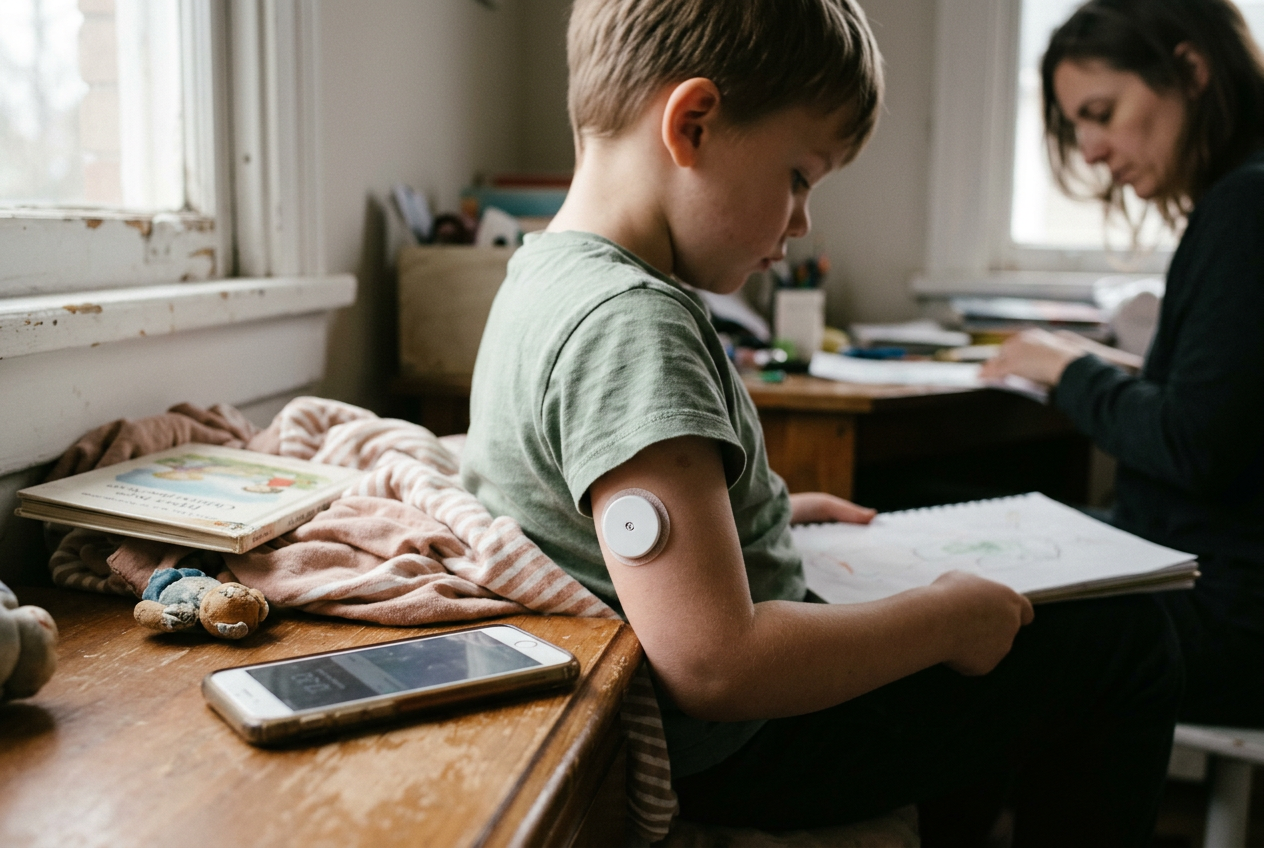
Continuous glucose monitors use a sensor beneath the skin to estimate glucose in interstitial fluid. They provide repeated measurements and trends rather than the single-time-point result generated by a finger-stick blood glucose meter. Interstitial readings can lag behind blood glucose, particularly when glucose is changing quickly, and individual readings may be affected by sensor performance or wear conditions.
Who falls within the intended population
The clearance has two defining boundaries: age and insulin use. Stelo may be sold over the counter for people aged 2 years and older who do not use insulin. This can include some people managing type 2 diabetes without insulin as well as people using the device to understand glucose patterns, subject to the indications, warnings and instructions in the FDA-cleared labeling.
The decision does not extend the device to children younger than 2 years. It also does not make Stelo an appropriate substitute for a prescription continuous glucose monitor in someone who uses insulin. Insulin dosing can depend on timely, clinically actionable glucose information, including alerts and performance characteristics selected for that use. A non-insulin user who later starts insulin should be reassessed rather than assuming the same device remains suitable.
The boundary is especially important for children with suspected hypoglycemia, unexplained symptoms or an established metabolic disorder. OTC availability should not be interpreted as evidence that Stelo can independently diagnose diabetes, rule out hypoglycemia or replace laboratory testing. Abnormal patterns require clinical interpretation in the context of symptoms, medications, meals, activity and validated diagnostic criteria.
What the regulatory evidence establishes
This is a device-clearance decision, not a randomized trial of clinical outcomes. The FDA announcement establishes the cleared population and the agency’s conclusion that the device met the applicable regulatory requirements for over-the-counter marketing. It does not, by itself, show that pediatric users experience better long-term health outcomes than children receiving usual care without continuous monitoring.
The public regulatory announcement is not a complete peer-reviewed evidence report. It does not provide the level of detail needed to characterize a comparative clinical-outcomes study by sample size, randomized comparator, effect estimate, confidence interval, statistical significance and long-term follow-up. No such outcome effect should therefore be inferred from the clearance.
Accuracy and usability evidence can support a device’s regulatory review while answering a narrower question than clinical effectiveness. A monitor may produce sufficiently reliable readings for its labeled purpose without evidence that giving those readings to children and caregivers improves disease control or prevents future disease. Those are separate claims requiring appropriately designed studies.
The distinction also applies to children without diagnosed diabetes. Glucose excursions occur in response to meals, exercise, illness, sleep and other factors, but displaying those changes does not necessarily make them pathologic or actionable. There is not enough information in this regulatory decision to conclude that routine CGM use benefits generally healthy children.
Practical effects beyond prescription care
OTC status removes the prescription as a condition of purchase. That may reduce one administrative barrier and allow families to begin monitoring before discussing it with a clinician. It may also bring unfamiliar CGM reports into routine visits, creating demand for interpretation even when monitoring was not initiated for a defined medical indication.
Clinicians may need to clarify the question the family is trying to answer. In a child with diagnosed diabetes who does not use insulin, glucose trends could supplement an established management plan. In a child without diabetes, isolated peaks or app-generated patterns should not be treated as a diagnosis. Standard clinical assessment and confirmatory testing remain necessary when symptoms or readings raise concern.
Access and coverage are also different issues. FDA clearance permits marketing without a prescription; it does not require an insurer to reimburse the device, establish cost-effectiveness or guarantee equitable access. Out-of-pocket purchasing may widen availability for some families while leaving financial barriers intact for others.
Data governance deserves attention as monitoring moves into consumer settings. Pediatric glucose information may be viewed by caregivers, stored in an app or shared with clinicians. Families should understand the device’s privacy settings, account access and data-sharing options rather than assuming that OTC medical-device data automatically become part of the clinical record.
What remains uncertain
The central limitation is the absence of comparative outcome evidence in the regulatory announcement. The clearance does not quantify whether Stelo changes glycated hemoglobin, quality of life, anxiety, health-care use or progression to diabetes in children. It also does not establish the best duration or frequency of monitoring for different pediatric populations.
Generalizability may vary by age, developmental stage, skin characteristics, caregiver involvement, device familiarity and underlying condition. Very young children may depend entirely on caregivers for sensor placement and interpretation, while adolescents may interact with readings more independently. Longer-term evidence will be needed to assess adherence, behavioral effects and unintended consequences, including unnecessary dietary restriction or distress over normal glucose variation.
The evidence supports a narrower conclusion: Stelo can now be marketed without a prescription to people aged 2 years and older who do not use insulin. Decisions about whether the information is clinically useful still depend on the indication, the child’s condition and the limits of what continuous glucose data can establish.
Questions clinicians ask
Can a child without diagnosed diabetes use Stelo?
Yes, if the child is at least 2 years old and does not use insulin, that falls within the population described by the FDA clearance. Whether monitoring is clinically useful is a separate judgment; the decision does not recommend routine CGM for every child without diabetes or replace diagnostic testing.
Can Stelo diagnose diabetes in a child?
No. A continuous glucose monitor displays estimated interstitial glucose and trends, but the clearance does not turn it into a stand-alone diagnostic test. A child with concerning symptoms or repeated abnormal readings still requires clinical assessment and testing performed and interpreted according to accepted diagnostic standards.
Is Stelo intended for children who use insulin?
No. The cleared OTC population excludes people who use insulin. Children receiving insulin may need a prescription system with features and labeling appropriate to insulin management; the OTC clearance should not be extrapolated to dosing decisions or populations outside Stelo’s intended use.
What if the reading does not match the child’s symptoms?
A discordant sensor value should not override symptoms or clinical judgment. Interstitial glucose may lag behind blood glucose, and sensor errors can occur. Families should follow the device labeling and seek clinical evaluation when readings are unexpected, persistent or accompanied by symptoms, using confirmatory testing when medically indicated.
References
- FDA Clears First Over-the-Counter Continuous Glucose Monitor for Children — U.S. Food and Drug Administration, 2026
- FDA Clears First Over-the-Counter Continuous Glucose Monitor — U.S. Food and Drug Administration, 2024
- Continuous Glucose Monitoring — National Institute of Diabetes and Digestive and Kidney Diseases, n.d.
One story a day
The story of the day, in your inbox
One health journey each morning — no advice, no alarm, just company for the road.