Sickle Cell Anemia Guidance Expands Hydroxyurea Access
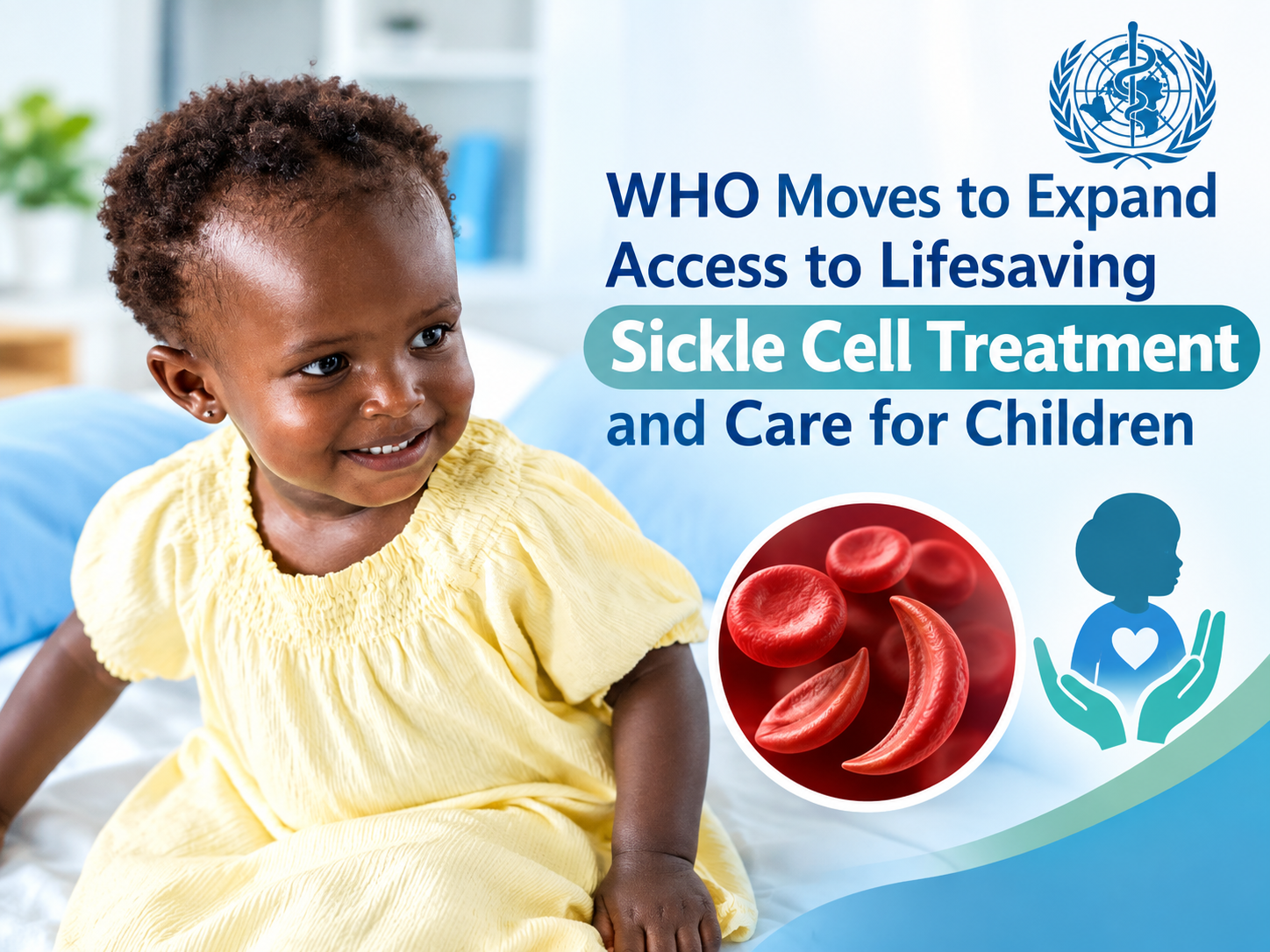
WHO recommends hydroxyurea for all children and adolescents with sickle cell anemia from 9 months to 19 years, shifting care toward early treatment regardless of symptom history.
 Written and medically reviewed byRayan SalihContributing writer · PharmD, RPh
September 2, 2026 · 7 min read

Early treatment becomes the expectation
The World Health Organization’s first normative guideline for sickle cell disease treatment and care in children recommends universal hydroxyurea access for patients with sickle cell anemia beginning at 9 months of age and continuing through age 19. The central change is eligibility: treatment should not be reserved for children who have already developed recurrent pain, acute chest syndrome, severe anemia, or other complications.
That matters because organ injury and vaso-occlusive morbidity can begin before a child accumulates an obvious clinical history. A symptom-triggered model also depends on reliable documentation of events and access to hospitals, both of which may be limited in settings carrying much of the global sickle cell disease burden. Universal eligibility offers a clearer standard and reduces the risk that children must become visibly ill before treatment is considered.
The recommendation concerns sickle cell anemia, the severe disease phenotype generally associated with genotypes such as hemoglobin SS and sickle beta-zero thalassemia. It should not automatically be extrapolated to every sickle cell disease genotype without checking the full guideline, diagnostic criteria, and applicable national recommendations.
WHO guidance establishes an international standard; it does not itself alter FDA-approved labeling or US payment policy. US clinicians and health systems will need to reconcile the recommendation with current product labeling, institutional protocols, informed-consent practices, and coverage rules, particularly for younger children or uses that differ from a product’s approved indication.
Evidence supports benefit before severe symptoms accumulate
This is a guideline update, not a new clinical trial. The WHO announcement therefore does not provide a newly enrolled population, comparator, effect estimate, or follow-up period. Its importance lies in converting an established evidence base into a universal treatment expectation across childhood and adolescence.
One pivotal component of that evidence is the multicenter, randomized, placebo-controlled BABY HUG trial. It enrolled 193 infants with sickle cell anemia who were 9 to 18 months old and assigned them to hydroxyurea at a fixed trial dose of 20 mg/kg per day or placebo for two years. Eligibility did not require prior severe disease, making the population directly relevant to preventive treatment.
The trial’s primary measures of splenic and renal function did not differ significantly between groups. However, hydroxyurea reduced important clinical events. Investigators reported 177 pain events among 62 children receiving hydroxyurea versus 375 events among 75 receiving placebo, with a p-value of 0.002. Dactylitis occurred 24 times among 14 hydroxyurea recipients and 123 times among 42 placebo recipients, with a p-value below 0.0001.
Hospitalizations and transfusions were also less frequent in the hydroxyurea group.
Those results support clinical benefit in infants who were not selected because they had already experienced recurrent severe complications. They do not mean that every possible long-term outcome was established by a two-year trial, nor should the trial’s fixed dose be treated as a universal dosing protocol. Initiation, adjustment, toxicity thresholds, and monitoring should follow the complete WHO guidance, applicable labeling, and local clinical standards.
National Heart, Lung, and Blood Institute guidance has also supported offering hydroxyurea early in childhood rather than limiting it to patients with frequent crises. The new WHO position broadens the policy significance of that approach, especially for countries where access has remained inconsistent despite a high burden of childhood illness and death.
Universal access requires more than a recommendation
Implementation begins with diagnosis. A health system cannot offer treatment at 9 months if newborn screening, confirmatory testing, genotype classification, and referral pathways are absent or delayed. Programs need a reliable route from screening to a clinician or trained care team authorized to assess eligibility and initiate longitudinal care.
Medication supply is the next constraint. Procurement plans should account for age-appropriate formulations, predictable resupply, storage requirements, dispensing capacity, and protection against catastrophic out-of-pocket costs. A nominally listed medicine is not universally accessible if families encounter stockouts, unaffordable laboratory fees, or repeated long-distance travel.
Clinical infrastructure must support baseline assessment and ongoing safety surveillance. Written protocols should specify laboratory tests, monitoring intervals, dose adjustment, management of cytopenias, adherence assessment, and procedures for interruptions. These requirements should be aligned with the full guideline and national rules rather than inferred from an individual trial. Programs also need systems to detect missed visits and reconnect families with care.
Workforce design will be especially important in areas with few hematologists. Standardized protocols, training for pediatricians and primary care clinicians, pharmacist involvement, task sharing, and referral criteria for complicated cases can extend capacity. Telehealth and centralized laboratory review may help, but they do not replace dependable local access to medication, testing, and urgent evaluation.
Health systems should measure more than the number of prescriptions issued. Useful implementation outcomes include the proportion of eligible children offered treatment, age at initiation, continuity of medication supply, retention in care, laboratory monitoring completion, treatment interruptions, hospitalizations, transfusions, acute chest syndrome, pain events, and serious adverse events. Data should also be examined for geographic, racial, socioeconomic, and insurance-related inequities.
Adolescents require a specific continuity plan. The WHO age range extends through 19 years, but treatment benefit and disease risk do not stop at that boundary. Pediatric programs should establish transition pathways to adult care before patients age out, with clear responsibility for prescribing, monitoring, reproductive counseling, and insurance authorization.
Important evidence and implementation gaps
The WHO news announcement communicates the normative change but does not, by itself, present the guideline’s complete evidence tables, certainty ratings, dosing algorithms, monitoring schedules, or subgroup analyses. Clinicians and policymakers should use the full guideline and its implementation materials when making protocol or formulary decisions.
Trial evidence in young children is strong for reducing several acute complications, but individual studies were conducted in selected populations with structured follow-up and laboratory access. Outcomes may differ where malnutrition, malaria, infection burden, diagnostic delays, medication interruptions, or limited monitoring affect care. Generalizability therefore depends partly on whether health systems can reproduce the treatment support available in trials.
Long-term surveillance remains important. A two-year infant trial cannot fully characterize lifetime organ outcomes, fertility considerations, pregnancy-related management, rare toxicities, or the consequences of intermittent treatment. Guideline adoption should be paired with pharmacovigilance and registries capable of following children across adolescence and into adult care.
Questions clinicians ask
Does a child need prior pain crises before hydroxyurea is offered?
No. The defining policy change is universal eligibility for children with sickle cell anemia from 9 months through age 19, rather than selection only after recurrent pain or another severe complication. Diagnosis, genotype, contraindications, baseline evaluation, and the complete guideline still need to be reviewed for each child.
Does WHO’s recommendation determine the dose to use?
No. BABY HUG studied a fixed dose of 20 mg/kg per day for two years, but a trial regimen is not automatically the dosing standard for every setting or formulation. Clinicians should use the full WHO protocol, current product labeling, national guidance, and established laboratory-based adjustment procedures.
What must be available before a program promises universal access?
At minimum, programs need timely diagnosis, continuous medication procurement, appropriate formulations, trained prescribers, laboratory access, toxicity-management protocols, adherence support, and reliable follow-up. Coverage for the medicine without coverage for testing, travel, or clinical visits can still leave treatment practically inaccessible.
Does the recommendation change US regulatory requirements?
No. WHO guidance informs standards of care and policy but does not expand an FDA-approved indication or override US prescribing, coverage, and consent requirements. Health systems should compare the WHO recommendation with current labeling and professional guidance, then address any age- or indication-related differences through established governance processes.
References
- WHO moves to expand access to lifesaving sickle cell treatment and care for children — World Health Organization, 2026
- Hydroxycarbamide in very young children with sickle-cell anaemia: a multicentre, randomised, controlled trial (BABY HUG) — The Lancet, 2011
- Evidence-Based Management of Sickle Cell Disease — National Heart, Lung, and Blood Institute, 2014
- About Sickle Cell Disease — Centers for Disease Control and Prevention, 2024
One story a day
The story of the day, in your inbox
One health journey each morning — no advice, no alarm, just company for the road.