Esophageal pH Capsule Alert Signals Procedural Safety Risk
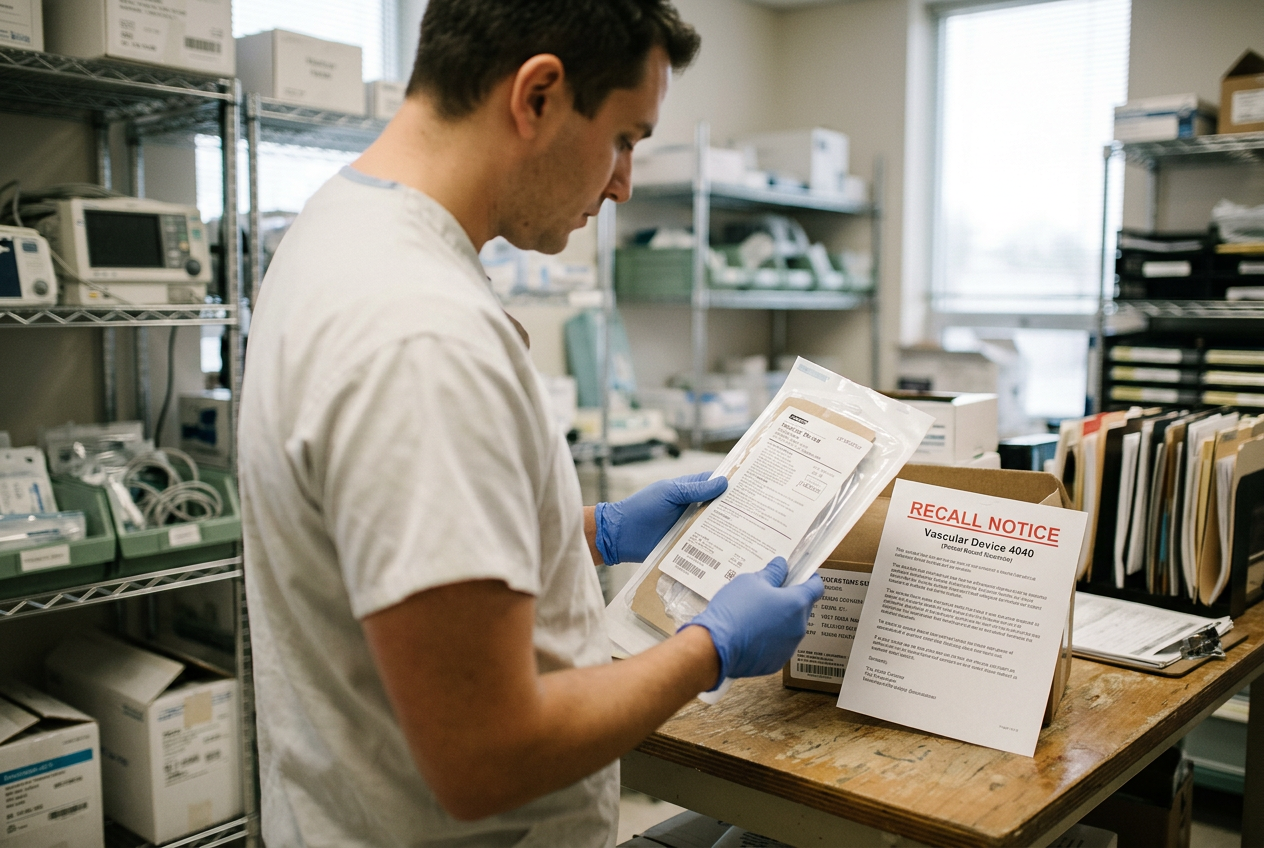
The FDA reported 184 serious injuries and no deaths involving specified Medtronic and Given Imaging esophageal pH capsule delivery devices. Gastroenterology services should review inventory, workflows and follow-up.
 Written and medically reviewed byRayan SalihContributing writer · PharmD, RPh
September 17, 2026 · 7 min read
What the FDA alert establishes
The FDA’s September 15 early alert concerns esophageal pH monitoring capsule delivery devices associated with Medtronic and Given Imaging. According to the agency, 184 serious injuries and no deaths had been reported as of August 10, 2026. The manufacturers are removing the affected devices, making this an immediate inventory and procedural-safety issue for services that perform capsule-based reflux monitoring.
The reported total describes a postmarket safety signal, not an injury rate. The FDA communication does not provide a denominator showing how many affected devices were distributed or used, nor does the count establish the risk associated with an individual procedure. It also should not be read as proof that every reported injury was caused by the device. Postmarket reports can identify patterns requiring action, but they generally cannot establish incidence or causality on their own.
“No deaths” is similarly narrow. It means the FDA had received no reported deaths within the information summarized through the stated cutoff date. It does not negate the seriousness of the injuries, rule out delayed reports or guarantee that later cases will have the same outcome.
The alert should be treated as a living regulatory record. Product scope, manufacturer instructions and recall status can change as an investigation advances. Services should therefore use the FDA page and linked manufacturer materials, rather than a saved email or an informal product list, to confirm the current affected identifiers and recommended disposition.
Why local inventory review matters
The first operational task is matching local stock to the precise products identified by the FDA and manufacturer. That review should extend beyond the main endoscopy supply room to procedure carts, ambulatory sites, satellite clinics, receiving areas, consignment stock and any kits assembled in advance. Unopened inventory may otherwise remain available after central stock has been checked.
Matching should use the identifiers published in the regulatory communication, such as product name, catalog or model information, lot or serial details, expiration information and unique device identifiers when available. Staff should not infer that every esophageal pH capsule system is affected, or that a device is unaffected merely because its outer packaging looks different. The documented identifiers control the scope.
Affected stock should be segregated from usable inventory and handled according to the FDA and manufacturer removal instructions. A local record of quantities, storage locations and disposition can help reconcile stock and demonstrate that all care areas were reviewed. Receiving teams also need an updated check so that returned, transferred or newly delivered product does not re-enter circulation inadvertently.
The FDA’s device recall framework distinguishes the physical removal of a product from other corrections that may occur at the point of use. For this alert, services should follow the specific manufacturer action rather than substitute a locally devised inspection, relabeling or repair process.
Building the signal into procedural safeguards
Inventory control alone may not protect patients if an affected device has already reached a procedure room or if staff are unaware of the alert. Gastroenterology services can incorporate an identifier check into preparation and time-out processes, with documentation that the device is outside the affected scope and that packaging and components are intact under the applicable instructions for use.
The team should also review the expected deployment sequence and the response to any device behavior that differs from the instructions for use. Operators should not improvise a maneuver solely to complete a study when a capsule or delivery component does not behave as intended. The workflow should define when to stop, whom to call, how to maintain direct clinical observation and how to obtain endoscopic, surgical or other support when clinically indicated.
Documentation is important for both care and investigation. The procedure record should preserve the product and lot identifiers, the operator’s account of deployment, any deviation from expected function, actions taken and the patient’s condition before discharge. If a malfunction or injury occurs, the device and packaging should be retained when feasible under institutional policy and manufacturer or FDA instructions rather than discarded before evaluation.
Services should ensure that physicians, nurses, technicians, procurement staff, biomedical or clinical engineering teams, risk management and device-safety personnel receive the same current notice. A brief multidisciplinary huddle may be more reliable than passive email distribution, particularly across facilities using shared inventory or rotating staff.
Postprocedure surveillance should be explicit
Routine discharge instructions may be too generic for patients exposed to a device covered by a new safety communication. Follow-up materials should clearly explain how and when to contact the endoscopy service, including after hours, if new or worsening symptoms occur. Symptoms potentially requiring prompt assessment include significant chest or abdominal pain, difficulty or pain with swallowing, bleeding, breathing difficulty, fever or persistent vomiting, interpreted in the context of the procedure and the FDA or manufacturer guidance.
A defined callback pathway can reduce uncertainty. Staff handling calls should be able to identify the device used, retrieve the procedure note and escalate concerns without requiring the patient to reconstruct technical details. The threshold for evaluation should reflect symptom severity, the procedural course and the possibility of a device complication; the FDA injury count alone cannot determine management for an individual patient.
For patients already exposed to an affected product, services should consult the current FDA and manufacturer instructions to determine whether record review or proactive outreach is recommended. A blanket recall of every patient who underwent wireless pH monitoring would go beyond the stated evidence unless the regulator or manufacturer specifies that step.
Suspected malfunctions and adverse events should enter the institution’s device-event process. Reporting obligations differ for manufacturers, importers and device user facilities, while clinicians and patients may also submit voluntary reports through FDA pathways. Reports are more useful when they include device identifiers, timing, procedural details, clinical consequences and the actions required to address the event.
What the available evidence cannot answer
This is a regulatory safety communication, not a controlled clinical study. There is no comparator group, prespecified follow-up period, effect estimate, confidence interval or reported denominator from which to calculate absolute risk. Reporting can be incomplete or duplicated, clinical detail may vary, and heightened awareness can change reporting patterns.
The available information also does not establish whether risk differs by patient anatomy, operator experience, procedural setting or device lot beyond the identifiers named in the alert. Nor can it quantify the effectiveness of any single local safeguard. These limitations do not weaken the need to remove affected stock; they define what can and cannot be concluded from the reported number.
The practical response is therefore targeted rather than speculative: verify the exact affected products, prevent their use, preserve traceability, prepare for procedural abnormalities and make postprocedure escalation easy. Services should continue checking the FDA record for updated scope, recommendations or recall classification.
Questions clinicians ask
Does the alert apply to every wireless esophageal pH study?
No. The scope should be determined from the product and device identifiers in the current FDA communication and manufacturer materials. Services should not automatically treat all wireless pH monitoring systems as affected, but they should check every storage and procedure location where the named delivery devices could be present.
What should we do about patients who already underwent a procedure?
Review the current FDA and manufacturer instructions to determine whether proactive outreach is advised for the affected product. Regardless of outreach strategy, the service should be able to identify exposed patients, retrieve device identifiers and rapidly assess new or worsening symptoms that could represent a procedural or device-related complication.
How should a suspected malfunction or injury be documented?
Record the device and lot identifiers, procedural sequence, unexpected behavior, clinical effects and interventions. Preserve the device and packaging when feasible, notify the institution’s device-safety and risk teams, and follow applicable FDA reporting requirements; a complete report is more useful than a brief entry stating only that the device failed.
Can the 184 injuries be used to estimate patient risk?
No. The FDA-reported count lacks a denominator and comes from postmarket surveillance rather than a comparative study, so it cannot provide an incidence rate or individual risk estimate. It is a serious signal supporting removal and workflow review, not a quantified probability for counseling a specific patient.
References
- FDA Early Alert on Esophageal pH Monitoring Delivery Device Issues (Medtronic/Given Imaging) — U.S. Food and Drug Administration, 2026
- Recalls, Corrections and Removals (Devices) — U.S. Food and Drug Administration, 2026
- Medical Device Reporting (MDR): How to Report Medical Device Problems — U.S. Food and Drug Administration, 2026
One story a day
The story of the day, in your inbox
One health journey each morning — no advice, no alarm, just company for the road.