ENROUTE Class I Recall Requires Immediate Lot Review
Specified ENROUTE neuroprotection system lots were recalled after arterial sheath tip separation reports. Transcarotid teams should quarantine inventory and review potentially affected procedures.
 Written and medically reviewed byRayan SalihContributing writer · PharmD, RPh
September 1, 2026 · 6 min read
What the recall changes
The FDA posted the Class I recall on August 26, 2026, after reports that the arterial sheath tip could separate during use. Separation can expose patients to serious vascular injury, making this an immediate device-safety issue for operating rooms, catheterization laboratories and hybrid suites that perform transcarotid procedures.
The action is lot-specific. It does not establish that every ENROUTE system is affected, and a recalled device’s use does not by itself show that separation occurred or that a patient was injured. Teams should compare every package identifier against the exact product and lot information in the FDA notice and the manufacturer’s communication rather than relying on the device name alone.
A Class I designation is the FDA’s most serious recall classification. It means there is a reasonable probability that use of, or exposure to, the affected product will cause serious adverse health consequences or death. Classification communicates the potential severity of the hazard; it does not provide an event rate or prove that harm occurred in each use.
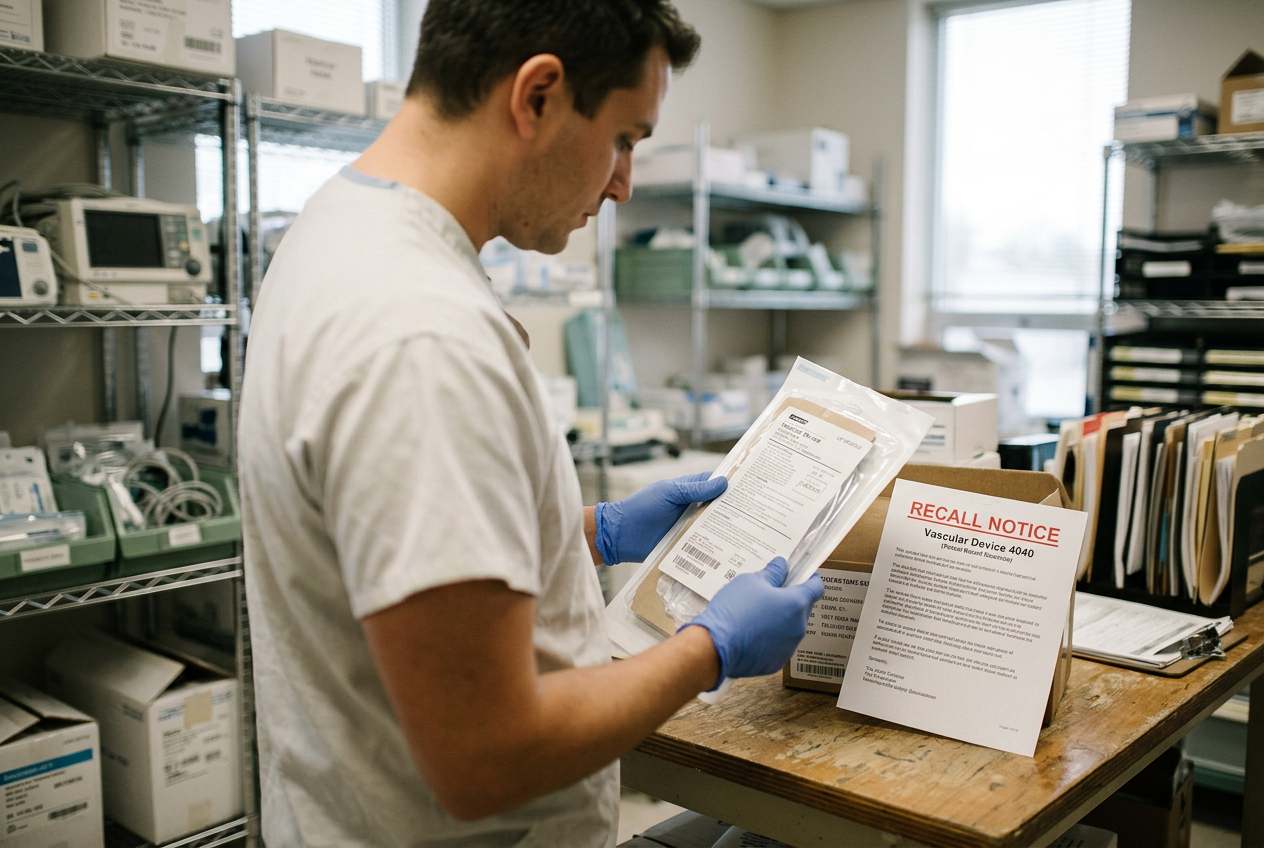
The immediate operational question is whether affected devices remain available for use. Inventory should be placed on hold while supply chain, perioperative leadership and the transcarotid clinical team reconcile catalog numbers, unique device identifiers where available, lot numbers and expiration information. The FDA notice and manufacturer instructions should determine whether units must be returned, transferred or otherwise handled.
How the safety signal was assessed
This is a regulatory recall, not a comparative clinical study. There is no randomized population, control group, prespecified clinical endpoint or follow-up interval from which to calculate relative risk. The FDA action concerns reports of a mechanical failure mode—separation of the arterial sheath tip—and the potential for serious injury when the device is used in the arterial circulation.
That distinction matters when communicating risk. A Class I recall establishes that the potential consequences are serious enough to warrant the highest recall category. It does not, without additional denominator data, show how often separation occurs among all procedures performed with affected lots. The FDA page should be used for the current scope of affected products, reported outcomes and required actions because recall details can be updated.
The failure mode is clinically important even if uncommon. A separated sheath component may cause direct vessel trauma or remain within the vasculature, potentially requiring imaging, endovascular retrieval, open intervention or additional observation depending on the procedural circumstances. The appropriate response to a suspected separation depends on the patient’s condition, the component’s location and the treating team’s judgment.
A three-part response for transcarotid programs
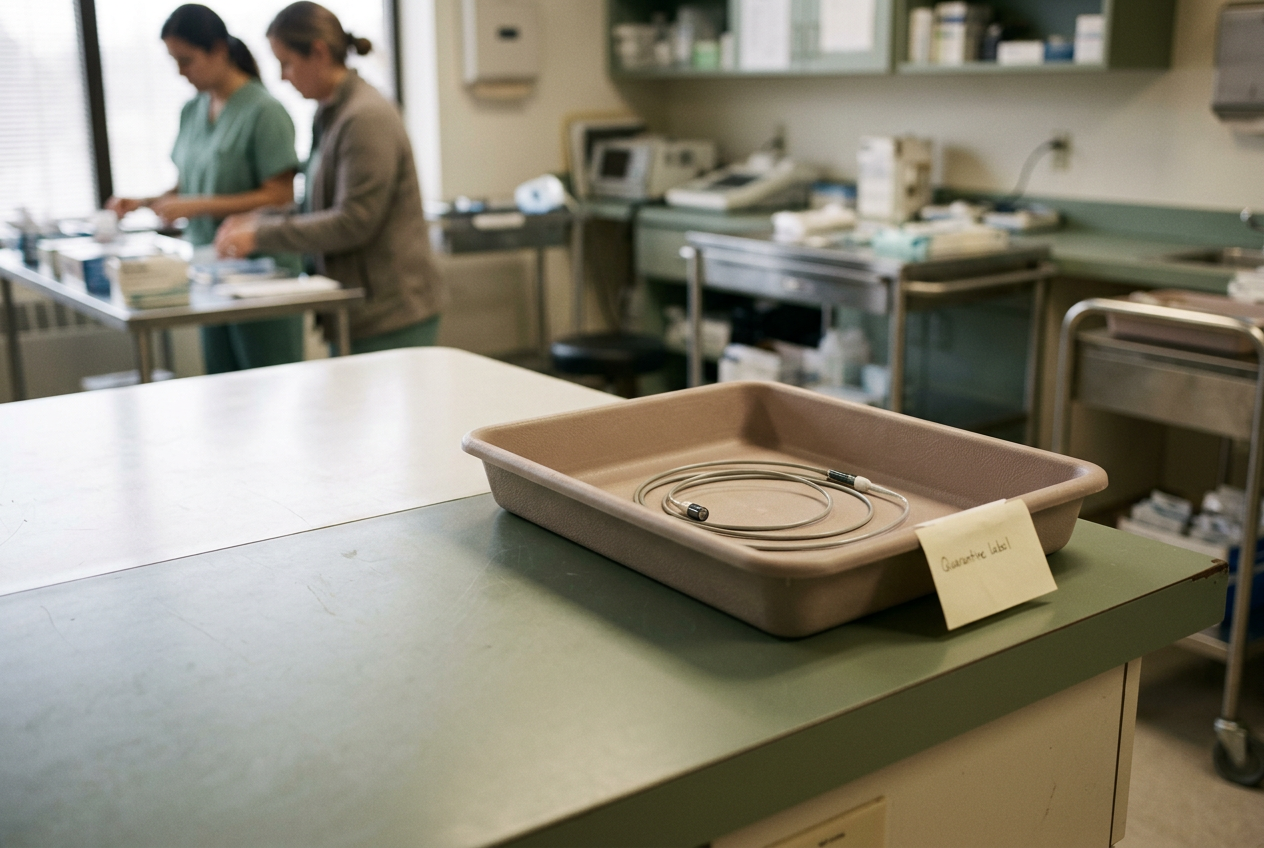
First, quarantine inventory. Stop distribution of units that match the affected product and lot identifiers, including stock held outside the main operating room. Relevant locations may include hybrid suites, procedure carts, satellite stores, consignment inventory and emergency backup stock. Clearly label quarantined units so that a routine restocking process does not return them to circulation.
The reconciliation should be documented. Record the number of affected units identified, their locations, their disposition and the person responsible for completing each step. If outer cartons and sterile packages carry different identifiers, the recall instructions should guide which fields must be checked. Unaffected ENROUTE inventory should remain physically distinguishable from recalled stock.
Second, identify potentially affected procedures. Search purchasing and inventory systems for the implicated lots, then connect those records with implant logs, procedure documentation, charge capture, barcode scans and unique device identifier data. Because no single system is consistently complete, a cross-check is safer than relying on one source.
The lookback period should follow the distribution and expiration dates in the recall materials. For each possible match, confirm whether the unit was merely stocked, opened but unused, or introduced into the patient. Document uncertain matches rather than treating missing records as proof that a recalled device was not used.
For procedures linked to an affected lot, review the operative report, device-accountability record and any documented device malfunction. Particular attention should be paid to a noted loss of sheath integrity, an unexpectedly missing component, difficult device withdrawal, unplanned imaging, retrieval attempts, vascular repair or other procedural escalation. Postprocedure records may also contain findings that warrant clinical reassessment, but the recall alone does not establish a need for the same test or intervention in every patient.
Third, coordinate risk communication. Vascular surgeons, interventional clinicians, anesthesia teams, nursing leaders, radiology, patient safety, risk management and supply chain need a shared account of the affected lots and the local review status. Messages should distinguish confirmed device separation, possible exposure to a recalled lot and exposure without evidence of malfunction.
Patient communication should be individualized and factual. A potentially affected procedure is not equivalent to a confirmed retained component or arterial injury. If outreach is indicated under the recall instructions or local assessment, it should explain what is known, what remains uncertain, which symptoms merit urgent evaluation and whom the patient should contact. Institutions should avoid unsupported numerical estimates when the available recall evidence does not provide a reliable incidence rate.
Suspected malfunctions and injuries should be documented through institutional safety systems and reported in accordance with FDA medical-device reporting requirements. Reports are most useful when they include the exact product, lot or unique device identifier; procedure date; failure description; clinical consequences; interventions; and whether the device or separated component is available for evaluation.
What remains uncertain
The regulatory notice does not function as an incidence study. Without the number of affected devices used, complete case ascertainment and standardized follow-up, it cannot establish a precise probability of sheath tip separation or patient injury. Voluntary reports may be incomplete, duplicated or influenced by increased recognition after a safety communication.
The available information also may not define the best surveillance strategy for every patient previously treated with an affected lot. Decisions about record review, contact, examination or imaging should reflect the recall instructions, evidence of procedural malfunction and the individual clinical context. Teams should check the FDA page for updates rather than treating the initial notice as static.
Questions clinicians ask
Does the recall apply to every ENROUTE system?
No. The action applies to the specific ENROUTE Transcarotid Neuroprotection System and Plus products and lots identified in the FDA notice. Teams should match full package identifiers and lot information; a shared brand name is not enough to classify a unit as recalled.
What if an affected lot may have been used but no problem was documented?
Possible use should trigger a structured record review, not an assumption that separation occurred. Confirm the device match, examine procedural documentation for loss of integrity or unexpected intervention, and follow the manufacturer’s and FDA’s recall instructions when deciding whether additional clinical review or patient communication is warranted.
Should every potentially exposed patient undergo imaging?
The recall notice establishes a serious potential hazard but does not by itself support one universal imaging pathway for all previous recipients. Evaluation should be guided by confirmed or suspected malfunction, procedural findings, current symptoms, the device instructions and clinical judgment.
How should a suspected sheath tip separation be reported?
Use the institution’s device-safety process and applicable FDA reporting pathway. Include the catalog and lot identifiers, procedure details, the nature of the separation, clinical consequences and any retrieval or repair; preserve the device or component for evaluation when doing so is feasible and consistent with local policy.
References
- Percutaneous Catheter Recall: Boston Scientific Removes ENROUTE Transcarotid Neuroprotection System Due to Risk of Arterial Sheath Tip Separation — U.S. Food and Drug Administration, 2026
- Medical Device Reporting (MDR): How to Report Medical Device Problems — U.S. Food and Drug Administration, 2024
One story a day
The story of the day, in your inbox
One health journey each morning — no advice, no alarm, just company for the road.