Bravo CF pH Device Recall Follows 184 Serious Injuries
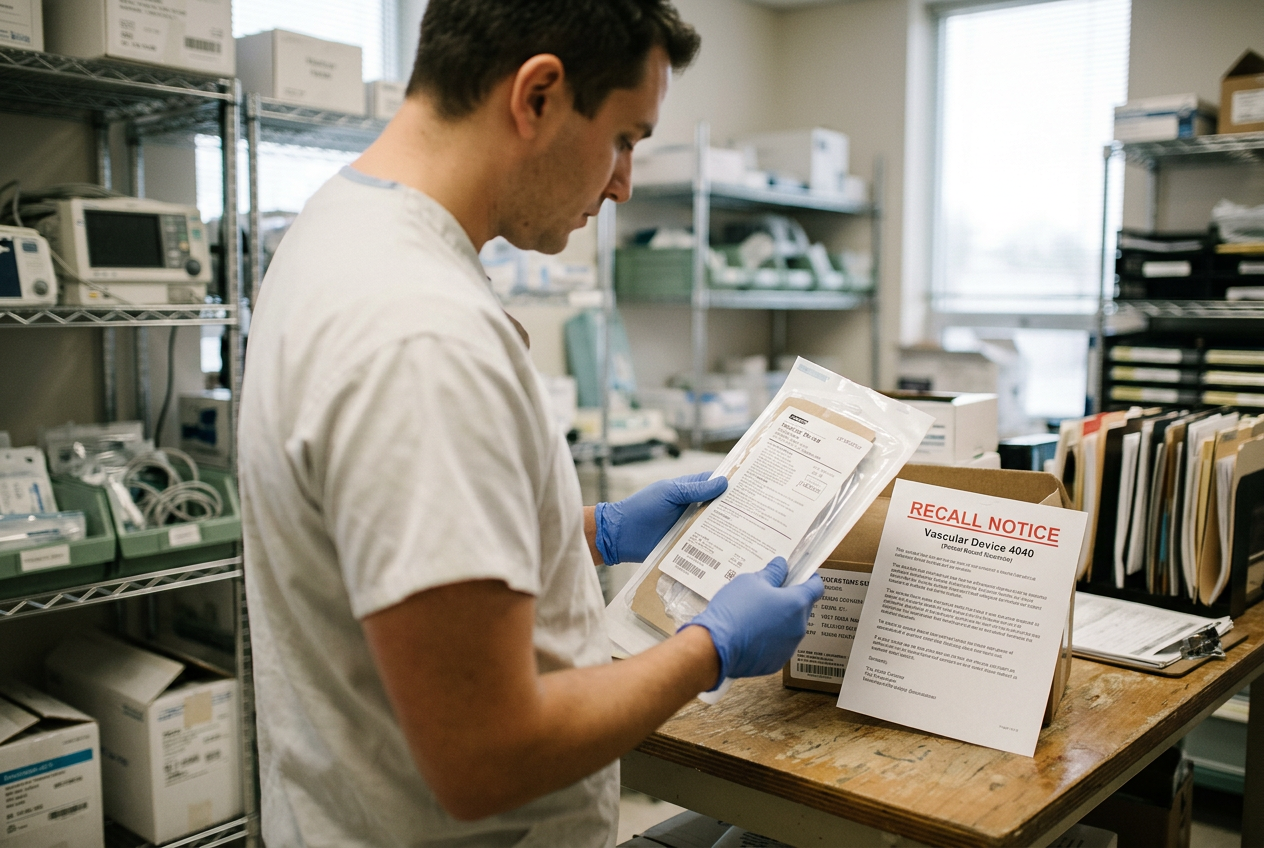
The Class I recall covers Bravo CF delivery devices that may not attach or release the esophageal pH capsule as intended. Gastroenterology services should review inventory, prior procedures and testing alternatives.
 Written and medically reviewed byRayan SalihContributing writer · PharmD, RPh
October 12, 2026 · 6 min read
What the recall changes
The September 15, 2026, action concerns Bravo CF capsule delivery devices from Medtronic and Given Imaging. According to the FDA, an affected delivery device may fail to attach the pH-monitoring capsule to the esophagus or fail to release it as intended. Either malfunction can prevent successful monitoring and may expose a patient to additional intervention or a repeat procedure.
The FDA reported 184 serious injuries in connection with the problem and designated the action Class I, its most serious recall classification. Class I means there is a reasonable probability that use of or exposure to the affected product could cause serious adverse health consequences or death. It does not, by itself, establish that every reported injury was caused by the malfunction or that every use carried the same risk.
This is a regulatory safety action, not a comparative clinical study. There was no control group, prespecified follow-up period, effect estimate, confidence interval or hypothesis test. The denominator—the total number of affected devices used or procedures performed—is also necessary to calculate an injury rate and should not be inferred from the reported event count.
The action specifically involves the delivery component used to position and deploy the wireless capsule. Clinicians and procurement teams should not assume that every Bravo capsule, recorder or accessory is included. Product names, model or catalog numbers, lot identifiers and distribution dates should be matched against the current FDA notice and manufacturer communication.
Reviewing inventory and completed procedures
Health systems need two linked reviews: one for unused stock and another for procedures in which a potentially affected device may already have been used. Supply-chain records can identify affected inventory, while endoscopy logs, procedure documentation, purchase records and lot-tracking systems may help reconstruct exposure.
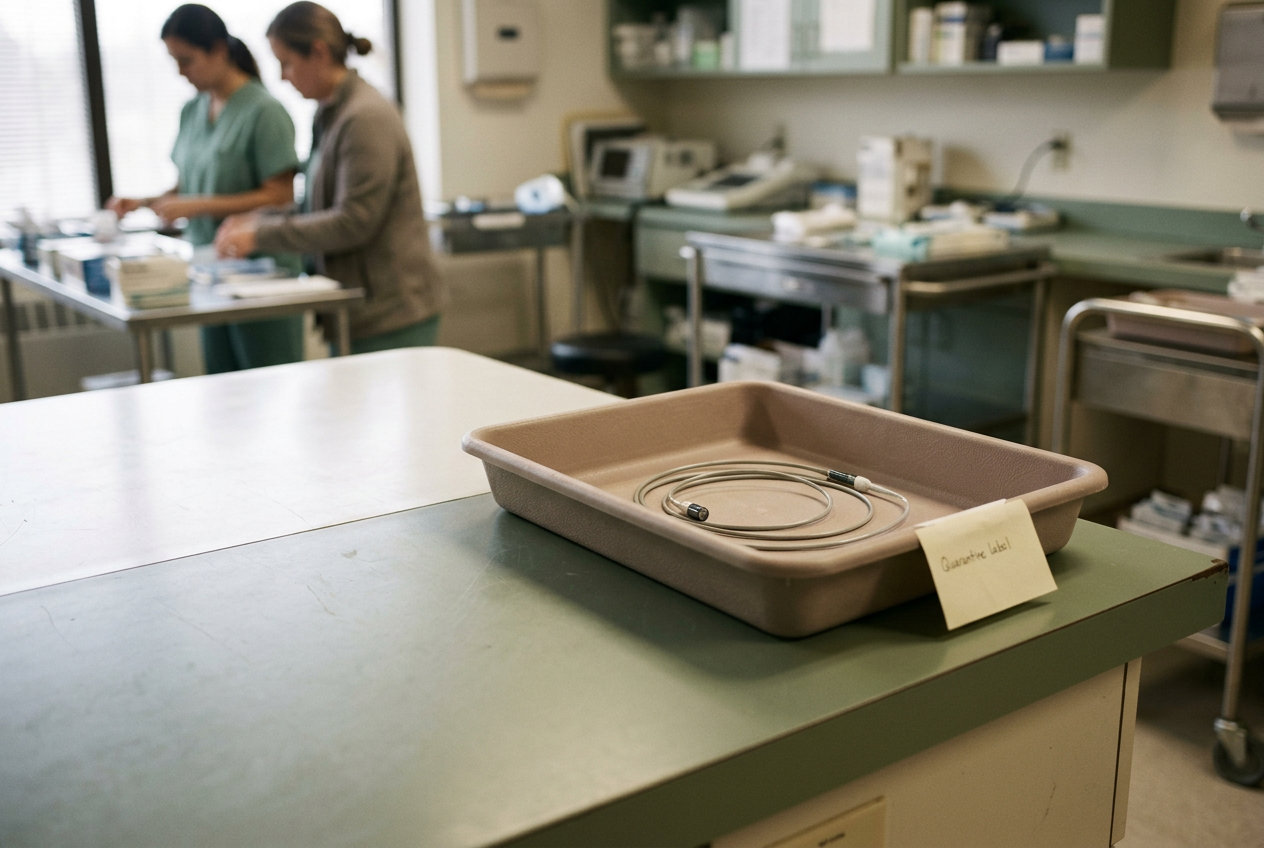
Segregate unused affected devices from available stock and handle them according to FDA and manufacturer instructions. Removing a product from clinical areas is not enough if you have not also checked replacement stock, satellite units, or procedure carts. Services should document reconciliation so that the number located, used, returned or otherwise accounted for is clear.
For completed procedures, the most useful first step is to establish whether an affected delivery device was used and whether the procedure note documented successful attachment and release. A technically incomplete study, missing tracing or unexpected deployment difficulty may warrant review even when the record does not explicitly describe a malfunction.
| Review group | Records to check | Practical next step |
|---|---|---|
| Unused devices | Model, lot, expiration and distribution records | Quarantine and follow the current removal instructions |
| Completed, technically successful procedures | Device identifier, deployment note and recorded pH data | Document review and use symptom- or finding-based follow-up |
| Incomplete or failed studies | Deployment details, tracing quality and any intervention | Obtain gastroenterology or endoscopy review before deciding on repeat testing |
| Possible injury or retained equipment | Procedure report, subsequent encounters and current symptoms | Prompt clinical assessment and device-event reporting through established channels |
The FDA’s current recall page should remain the source of truth because it can be updated with affected-product tables and recommended actions. Check local lists created from an earlier notice against the live record before outreach or inventory reconciliation is considered complete.
Follow-up should reflect the procedure record
The recall does not mean that every person previously tested requires the same examination or repeat study. Follow-up should be risk-based, considering whether the affected product was used, whether attachment and release were documented, whether interpretable monitoring data were obtained, and whether symptoms or subsequent care suggest a complication.
A patient with a documented deployment problem, an incomplete study or concerning symptoms after the procedure warrants timely clinical review. Symptoms such as new or persistent swallowing difficulty, painful swallowing, chest or abdominal pain, bleeding, fever or breathing difficulty should be assessed under the service’s urgent post-procedure pathway. The appropriate evaluation depends on the presentation and cannot be determined from the recall classification alone.
For an asymptomatic patient whose capsule was documented as attached and released normally and whose study produced usable data, the regulatory notice should guide whether additional contact is required. The available evidence does not provide a comparative benefit estimate for routine imaging, endoscopy or repeat monitoring in all previously exposed patients.
Document suspected malfunctions and associated injuries in the medical record and route them through the institution’s device-safety process. Reporting to the manufacturer and FDA supports ongoing surveillance, particularly when the event includes device identifiers, deployment details, interventions and outcome information.
Options for planned reflux monitoring
Planned procedures using affected delivery devices should not proceed with recalled stock. The alternative depends on the diagnostic question, local equipment and the patient’s ability to tolerate catheter-based testing.
Ambulatory transnasal catheter pH monitoring can measure esophageal acid exposure without an attached wireless capsule. Combined pH-impedance monitoring also detects reflux episodes based on impedance changes, including weakly acidic or nonacidic episodes. The American College of Gastroenterology guideline describes ambulatory reflux monitoring as an objective test for gastroesophageal reflux disease when the diagnosis is uncertain or when symptoms persist in selected clinical settings.
Whether monitoring is performed while acid-suppressive therapy is continued or withheld depends on what the test is intended to establish. That decision should follow the relevant guideline and local protocol rather than being improvised in response to the recall. Upper endoscopy can evaluate mucosal disease and other structural causes of symptoms, but it does not replace ambulatory reflux monitoring when objective reflux measurement is needed.
Another option is to defer testing until an unaffected wireless system is available, provided the delay is clinically acceptable. Services should confirm that any substitute device is not covered by the removal and that staff are trained in its use. Switching technologies can alter test duration, tolerability and the measurements available, so reports should identify the method used.
What remains uncertain
The FDA notice provides a serious injury count and the basis for a Class I action, but it is not designed to estimate comparative risk. Without the number of devices distributed and used, the frequency of each failure mode, patient-level clinical details and standardized follow-up, the absolute risk per procedure cannot be calculated from the recall summary.
Adverse-event reporting is also vulnerable to underreporting, duplicate reports and incomplete information. A report can identify a credible safety signal without proving causation in each case. Conversely, an incomplete report count should not be interpreted as the full burden of harm.
The recall evidence therefore supports stopping use of affected delivery devices, tracing inventory and reviewing potentially affected procedures. It does not support assuming that all previous Bravo studies were invalid or that every exposed patient experienced injury.
Questions clinicians ask
How can I determine whether a prior procedure was affected?
Match the delivery device’s model and lot information against the current FDA recall table. If the procedure record lacks those identifiers, reconcile endoscopy dates with supply-chain, purchasing and inventory records, then review the note for deployment difficulty, failed release or missing monitoring data.
Does every patient previously tested need repeat endoscopy or pH monitoring?
Not on the basis of the Class I designation alone. The decision should reflect confirmed use of an affected device, documentation of attachment and release, study validity, symptoms and the FDA or manufacturer’s current follow-up instructions; the recall summary provides no evidence for universal repeat testing.
What can replace wireless capsule monitoring for a planned study?
Catheter-based ambulatory pH monitoring or combined pH-impedance monitoring may answer many reflux questions without capsule deployment. Test selection, duration and whether acid suppression is continued or withheld should be based on the diagnostic objective, clinical guidelines, local expertise and patient tolerance.
What should be included in a malfunction report?
Include the device model and lot when available, procedure date, intended use, what occurred during attachment or release, monitoring results, subsequent interventions and the clinical outcome. Reports should move through the institution’s safety process and applicable manufacturer and FDA reporting channels.
References
1. Esophageal pH-Monitoring Capsule Recall: Medtronic and Given Imaging Remove Esophageal pH-Monitoring Capsule Delivery Devices — US Food and Drug Administration, 2026 2. What Is a Medical Device Recall? — US Food and Drug Administration, n.d. 3. ACG Clinical Guideline for the Diagnosis and Management of Gastroesophageal Reflux Disease — The American Journal of Gastroenterology, 2022
One story a day
The story of the day, in your inbox
One health journey each morning — no advice, no alarm, just company for the road.