Astral Ventilator Class I Recall Raises Backup Needs
Supercapacitor electrolyte leakage may damage circuit boards in affected ResMed Astral ventilators. Ventilator-dependent patients need a functional backup and a rehearsed response plan.
 Written and medically reviewed byRayan SalihContributing writer · PharmD, RPh
October 7, 2026 · 6 min read
What changed
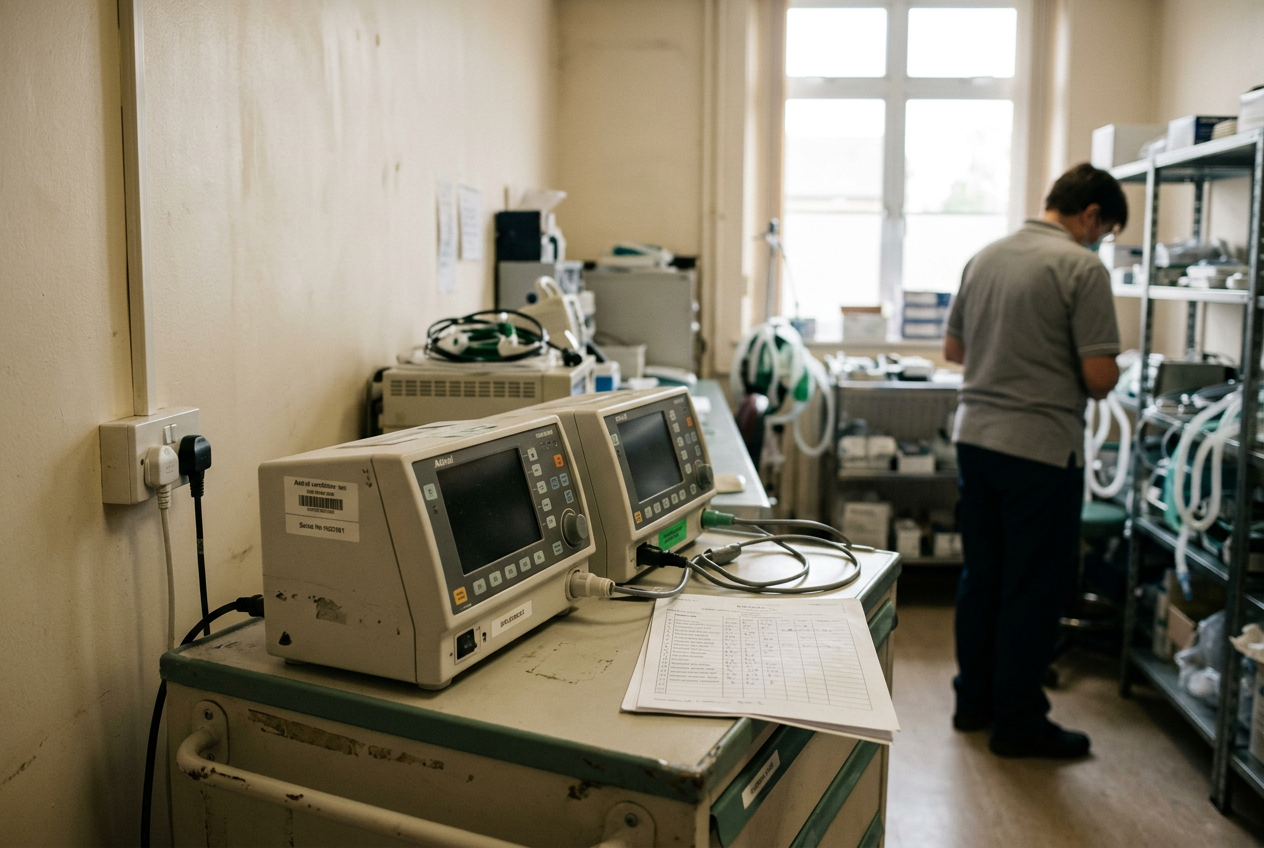
The FDA’s September 25, 2026, recall record identifies a failure risk in affected ResMed Astral ventilators. Electrolyte can leak from a supercapacitor onto the circuit board, potentially damaging electronic components and forcing the ventilator into a fail-safe state.
For a patient who cannot sustain adequate ventilation without mechanical support, the practical hazard is interruption of therapy. The relevant safety response is therefore broader than arranging eventual repair: the care team must be able to recognize a failure, move immediately to an alternative source of ventilation and obtain technical or emergency assistance.
The FDA classified the action as Class I, its most serious recall category. That classification is used when there is a reasonable probability that use of, or exposure to, a recalled product will cause serious adverse health consequences or death. It describes the potential severity of the hazard; it does not quantify how often this particular failure will occur.
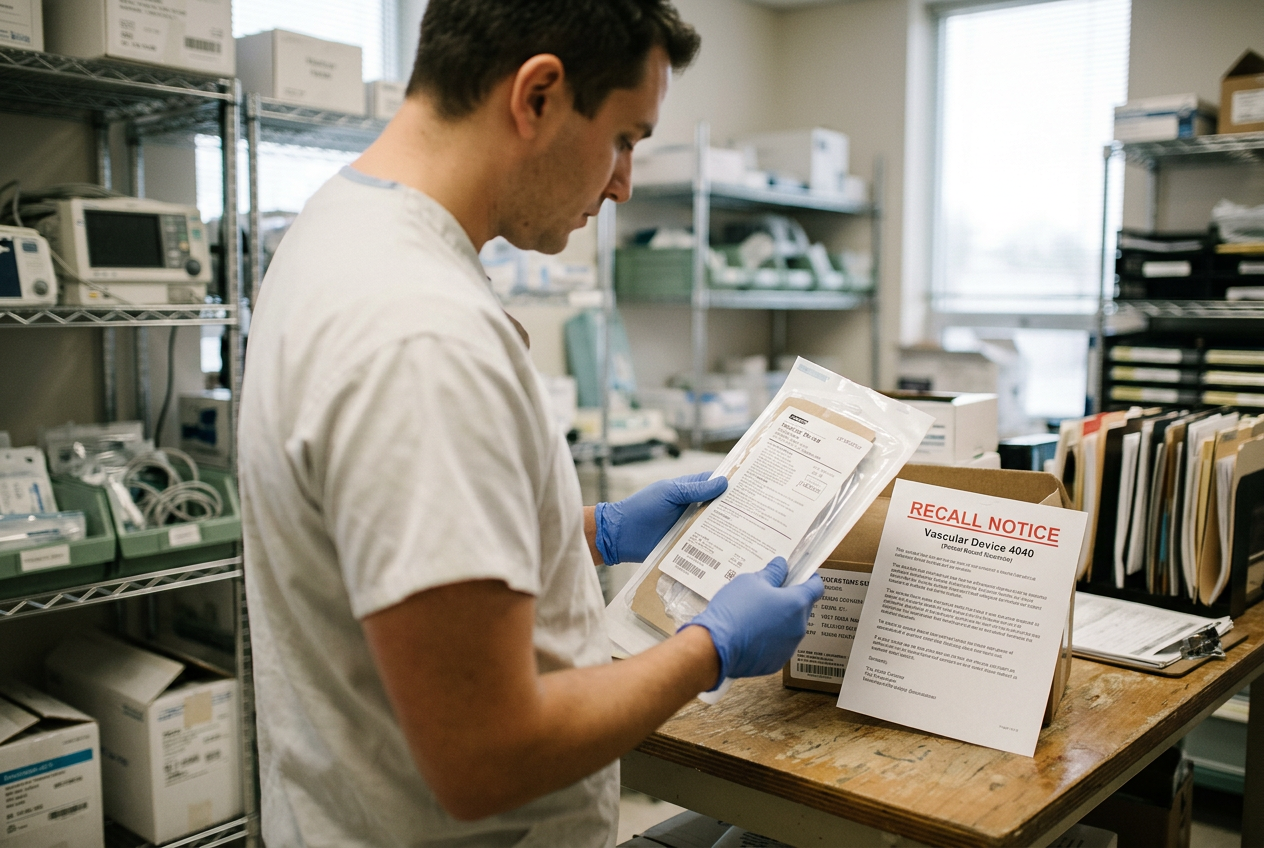
A recall also does not automatically mean every device should be switched off or returned immediately. FDA recall actions can involve inspection, correction, servicing, replacement, updated instructions or removal. Clinicians and equipment providers should follow the product identification and disposition steps in the recall communication rather than infer them from the classification alone.
Why a fail-safe state still creates clinical risk
A fail-safe state is intended to limit uncontrolled device behavior after a fault. It should not be interpreted as continued delivery of the patient’s required ventilation. If circuit-board damage interrupts therapy, the safety of a ventilator-dependent patient rests on how quickly the problem is recognized and how reliably another means of ventilation can be started.
Monitoring can help identify deterioration or an equipment problem, but it cannot replace backup ventilation. Pulse oximetry may lag behind an abrupt loss of ventilation, particularly when supplemental oxygen is in use, and an alarm is useful only if someone can hear it, understand it and respond. Alarm checks, communication pathways and the backup device should therefore be treated as one response system.
The risk may arise in hospitals, long-term care facilities, transport settings and private homes. Home ventilation deserves particular attention because technical support, respiratory clinicians and replacement equipment may not be immediately available. Power interruptions, travel and caregiver handoffs can further narrow the margin for recovery.
A checklist for care settings
The FDA record establishes the device hazard. Translating it into local practice requires a documented plan tailored to the patient’s dependence on ventilation and the resources available in that setting.
Confirm whether the device is affected. Record the ventilator model, serial number and equipment provider, then compare those details with the FDA recall record and the manufacturer’s communication. Do not assume that every Astral ventilator is included, or that a device is unaffected based only on its appearance or current performance.
Assess ventilation dependence. Document whether the patient can maintain adequate ventilation during a brief interruption and how rapidly harm could occur. This assessment determines the urgency, proximity and capability required of the backup. It should be visible in the care plan and communicated during every transfer or shift handoff.
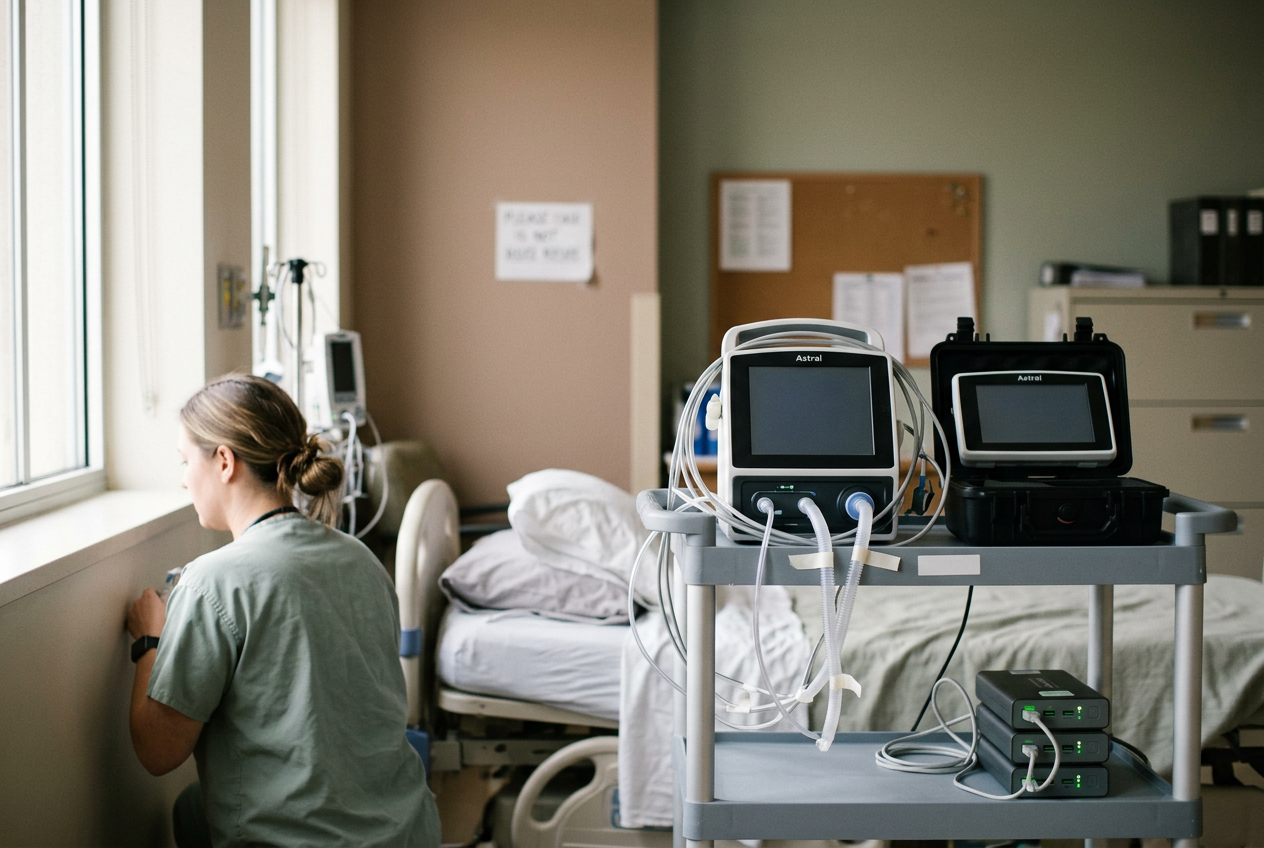
Provide a functional alternative. For a ventilator-dependent patient, backup ventilation should be immediately accessible and able to supply the prescribed support. Readiness includes the correct circuit and interface, an available power source, charged batteries where applicable and any required oxygen supply. Equipment stored elsewhere, uncharged or unfamiliar to caregivers is not an effective backup.
Test readiness, not just presence. Follow the backup device’s instructions and organizational policy for operational checks. Verify that required accessories travel with the patient and that preventive maintenance is up to date. Teams should document who performed the check and when another check is due.
Review alarm response. Confirm that alarms can be heard in the patient’s usual environment and that caregivers know which responses require an immediate switch to backup ventilation. Remote or physiologic monitoring may add warning, but it should not be used to justify delaying access to an alternative ventilator.
Rehearse the transition. Caregivers should practice disconnecting the affected ventilator, initiating the designated backup and calling for help within the limits of their training. Training should cover nights, transport and other periods when the usual respiratory team may not be present. A written plan should include the equipment provider, clinical service and emergency contact numbers.
Plan service without creating an unsupported interval. Coordinate inspection, correction or replacement through the manufacturer, durable medical equipment provider or responsible biomedical engineering service. Do not leave a patient who requires continuous support without suitable ventilation while the primary device is being evaluated.
Document transitions of care. Hospitals, home-care companies, long-term care facilities and transport teams should communicate the recall status, device identifiers, backup arrangement and pending service action. A verbal mention alone can be lost during discharge or transfer.
Escalate an actual failure. If ventilation stops or the device enters a fault state, the trained caregiver should implement the established backup plan and seek emergency assistance when adequate ventilation cannot be restored promptly. Report suspected device failures through the organization’s safety process and the appropriate FDA reporting channel.
What the recall record cannot answer
This is a regulatory recall, not a comparative clinical study. There is no control group, effect estimate, confidence interval or follow-up period from which to calculate an individual device’s probability of failure. A Class I designation communicates the seriousness of the potential outcome, not the incidence of the defect.
The public record also cannot determine the appropriate backup configuration for every patient. Ventilator dependence, prescribed settings, airway access, caregiver capacity and response times differ substantially across care environments. Those factors require individualized clinical and operational assessment.
Further information may emerge as affected devices are inspected and the correction progresses. Clinicians and equipment managers should use the FDA record and manufacturer communication as the source of truth for affected products and corrective actions, while avoiding unverified assumptions about units outside the recall scope.
Questions clinicians ask
Should an affected Astral ventilator be stopped immediately?
Not solely because the action is labeled Class I. FDA recalls may call for correction, servicing, replacement or removal, so the product-specific communication should govern disposition. For a ventilation-dependent patient, coordinate any change so suitable respiratory support remains continuously available.
What counts as functional backup ventilation?
The alternative should be immediately available, appropriate for the patient’s prescribed support and accompanied by the necessary circuit, interface, power and oxygen resources. It also has to be checked and usable by the caregiver present; an inaccessible, uncharged or unfamiliar device does not provide dependable redundancy.
Is continuous pulse oximetry enough while service is arranged?
No. Monitoring may identify physiologic deterioration, but it neither prevents circuit-board failure nor restores ventilation. Oxygen saturation can also remain temporarily reassuring after ventilation is interrupted. Monitoring is an adjunct to alarm response, caregiver readiness and a functional alternative means of ventilation.
What should follow a suspected device failure?
The immediate priority is to maintain ventilation through the established backup plan and obtain emergency help if adequate support cannot be restored promptly. The event should then be documented, reported through the applicable device-safety pathway and referred to the equipment provider or authorized service channel for evaluation.
References
1. What Is a Medical Device Recall? — U.S. Food and Drug Administration, n.d. 2. Recalls Background and Definitions — U.S. Food and Drug Administration, n.d.
One story a day
The story of the day, in your inbox
One health journey each morning — no advice, no alarm, just company for the road.