Bravo CF Recall Requires Removal From Esophageal Testing
The FDA’s Class I classification means gastroenterology and motility services should identify, quarantine and remove affected Bravo CF delivery devices while reviewing scheduled esophageal pH studies.
 Written and medically reviewed byRayan SalihContributing writer · PharmD, RPh
October 14, 2026 · 6 min read

What changed
The FDA classified the recall involving affected Bravo CF esophageal pH-monitoring delivery devices as Class I on September 15, 2026. Medtronic and Given Imaging are directing customers to remove affected products, making inventory control the immediate issue for gastroenterology units, endoscopy centers and esophageal motility laboratories.
Class I describes a recall in which the FDA considers there to be a reasonable probability that use of, or exposure to, the affected product will cause serious adverse health consequences or death. The classification communicates the potential severity of the hazard; it does not establish that every affected device will fail or that every exposed patient will be harmed.
This is a regulatory action, not a clinical study. There is therefore no trial population, comparator, effect estimate, confidence interval or follow-up period to report. The operational evidence is the FDA notice itself, including its affected-product identifiers and the removal action specified for customers.
The distinction between the complete Bravo pH-monitoring system and the recalled delivery devices matters. Services should not assume that every product bearing the Bravo name is included, but they also should not clear stock based on appearance or familiarity. The controlling information is the product identification in the FDA notice and associated manufacturer communication.
Finding affected inventory
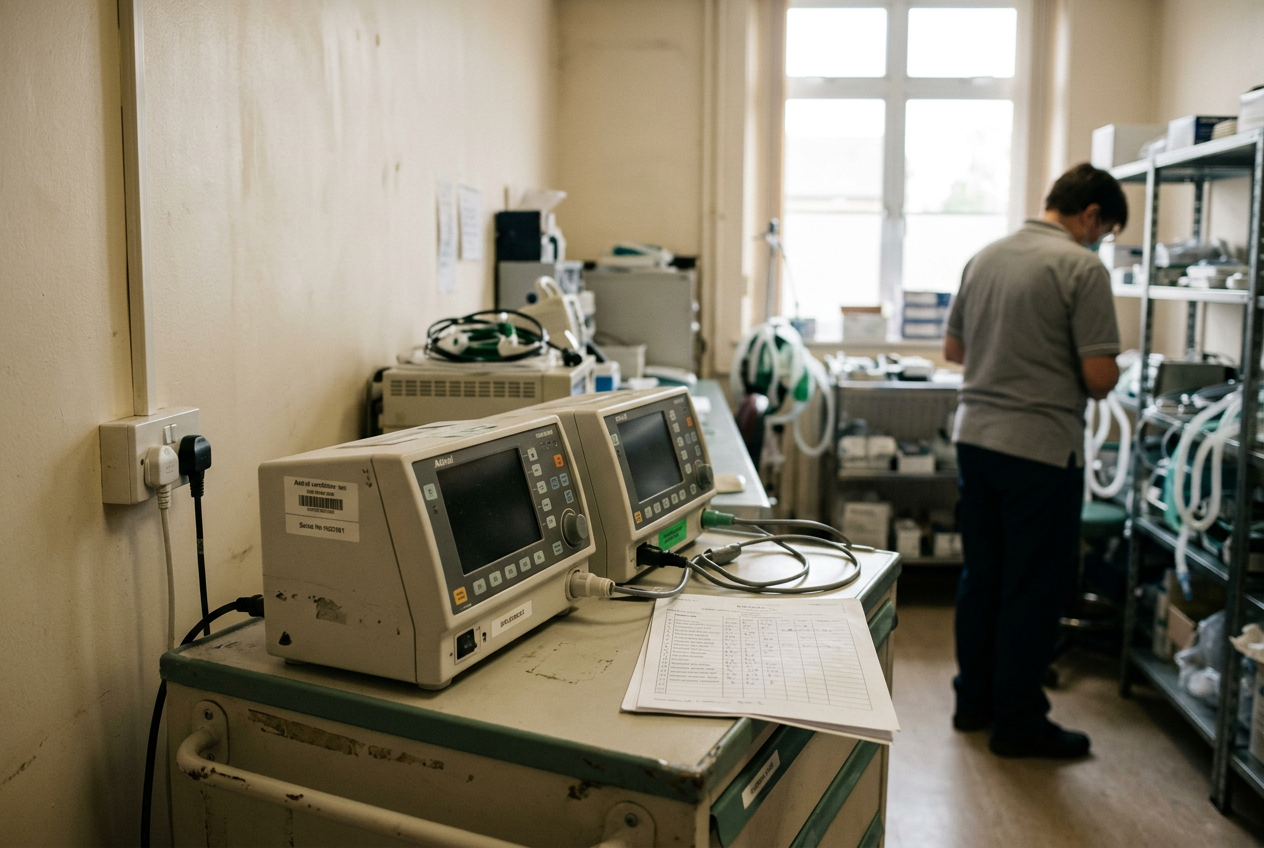
A recall response should begin with a single accountable lead and a search that extends beyond the main supply room. Bravo CF delivery devices may be held in procedure rooms, endoscopy carts, motility laboratories, satellite clinics, receiving areas or consignment stock. Units should also check products already pulled for upcoming cases.
Staff should compare the labeling on each device or package directly with the identifiers in the FDA recall notice and manufacturer correspondence. Relevant fields may include the product name, catalog or model number, lot information, expiration information and unique device identifier, depending on what appears in the notice. An internal product nickname, purchasing description or photograph is not a sufficient substitute for that comparison.
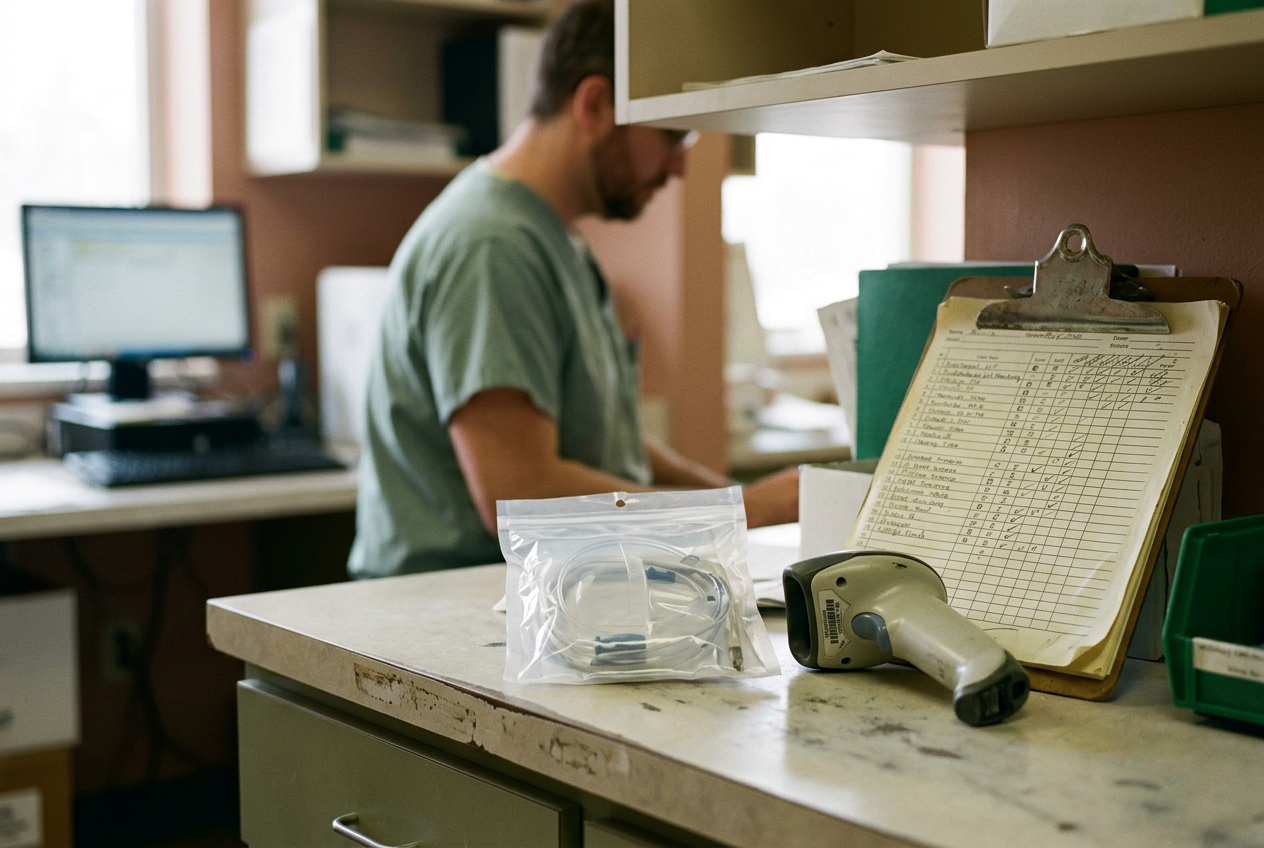
The service should document which locations were searched, the number of units reviewed, the identifiers checked and whether each unit was affected. This creates a reconciliation trail and helps prevent quarantined stock from being returned inadvertently to active inventory. If labeling is missing, damaged or ambiguous, the device should not be presumed unaffected; the manufacturer or distributor can clarify its status.
Affected devices should be segregated promptly in a clearly labeled, access-controlled quarantine area and removed from procedure carts and preference lists. Electronic inventory records can be blocked or flagged so that staff cannot issue the product while physical reconciliation continues. Disposal, return or other handling should follow the manufacturer’s recall instructions rather than a locally improvised process.
Services that share inventory across departments or legal entities should communicate beyond the motility team. Supply chain staff, biomedical or clinical engineering teams, endoscopy leadership, risk management and scheduling personnel may each hold part of the information needed to locate stock and identify affected appointments.
Managing planned pH monitoring
The immediate scheduling question is whether an upcoming study depends on a recalled delivery device. Teams can cross-reference booked Bravo procedures with verified unaffected inventory, rather than automatically canceling every reflux-monitoring appointment. No affected device should be reserved or used simply because a patient has already completed medication holds, fasting or other preparation.
When unaffected stock is unavailable, the ordering clinician and testing service should decide whether to defer the study or use another established reflux-monitoring method that is clinically appropriate and locally available. Catheter-based ambulatory pH or pH-impedance monitoring may answer some diagnostic questions, but it uses a different procedure and patient experience. Do not treat it as an automatic one-for-one replacement without considering the original indication and test protocol.
Patients whose appointments change need a concise explanation that a device recall has affected local availability. Services should provide revised preparation instructions if the test method or date changes. They should also avoid implying that Class I status means a particular patient has already experienced harm; the classification addresses the seriousness of the potential risk.
For a device used before the service learned of the recall, staff should preserve the product and procedure identifiers in the record, determine whether the unit was within the affected scope, and follow the FDA and manufacturer’s patient-management instructions. New or worsening symptoms and suspected device-related complications require clinical assessment rather than a recall-only administrative response.
Report potential adverse events or product problems through established institutional channels and to the manufacturer. Clinicians and facilities can also submit reports through the FDA’s MedWatch program. A report can be appropriate even when causality is uncertain; reporting does not itself establish that the device caused the event.
Limits of the available evidence
The FDA communication establishes the recall classification and requested product action, but it is not designed to estimate an individual patient’s probability of injury. Public recall notices may not provide a denominator for all distributed or used devices, complete clinical follow-up, or enough detail to compare risks among settings.
Local planning is also constrained by differences in inventory, referral volume and access to alternative reflux testing. A tertiary motility center may absorb postponed studies or offer catheter-based testing more readily than a smaller endoscopy service. Decisions about prioritization therefore require clinical review as well as supply-chain reconciliation.
Recall information can be updated. Services should retain the FDA notice and manufacturer communication used for their initial response, while checking for revisions to affected identifiers, return procedures or patient-management recommendations. The most current regulator and manufacturer instructions should govern the final disposition of stock.
Questions clinicians ask
How do we determine whether a Bravo CF device is affected?
Compare the product labeling directly with the identifiers listed in the FDA notice and manufacturer recall communication. Check all storage and procedure locations, document the match decision, and quarantine any unit whose status cannot be confirmed until Medtronic, Given Imaging or the distributor provides clarification.
Should every scheduled Bravo study be canceled?
Not necessarily. The recall applies to affected products, so services can first determine whether verified unaffected inventory is available. If it is not, the ordering clinician and laboratory should decide whether to postpone the study or use another clinically suitable reflux-monitoring approach, with new preparation instructions when needed.
What if an affected device may already have been used?
Confirm the device and procedure identifiers, review the FDA and manufacturer’s patient-management instructions, and assess any symptoms or suspected complication clinically. Preserve documentation and report relevant product problems or adverse events through institutional processes, the manufacturer and, when appropriate, FDA MedWatch.
What does Class I mean for risk communication?
Class I is the FDA’s most serious recall classification and reflects the potential for serious adverse health consequences or death. It does not mean that every recalled device failed or that every exposed patient was injured, so communication should distinguish potential hazard from a confirmed patient outcome.
References
1. Esophageal pH Monitoring Capsule Recall: Medtronic and Given Imaging Remove Esophageal pH Monitoring Devices — U.S. Food and Drug Administration, 2026 2. Medical Device Reporting: How to Report Medical Device Problems — U.S. Food and Drug Administration, 2024
One story a day
The story of the day, in your inbox
One health journey each morning — no advice, no alarm, just company for the road.