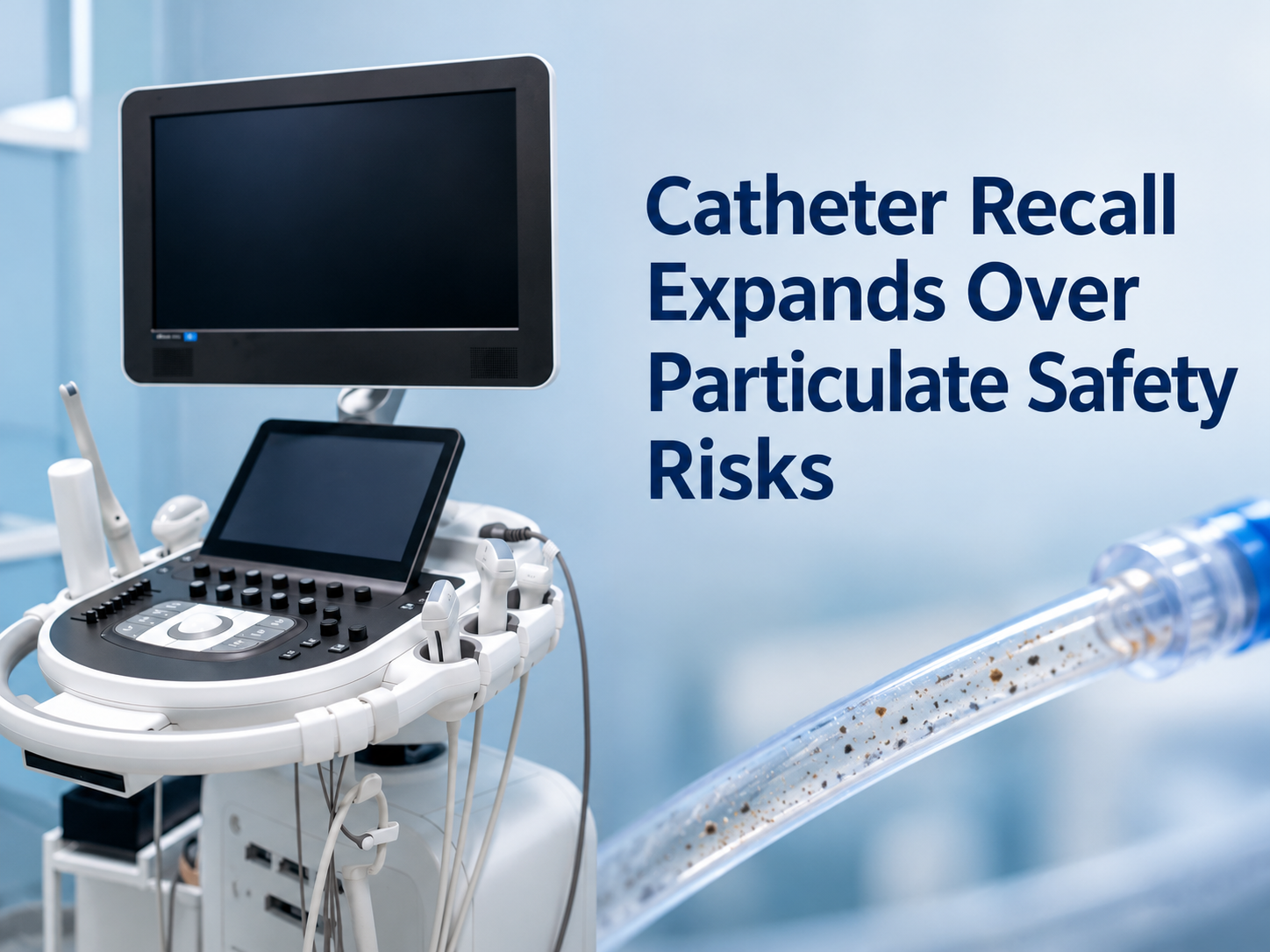
Impella Introducer Recall Requires Kit-Level Checks
The FDA’s Class I classification covers certain catheter introducers in kits used with Impella heart pumps. Heart teams should verify identifiers and incorporate the manufacturer’s correction into procedural checks.
 Written and medically reviewed byRayan SalihContributing writer · PharmD, RPh
August 28, 2026 · 6 min read

What the Class I classification means
The FDA classified the catheter introducer correction on August 10, 2026, placing it in the agency’s most serious recall category. A Class I designation means there is a reasonable probability that use of, or exposure to, the affected product could cause serious adverse health consequences or death. It describes the potential severity of the hazard, not the frequency with which a product will fail.
The action concerns catheter introducers associated with Abiomed and Oscor and supplied in kits used with Impella heart pumps. The distinction matters: the FDA notice is not, by itself, a recall of every Impella pump, every Impella procedure kit or every introducer made by either company. Applicability depends on the product names, catalog or model numbers, unique device identifiers and lot information in the FDA notice and the manufacturer’s communication.
“Correction” also has a specific regulatory meaning. Device recalls can involve removing products from their point of use, but they can also be managed through inspection, relabeling, revised instructions, repair or another action performed without taking every unit out of circulation. Class I does not automatically mean that all affected products must be discarded or that support already underway must be stopped. The required response is the one specified for the listed product.
Identifying affected kits
Heart teams should identify the introducer as a component with its own traceability information, even when it arrives inside a larger Impella kit. Screening only for the Impella system name can miss component-level recalls; conversely, quarantining all Impella supplies could unnecessarily disrupt mechanical circulatory support.
The FDA recall page and the associated customer communication are the controlling sources for scope. Inventory teams should compare each available package with every identifier provided, including the introducer’s product or catalog number, lot number and unique device identifier where listed. The outer kit label, component label and electronic inventory record may not present those details in the same place.
A practical reconciliation should document four points:
| Checkpoint | Information to match | Why it matters |
|---|---|---|
| Product | Exact introducer and kit description | Similar-looking products may not be included |
| Identifier | Catalog, model or unique device identifier | Names alone may be insufficient |
| Production unit | Lot or other traceability number | Recall scope may cover selected manufacturing groups |
| Disposition | Manufacturer’s stated correction | Class I status does not define the operational remedy |
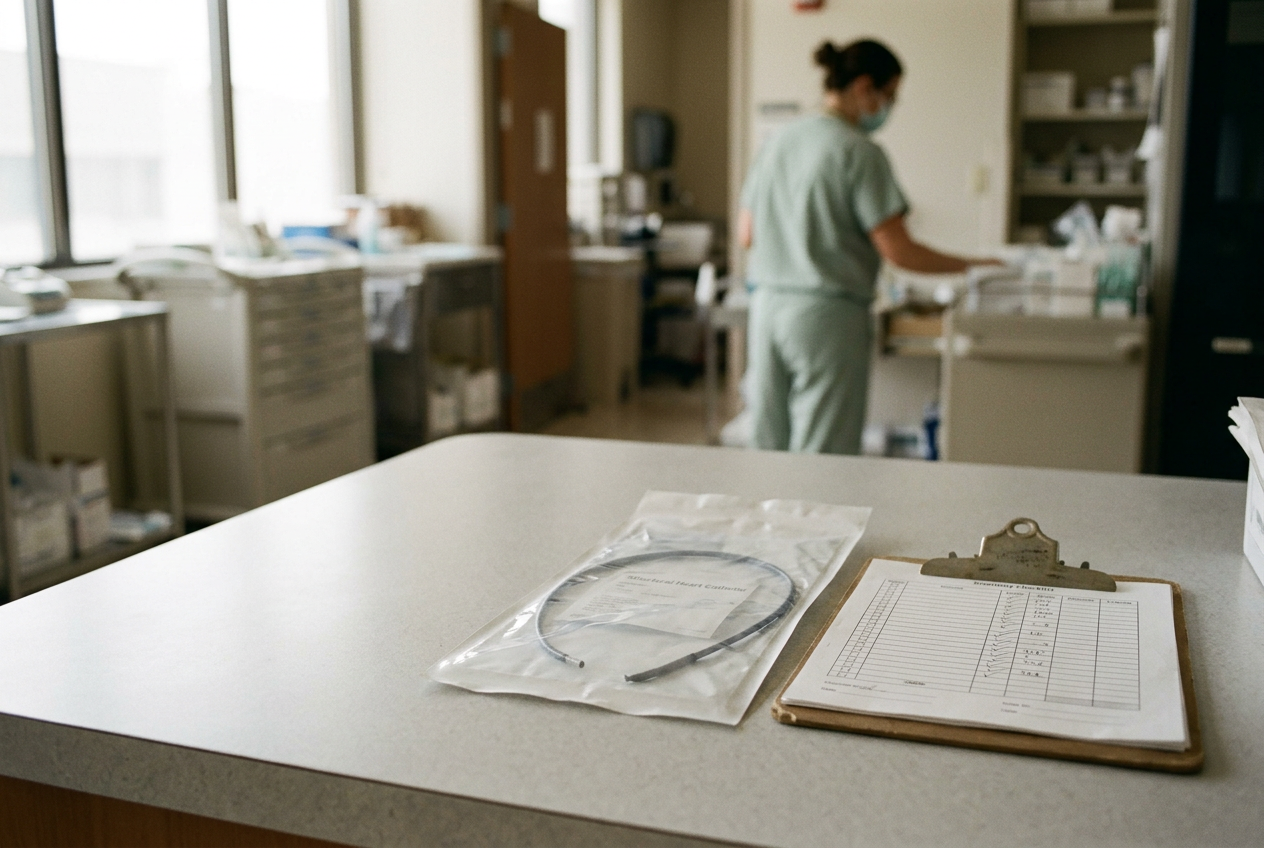
If the introducer’s identifier cannot be confirmed from the outer packaging, the kit should not be assumed to be either affected or unaffected. The appropriate escalation route is the institution’s supply-chain, sterile-processing or device-safety process, using the contact information in the FDA notice or manufacturer letter. Opening a sterile kit solely to inspect a component can make the kit unusable and should not substitute for traceability records.
Teams should also search satellite locations. Introducer kits may be held in the catheterization laboratory, operating room, hybrid suite, emergency stock, perfusion or mechanical-support carts, consignment inventory and procedure-specific packs assembled away from the central storeroom. Purchase history can help identify units already distributed internally.
Incorporating the correction into Impella workflows
The bedside implication is procedural rather than diagnostic. The introducer is part of vascular access and device delivery, so uncertainty about an affected component can arise during a time-sensitive intervention. A kit-level check before room setup is less disruptive than discovering the issue after the sterile field has been established or access obtained.
Institutions can incorporate the correction into existing recall controls rather than creating a separate clinical pathway. Supply-chain staff can flag affected identifiers in inventory systems; procedural areas can separate affected or unresolved stock; and the preprocedure team can confirm that the introducer’s status has been checked. A documented substitute plan may reduce delay if a kit is removed from use.
The manufacturer’s instructions should determine whether an affected device is returned, inspected, relabeled or otherwise corrected. Staff should not improvise a repair or rely on visual inspection unless that is part of the authorized action. An introducer that appears normal may still fall within the recall, while a product outside the listed identifiers is not included merely because it has the same general design or intended use.
For a patient already receiving Impella support, the classification alone does not establish that pump removal or an additional invasive procedure is warranted. The introducer’s role in the completed procedure, whether any recalled component remains in use, the patient’s clinical status and the manufacturer’s instructions all matter. Any suspected device malfunction or associated adverse event should be managed clinically and reported through institutional channels and the FDA’s MedWatch program as appropriate.
Recall documentation should connect the affected component to the procedure record when feasible. Useful records include the kit and introducer identifiers, the correction performed, whether the product was used, and any observed malfunction or patient consequence. This supports follow-up, adverse-event evaluation and verification that all affected stock has been addressed.
What the notice cannot establish
This is a regulatory safety action, not a comparative clinical study. There is no randomized population, comparator, effect estimate, confidence interval or defined follow-up period from which to calculate the probability of harm in an individual Impella procedure. The Class I classification communicates the seriousness of a plausible outcome under the FDA standard; it does not quantify incidence.
The public notice may also be updated as firms complete reconciliation or provide additional instructions. Local decisions should therefore use the current FDA page and current manufacturer communication rather than a downloaded list that may have become outdated.
Generalizability is limited to the identifiers included in the recall. The notice should not be read as evidence that unaffected Oscor introducers, all Abiomed kits or the Impella pump platform as a whole carry the same recalled defect. It also does not replace clinical assessment when a vascular-access complication or device malfunction is suspected.
Questions clinicians ask
Does Class I mean every Impella procedure must stop?
No. Class I describes the potential seriousness of harm from affected products; it does not automatically suspend use of every Impella system. Teams should determine whether the planned kit contains an identifier listed by the FDA and then apply the manufacturer’s specified correction or disposition.
How should we check a sealed kit without opening it?
Start with the outer kit label, purchase and consignment records, unique device identifier data, and any component-level traceability supplied by the manufacturer. If those sources do not establish status, escalate through device-safety or supply-chain staff rather than opening sterile inventory merely to inspect the introducer.
What if the introducer was already used?
Review the correction notice, procedure record and patient’s clinical course to determine whether follow-up or reporting is indicated. Recall classification alone does not justify an additional invasive procedure, but a suspected malfunction or related adverse event warrants clinical evaluation and reporting through established institutional and FDA channels.
Should unaffected kits be quarantined as a precaution?
The evidence supports controlling products that match the listed identifiers and resolving stock whose status cannot be verified. Broadly quarantining all Impella kits may impede urgent mechanical circulatory support without reflecting the recall’s defined scope; institutions should keep documentation showing how each determination was made.
References
- Catheter Introducer Correction: Abiomed and Oscor Issue Correction for Catheter Introducer — US Food and Drug Administration, 2026
- What Is a Medical Device Recall? — US Food and Drug Administration, n.d.
One story a day
The story of the day, in your inbox
One health journey each morning — no advice, no alarm, just company for the road.