Par Health Recalls Two Lots of Premixed Dexmedetomidine After Particulate Matter Is Found
Par Health recalled two lots of premixed dexmedetomidine after cellulose or stopper material was found. Critical care and procedural teams should quarantine affected inventory before use.
 Written and medically reviewed byDr. Abu BakarContributing writer · PharmD, PhD (Pharmacology)
October 21, 2026 · 6 min read
Why the recall changes bedside workflow
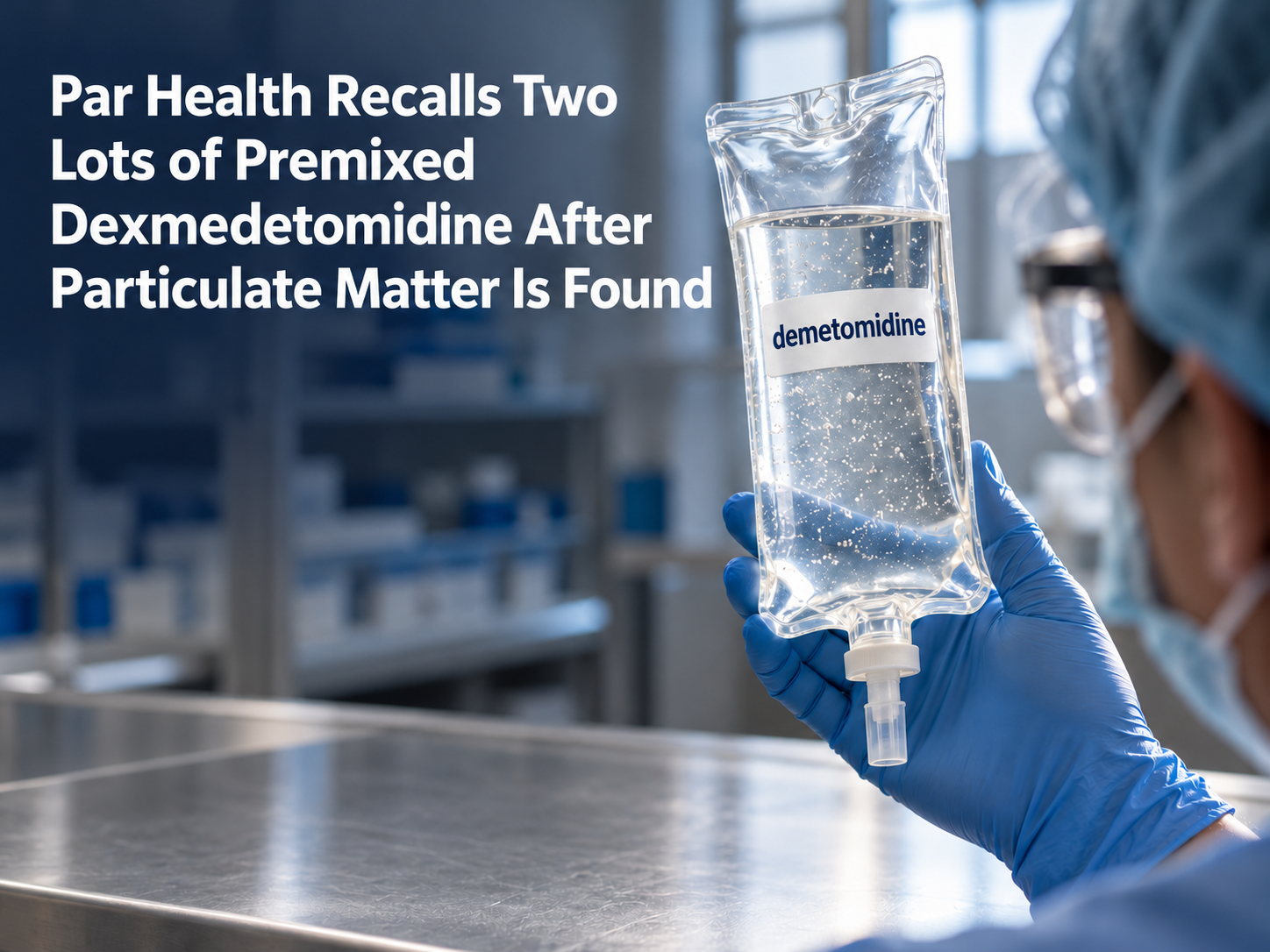
Par Health’s nationwide recall affects two lots of dexmedetomidine hydrochloride in 0.9% sodium chloride injection, a premixed intravenous product used in critical care and procedural sedation. The FDA-posted announcement says particulate matter from cellulose or stopper material was identified in the recalled product.
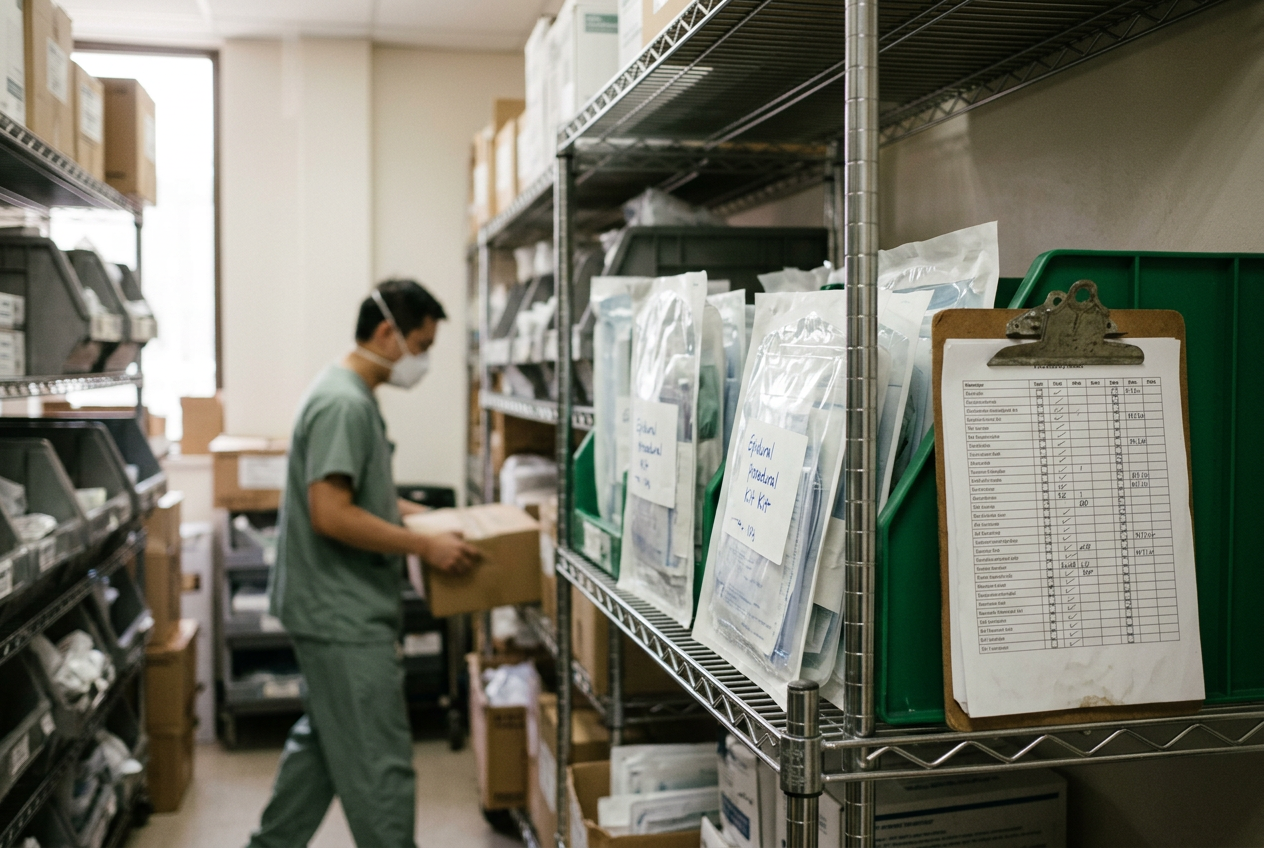
The immediate issue is not whether a bag appears usable at the bedside. It is whether its lot number matches either recalled lot. Pharmacy, anesthesia, procedural and intensive care inventories may be distributed across automated dispensing cabinets, medication rooms, emergency carts, operating and procedure suites, satellite pharmacies, transport kits and patient-specific supplies. A check limited to the central pharmacy could therefore miss stock positioned closer to administration.
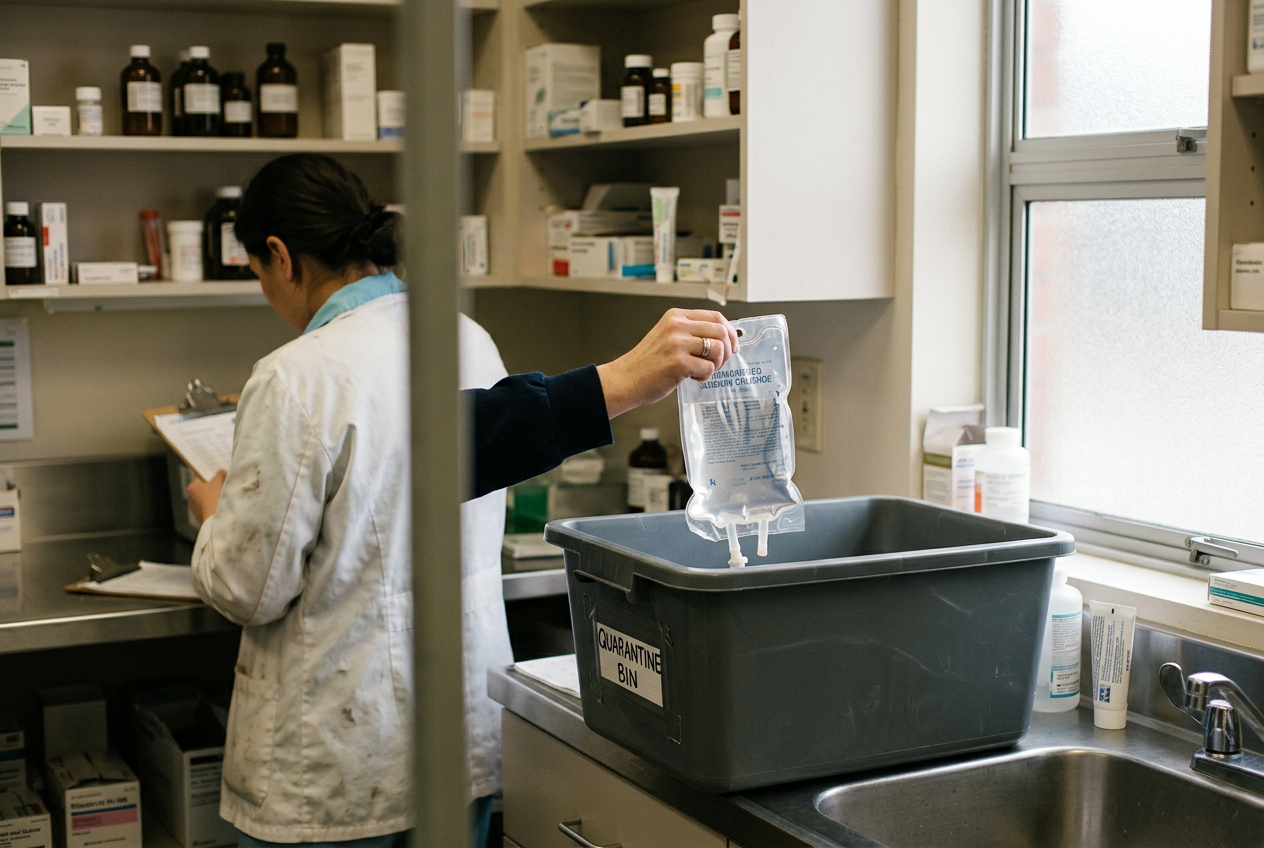
Affected bags should be removed from available inventory and placed in quarantine under the organization’s recall procedure. The lot and other package identifiers should be compared directly with the FDA notice and the product label; nonmatching stock should not be assumed affected solely because it has the same generic name or manufacturer. Sites should follow the recall notice’s return and replacement directions for confirmed units.
What the FDA notice establishes
This is a regulatory recall, not a clinical trial or comparative safety study. The evidence consists of product findings that prompted Par Health to remove two lots from the US market. According to the FDA-posted announcement, cellulose material was associated with one recalled lot and stopper material with the other.
Particulate matter in an intravenous drug creates a direct administration hazard because material can enter the circulation with the infusion. The FDA cited potential consequences including pulmonary emboli, vascular occlusion and phlebitis. The notice did not provide an incidence estimate for these outcomes, and the presence of a recalled bag does not establish that a patient has experienced an embolic or vascular event.
The announcement reported no adverse events associated with the recall as of its release. That is reassuring only in a limited sense. Passive reports can lag recognition, and the absence of reports at the time of an announcement does not show that exposure is harmless or remove the need to isolate recalled inventory.
The recall is lot-specific rather than a withdrawal of dexmedetomidine as a drug. It does not, by itself, change the approved role, dosing or monitoring requirements of unaffected dexmedetomidine products. Facilities should distinguish the product-quality action from broader decisions about whether dexmedetomidine is appropriate for an individual patient.
Translating the notice into an inventory response
A coordinated response should begin with the recall lead—typically pharmacy or medication safety—but extend to every location that can hold premixed infusions. Purchasing and wholesaler records can help identify whether the facility received the affected lots, while physical inspection is needed to determine whether units remain on-site or have moved into decentralized storage.
A practical sequence is to stop distribution of matching stock, quarantine confirmed units and document the quantity and locations recovered. Electronic inventory status should be updated so recalled bags cannot be selected, replenished or transferred back into clinical circulation. Where local systems permit, lot-level blocks are preferable to broad product suppression because they preserve access to unaffected inventory while preventing use of the recalled units.
Teams should also reconcile recalled stock against dispensing, transfer and administration records. This may identify bags already sent to intensive care units, procedural suites or another facility. The purpose is traceability: establishing where the recalled product went, whether it remains available for use and whether any documented administration warrants clinical review.
Visual inspection can support routine product checks, but it should not replace lot verification. A bag that looks clear is not exempt if its identifier matches the recall, and a suspicious bag should be withheld and reported even if its lot is not listed. Staff should avoid manipulating a suspect container in an attempt to characterize the material.
If a recalled product may already have been administered, the response should be based on the patient’s condition, exposure documentation and the institution’s medication-safety process. The FDA notice identifies possible harms but does not prescribe a universal testing or surveillance protocol for every exposed patient. New cardiopulmonary, vascular or infusion-site findings require clinical assessment rather than an assumption that the recall caused them.
Suspected adverse events and product-quality problems can be reported through FDA MedWatch. Reports are most useful when they include the manufacturer, product name, lot number, administration timing, observed problem and relevant clinical outcome. Facilities should also preserve the container and packaging when feasible under local policy because those materials may assist investigation.
What remains uncertain
The recall notice does not quantify how many contaminated units reached patients, the concentration or size distribution of the particles, or the probability of pulmonary embolism, vascular occlusion or phlebitis after exposure. It also does not compare the recalled product with another formulation or estimate relative risk.
These limitations matter. A recall is a preventive product-quality action, and its hazard language describes plausible serious outcomes rather than measured event rates. The evidence supports rapid identification and quarantine of implicated lots, but it cannot determine an individual patient’s risk solely from the notice.
Generalizability is also narrow. The action applies to the specified Par Health lots and should not be extended automatically to other manufacturers, concentrations, container sizes or lots. Conversely, any visible particulate or container defect in a nonrecalled infusion still warrants isolation and review through routine product-quality procedures.
Questions clinicians ask
Where should teams look for recalled dexmedetomidine?
Check central and satellite pharmacies, automated dispensing cabinets, intensive care medication rooms, operating and procedure suites, emergency supplies, transport kits and patient-specific bins. Purchasing records can identify receipt of affected lots, but physical reconciliation is needed because premixed bags may have moved after delivery.
Is a visual inspection enough to clear a bag for use?
No. The recall is defined by product and lot identifiers, so a matching bag should be quarantined even if no particle is visible. Visual inspection remains important for all intravenous products, but it cannot substitute for comparing the package information with the identifiers in the FDA notice.
What if an affected bag may already have been administered?
Document the product, lot, timing and available exposure details, then assess the patient according to clinical findings and local medication-safety procedures. The FDA cited pulmonary emboli, vascular occlusion and phlebitis as potential risks, but the notice does not establish a standard testing protocol or prove causation in an individual case.
Should all dexmedetomidine stock be removed?
The FDA-posted action concerns two specified Par Health lots, not every dexmedetomidine product. Quarantine matching units and any product with a suspected quality defect, while managing unaffected inventory according to normal pharmacy controls and the approved labeling.
References
1. Par Health Issues Voluntary Nationwide Recall of Two Lots of Dexmedetomidine HCl in 0.9% Sodium Chloride Injection — U.S. Food and Drug Administration, 2026 2. Drug Recalls — U.S. Food and Drug Administration, n.d. 3. MedWatch: The FDA Safety Information and Adverse Event Reporting Program — U.S. Food and Drug Administration, n.d.
One story a day
The story of the day, in your inbox
One health journey each morning — no advice, no alarm, just company for the road.