Preventing Recurrent Ischemic Stroke With Heart-Brain Clinic
Recurrent ischemic stroke is one of the most devastating yet preventable medical problem.
 Written and medically reviewed byDr. Abu BakarContributing writer · PharmD, PhD (Pharmacology)
June 28, 2026 · 6 min read
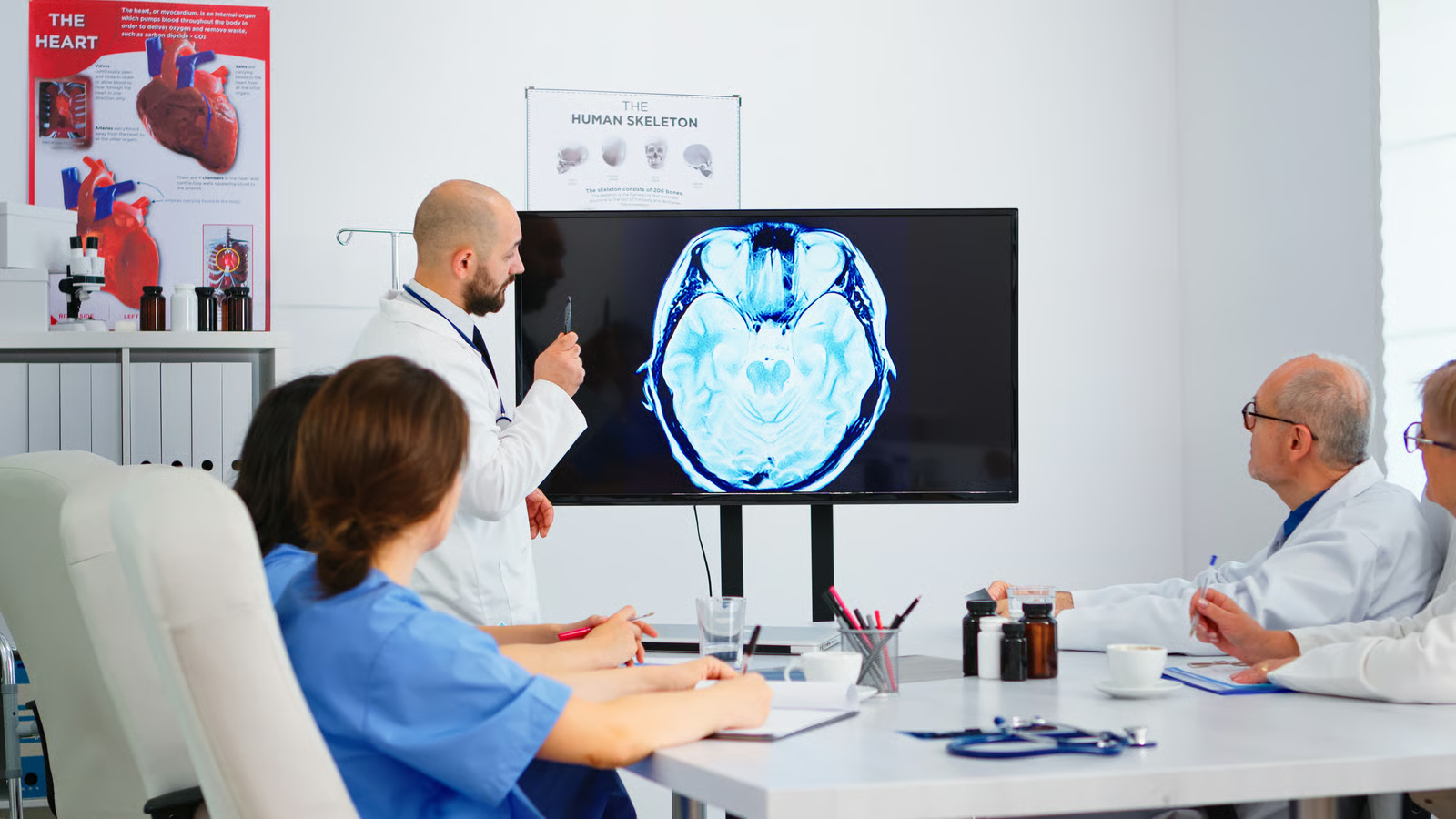
Recurrent ischemic stroke is one of the most devastating yet preventable medical problem. After suffering from stroke or TIA, the most important thing that should be done is to find its cause. Joint heart–brain clinics provide an opportunity for neurologists and cardiologists to meet at the same time and achieve this goal. In such multidisciplinary clinics, neurologists and cardiologists discuss imaging of blood vessels in the brain, heart rhythm and other risk factors simultaneously, which allows them to immediately understand the possible cause of the problem.
Why It Matters
Preventing a second stroke requires understanding what caused the initial one. Experts claim that about 80 percent of strokes are preventable through management of various risk factors including hypertension, hypercholesterolemia, diabetes, smoking, and physical inactivity. However, once a stroke takes place, prevention relies upon identification of its exact cause. There are many causes of strokes, one is related to blocked arteries in the brain (atherosclerosis), another one to blood clot formation in the heart (cardioembolism), while there may be more than one reason behind a particular stroke. For instance, if a patient goes on aspirin therapy at home due to diagnosed arteries’ disorder, while the true reason is undetected silent heart arrhythmia, he/she will remain highly susceptible to having another stroke. Inability to identify the underlying condition may lead to inability to choose the right strategy of prevention such as anticoagulants to treat the heart arrhythmia, angioplasty or even surgery for blocked arteries, or patching the hole in the heart.
It is not unusual that many strokes are initially classified as “cryptogenic” despite various tests conducted. The reason is that their cause remains unknown; however, about 25% of all ischemic strokes are cryptogenic, mostly in young patients without any identifiable risk factors. Heart-brain clinics focus on identifying the causes of such cases. During one appointment, specialists can conduct a prolonged heart rhythm monitoring (using 30-day monitor or an implantable loop recorder) together with brain and vessel imaging. Such an approach will reveal the cause in most cases; for instance, the cause could be silent atrial fibrillation or a patent foramen ovale. Both problems cannot be diagnosed using standard diagnostic methods, but their identification enables patients to receive proper treatment earlier, rather than undergoing the trial-and-error approach and receiving the same treatment (for example, aspirin) that does not address the problem and puts them at the risk of another stroke.
Who It Affects
Patients who have had a stroke or TIA benefit the most. Many survivors face multiple possible causes, so without coordinated care they might receive incomplete or even contradictory treatment. A dedicated heart-brain visit means one clear plan. In one combined appointment, a patient avoids separate cardiology and neurology visits; instead both specialists evaluate the case together. Hidden problems like silent atrial fibrillation or a small heart defect (PFO) often come to light, and the right therapy (such as a blood thinner or closure device) can be started immediately. Patients appreciate the convenience and clarity: one visit replaces what used to require two appointments, which also saves time for family members and caregivers.
Clinicians also benefit from this team approach. Neurologists are trained to spot stroke patterns and interpret brain imaging, while cardiologists specialize in heart rhythms and echocardiography. Seeing cases together lets them pool expertise and learn from each other. For example, a cardiologist might suggest a long-term heart monitor when the neurologist describes an “embolic” stroke on MRI, and the neurologist can then order any needed tests at once. Decisions that used to involve lengthy consult notes or phone calls now happen face-to-face. This saves time, cuts redundancy, and reduces confusion. Doctors report they can give clear, unified advice in minutes instead of many days.
Health systems and payers have a big stake, too. Strokes — especially repeat strokes — are very costly, with hospital stays, rehabilitation, and long-term disability care adding up. Even a small reduction in recurrence can save millions in healthcare costs. However, building heart-brain clinics requires new resources and workflow changes. Hospitals must coordinate two specialists’ schedules and create special billing arrangements for a joint visit. Some centers use bundled payment programs or stroke quality initiatives to support the model. In smaller or rural hospitals where stroke neurologists and cardiologists are not both available on site, telemedicine or networked care can help, but certain imaging tests and procedures still require an in-person visit to a stroke center.
What Changes
- Faster, more accurate diagnosis: When neurologists and cardiologists evaluate a patient together, they can agree on the stroke’s likely cause much sooner. Patients need fewer visits before a treatment decision. For example, one heart-brain program reported that patients completed their evaluation faster with no waiting weeks to see another specialist. This rapid teamwork means key tests (like prolonged heart monitors or urgent echocardiograms) are ordered immediately, avoiding delays that could leave a cause undetected.
- Streamlined testing and monitoring: A combined clinic ensures patients get the right tests without duplication. The team can quickly decide to schedule a 30-day heart monitor, an implantable loop recorder, carotid ultrasound, or advanced brain imaging as needed. For example, a patient with an unknown stroke cause might have a 24-hour ECG and a cardiac ultrasound arranged on the spot. This targeted approach means no unnecessary scans or repeated referrals — each test is done in context, saving time and money.
- Personalized treatment plans: The unified team can quickly choose among medications, procedures, or devices based on the patient’s findings. They decide on anticoagulants versus aspirin, or a procedure like carotid stenting or PFO closure, all in one visit. For instance, if atrial fibrillation is found, the team can start blood thinners or even consider a closure device. Similarly, if significant carotid artery narrowing is detected, the team can immediately plan for a stent or surgery. At Mayo Clinic, providers emphasize selecting only the right patients for intervention — as one cardiologist explained, they avoid closing PFOs unless there is a clear benefit. This shared decision-making balances stroke risk against bleeding or procedural risk, giving each patient a plan tailored to their situation.
- Clear communication and engagement: Patients and families hear one unified message. With both specialists talking together, everyone better understands why certain tests or treatments are needed. This reduces confusion and often improves adherence to the prevention plan. Patients leave with a single roadmap rather than conflicting instructions, which improves their follow-through and outcomes.
- System-level trade-offs: Heart–brain clinics can improve outcomes but require careful coordination. Hospitals may need to align two specialists’ schedules and create special billing arrangements under standard payment models. Some centers use bundled payments or stroke-care grants to support the clinic. Access can be a challenge in smaller or rural hospitals, so telemedicine networks are often used to extend the service. In short, these clinics demand detailed planning and institutional support to run. The hope is that by preventing even a few recurrent strokes, they will save on long-term costs and spare patients from severe disability.
References
- Kleindorfer DO, Towfighi A, Chaturvedi S, et al. 2021 Guideline for the Prevention of Stroke in Patients With Stroke and Transient Ischemic Attack: A Guideline From the American Heart Association/American Stroke Association. Stroke. 2021. Direct URL: https://www.ahajournals.org/doi/pdf/10.1161/STR.0000000000000375 [\[ahajournals.org\]](https://www.ahajournals.org/doi/pdf/10.1161/STR.0000000000000375)
- Ibeh C, Elkind MSV. Stroke Prevention After Cryptogenic Stroke. Current Cardiology Reports. 2021. Direct URL: https://pubmed.ncbi.nlm.nih.gov/34657187/ [\[pubmed.ncb…lm.nih.gov\]](https://pubmed.ncbi.nlm.nih.gov/34657187/)
- Dahal K, Chapagain B, Maharjan R, Farah HH, Nazeer A, Lootens RJ, et al. Prolonged Cardiac Monitoring to Detect Atrial Fibrillation after Cryptogenic Stroke or Transient Ischemic Attack: A Meta-Analysis of Randomized Controlled Trials. Annals of Noninvasive Electrocardiology. 2016. Direct URL: https://pmc.ncbi.nlm.nih.gov/articles/PMC6931778/ [\[pmc.ncbi.nlm.nih.gov\]](https://pmc.ncbi.nlm.nih.gov/articles/PMC6931778/)
- Mayo Clinic. Preventing recurrent ischemic stroke. Mayo Clinic. 2022. Direct URL: https://www.mayoclinic.org/medical-professionals/neurology-neurosurgery/news/preventing-recurrent-ischemic-stroke0/mac-20537808 [\[mayoclinic.org\]](https://www.mayoclinic.org/medical-professionals/neurology-neurosurgery/news/preventing-recurrent-ischemic-stroke0/mac-20537808)
One story a day
The story of the day, in your inbox
One health journey each morning — no advice, no alarm, just company for the road.