Sirolimus Conversion Improves Survival After Heart Transplant
Sirolimus conversion is an increasingly considered strategy for heart transplant recipients because it can change their long-term health risks….
 Written and medically reviewed byDr. Abu BakarContributing writer · PharmD, PhD (Pharmacology)
August 8, 2026 · 6 min read
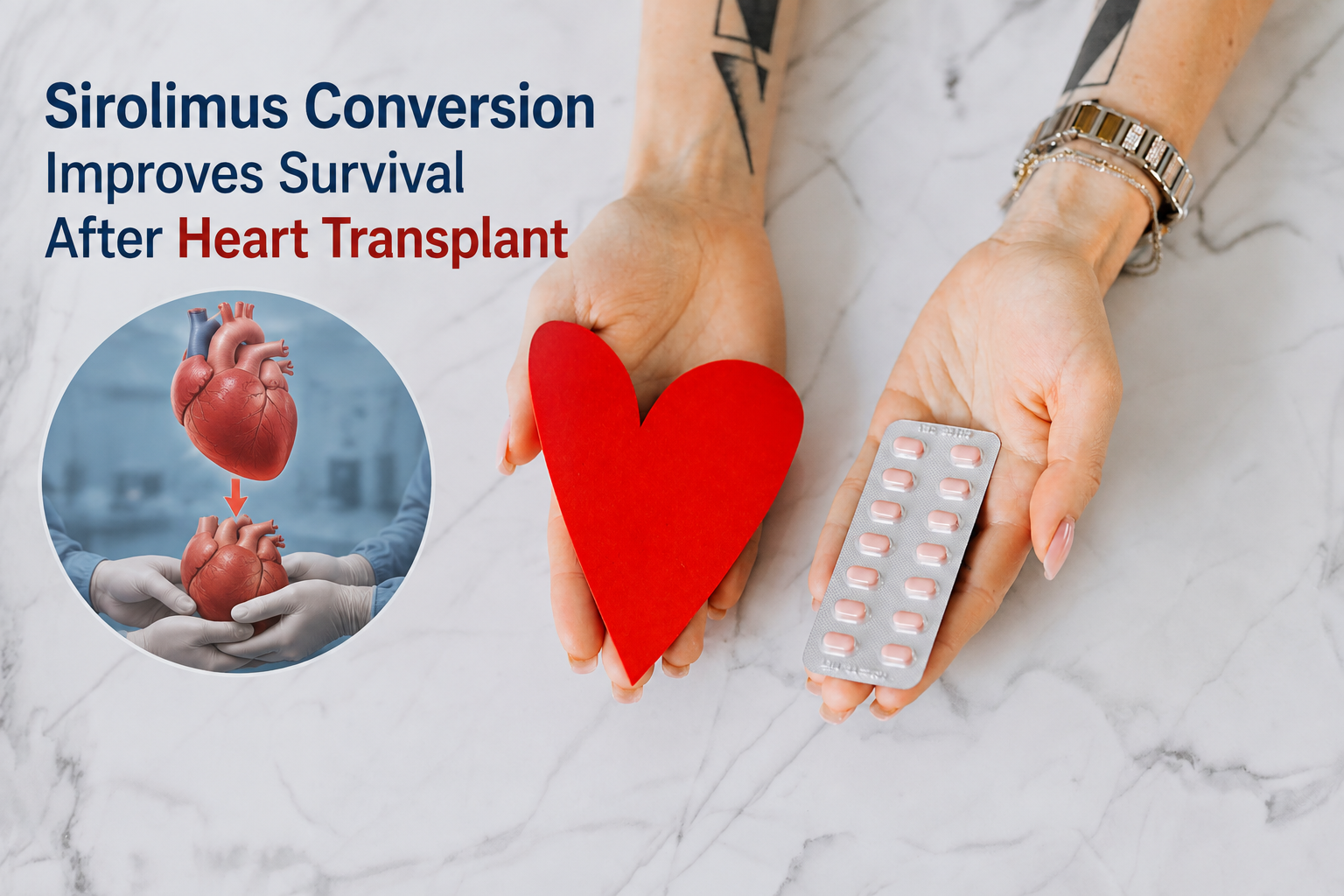
Sirolimus conversion is an increasingly considered strategy for heart transplant recipients because it can change their long-term health risks. In this approach, doctors switch a patient’s standard calcineurin inhibitor (like tacrolimus or cyclosporine) to sirolimus (an mTOR inhibitor) at the right time. Studies show that when done for the right patient, this swap can slow the progression of transplant heart vessel disease and even improve long-term survival. The key is choosing the timing and patient carefully, so the benefits outweigh the risks.
Why It Matters
Cardiac allograft vasculopathy and post-transplant cancer are two leading causes of late illness and death after heart transplantation. Cardiac allograft vasculopathy is an aggressive form of coronary artery disease that develops in the transplanted heart and limits how long the graft lasts. The standard drugs to prevent rejection – tacrolimus or cyclosporine – work very well early on but can contribute to kidney damage and speed up vascular disease over time. Clinical evidence now shows that patients who switch to sirolimus often have slower blood-vessel narrowing in the graft and fewer cancers (especially non-skin cancers) compared to staying on calcineurin inhibitors. These effects together appear to lead to better long-term survival for many heart transplant patients.
Early versus late switch: Doctors have found that timing makes a difference. Converting to sirolimus about a year or so after transplant tends to give the most benefit for the heart vessels and for survival. In one study of 317 heart transplant patients who switched, those changed more than a year out had much lower rejection rates than those switched before six months. In fact, older patients and those who waited longer to switch had the fewest problems with rejection. At the same time, the data show that even if a patient does have a mild rejection episode after switching, it did not seem to lead to worse graft vessel disease later on. In summary, early conversion (once wounds are healed) appears to slow vessel disease and improve survival, but the decision must be individualized for each patient.
How sirolimus works: Beyond the headlines about survival, the reason sirolimus is so powerful is that it acts on cell growth pathways. Unlike calcineurin inhibitors, sirolimus blocks a signal that tells cells to divide. For a transplanted heart, this translates into fewer scars and narrowing of microvasculature over time. Sirolimus appears to inhibit cancer cell proliferation as well. According to a meta-analysis of clinical trials involving heart transplantation patients, treatment using mTOR inhibitors (sirolimus and alike) resulted in significant reduction of plaques in the coronary arteries of transplanted hearts and decrease of the incidence of viral infections such as CMV in comparison to standard treatment. Moreover, these regimens provided preservation of renal functions since they do not expose a patient to calcineurin toxicity. Conversely, according to the same meta-analysis, the use of sirolimus-based regimen increased the occurrence of mild rejection episodes and adverse reactions (such as mouth ulcers or diarrhea) to the drug, as well as the discontinuation of the medication due to these side effects.
Who It Affects
Patients. Sirolimus conversion is most relevant for three overlapping groups of heart transplant recipients. First are patients who start to show early signs of cardiac allograft vasculopathy on routine follow-up (for example, changes seen on angiograms or imaging). Second are those whose kidney function is gradually worsening on calcineurin inhibitors. Third are patients who develop a serious cancer after transplant or are known to be at high risk for one. Younger patients – who may live many more decades with the graft – can gain the most years of graft health if the process of vessel disease is slowed early. Similarly, patients who have post-transplant cancers (other than easy skin cancers) often benefit from sirolimus’s antiproliferative properties, which can reduce cancer recurrence rates.
Clinicians. In practice, switching to sirolimus requires close teamwork. Transplant cardiologists must decide the right candidate and timing based on the individual’s recovery, kidney health, and cancer risk. Transplant surgeons and wound care teams need to ensure that surgical incisions and wounds have fully healed before conversion, since sirolimus can slow wound healing and increase infection risk early on. Pharmacists and clinic nurses play a vital role after the switch: they must monitor blood levels of sirolimus (which has a narrow therapeutic range), check lipid profiles (since sirolimus can raise cholesterol), test urine for protein (it can cause proteinuria), and watch for signs of mouth ulcers, low blood counts, or lung issues. All of these require more frequent lab tests and follow-up visits, especially in the first few months after switching.
Health systems and payers. Sirolimus conversion also has system-level implications. Transplant centers need clear protocols – deciding which patients qualify for conversion, when to switch, and how to coordinate among teams. Because the switch increases short-term monitoring (extra labs, clinic visits) and may add treatments (cholesterol drugs or blood pressure meds), programs should plan for these costs. Insurers and hospital quality teams should note that the “return on investment” is delayed: any reduction in graft failure or cancer-related hospitalizations may occur years later. Centers with multidisciplinary teams (cardiology, surgery, oncology, nephrology, pharmacy) are best able to manage these trade-offs. In the end, systems that adopt conversion protocols and track long-term outcomes (rather than only short-term metrics) may see lower rates of late graft vasculopathy and cancer.
What Changes
- Consider conversion when a transplant patient shows early cardiac allograft vasculopathy on screening studies, has worsening kidney function suspected to be from calcineurin drugs, or develops a post-transplant malignancy (other than easy skin cancers). These are the situations where sirolimus is most likely to help.
- Delay conversion until surgical wounds have healed and active infections are under control. In the first weeks after surgery, maintaining calcineurin inhibitor therapy is usually safer because sirolimus can impair healing. Doctors often wait until incisions are stable – typically several months after transplant – before making the switch.
- After conversion, intensify monitoring. Expect to check sirolimus blood levels regularly (to keep it in a safe range). Re-test kidney function, liver enzymes, and lipid panels often (sirolimus can raise triglycerides and cholesterol). Check urine for protein. The clinic team should ask about and watch for mouth ulcers or acne, swelling or edema, low white cells or platelets in blood tests, and any new cough or breathing issues.
- Manage side effects proactively. If cholesterol climbs, start or intensify statins. in case there is protein found in urine, use ACE inhibitors or ARBs. Apply topical gels or reduce doses for mouth ulcers. Watch out for pneumonitis, a rare inflammation of the lungs that occurs due to mTOR inhibitors.
- Discuss trade-offs with patients. The patient needs to be aware of both the advantages and disadvantages of treatment in the long run and short term. There are several advantages to switching over to sirolimus as a long-term treatment in terms of graft vessel diseases and cancer risk, but there are some disadvantages as well.
Final verdict: Sirolimus conversion is definitely not a panacea; however, it remains a very effective therapy if applied thoughtfully. For a chosen category of heart transplantation patients – for instance, for younger ones showing signs of developing vascular pathology or patients with oncological issues – conversion to sirolimus from an early date may be beneficial. Conversion has to take place under appropriate circumstances in a transplant center that has the ability to closely monitor the patient. It is imperative to educate patients regarding side effects (such as poor wound healing, hypercholesterolemia, edema, proteinuria, stomatitis) and the need for more thorough laboratory
monitoring.
References
- Raichlin E, Bae J-H, Khalpey Z, Edwards BS, Kremers WK, Clavell AL, et al. Conversion to sirolimus as primary immunosuppression attenuates the progression of allograft vasculopathy after cardiac transplantation. Circulation. 2007. View source
- Matsuo Y, Cassar A, Yoshino S, Flammer AJ, Li J, Gulati R, et al. Attenuation of cardiac allograft vasculopathy by sirolimus: Relationship to time interval following heart transplantation. The Journal of Heart and Lung Transplantation. 2013. View source
- Jennings DL, Lange N, Shullo M, Latif F, Restaino S, Topkara VK, et al. Outcomes associated with mammalian target of rapamycin (mTOR) inhibitors in heart transplant recipients: A meta-analysis. International Journal of Cardiology. 2018. View source
- Asleh R, Clavell AL, Pereira NL, Smith B, Briasoulis A, Alnsasra H, et al. Incidence of malignancies in patients treated with sirolimus following heart transplantation. Journal of the American College of Cardiology. 2019. https://pubmed.ncbi.nlm.nih.gov/31146812/
One story a day
The story of the day, in your inbox
One health journey each morning — no advice, no alarm, just company for the road.