Parental Stress Is a Public Health Issue: Why It Matters
Parental stress is more than a private struggle.It’s now a broad public concern. In 2024, the U.S.
 Written and medically reviewed byDr. Abu BakarContributing writer · PharmD, PhD (Pharmacology)
August 1, 2026 · 8 min read
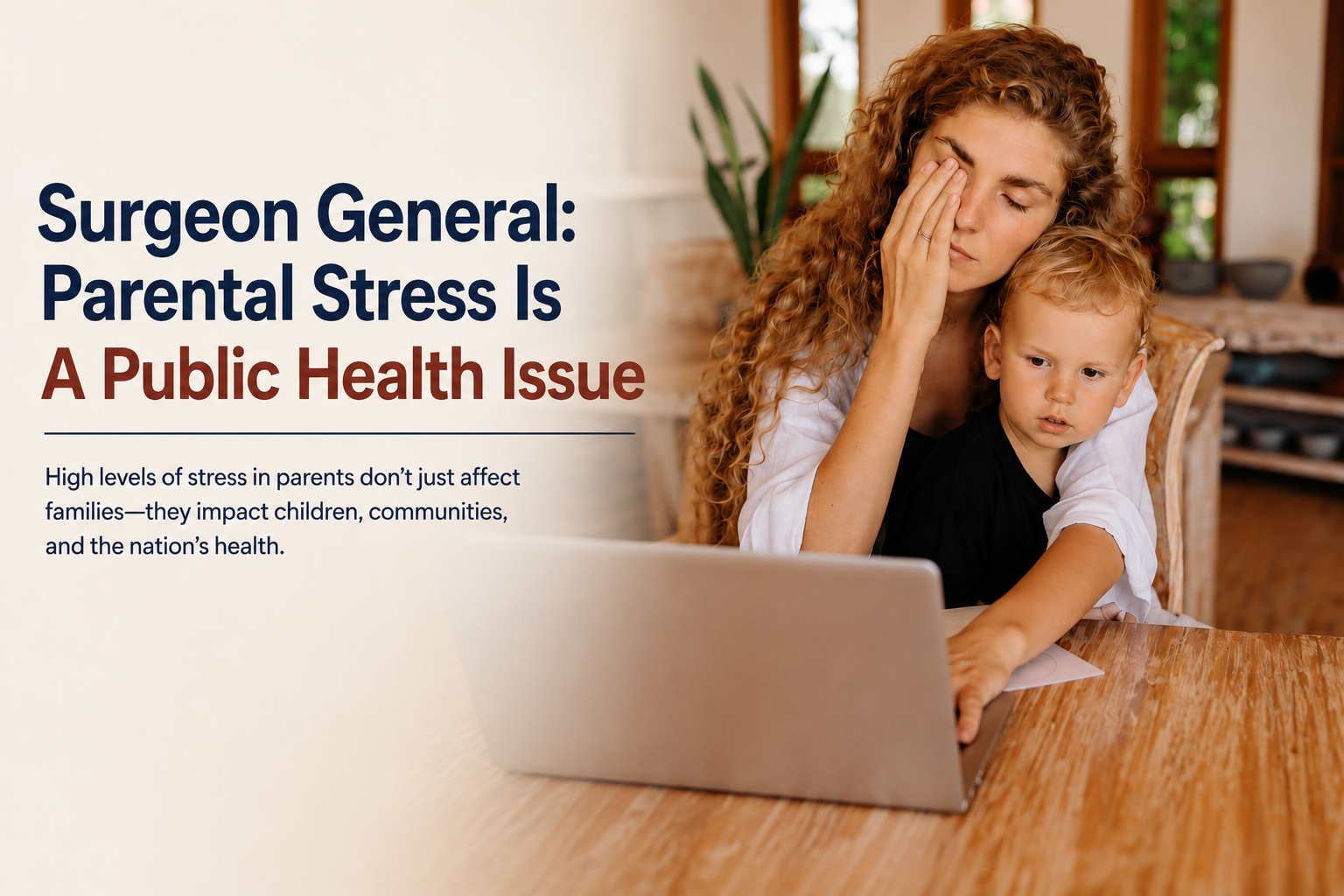
Parental stress is more than a private struggle.It’s now a broad public concern. In 2024, the U.S. Surgeon General officially declared parental stress a public health issue.This change in the language signifies that the challenges faced by parents on a daily basis, ranging from sleepless nights with a baby to balancing employment, parenthood and finances, are seen as concerns for the whole community. It is estimated that about 50% of parents feel extremely stressed, while 41% find it difficult to make it through their days. We discuss the significance of this shift below.
Why It Matters
Stress during the parenting years can reshape how a family works and how children grow up. When parents live under chronic stress, it takes a toll on their bodies and minds. They may sleep poorly, feel anxious or irritable and find it hard to keep a steady routine. Over time, constant stress can raise blood pressure, weaken the immune system and increase the risk of depression or heart problems. All of this makes day to day parenting harder.
Those effects rippleout to the kids. The emotional climate at home strongly influences a child’s well-being. When parents are tense or overwhelmed, children often respond with their own struggles. For example, a toddler may start acting out or become clingy, while an older child might fall behind in language or social skills. Clinicians and teachers notice these patterns: children from highly stressed homes tend to have more behavioral or anxiety issues, and sometimes even worse physical health. A stressed parent might miss signs of problems or skip check-ups, letting small issues grow bigger.
Calling parental stress a public health issue shifts how we think about the problem. Instead of focusing on what parents might be doing “wrong,” it points to social and economic causes. Things like unpredictable work hours, lack of affordable childcare and unstable housing are major stress drivers. When the Surgeon General talks about this as a population health problem, it opens the door to big picture solutions for example, adding routine stress screening at clinic visits, funding community support programs, changing workplace policies or updating insurance to cover family support services.
There’s a practical cost too. Stressed families use more health care. A parent who never gets a break is more likely to develop chronic conditions like diabetes or depression that need ongoing treatment. At the same time, their child might have more emergency visits or need extra services like counseling. In other words, health systems and insurers that ignore parental stress may end up with higher bills over time.The costs and complications that could have been reduced if stress had been addressed early.
Finally, this issue highlights serious gaps. Parental stress isn’t felt equally. Families with low income, inflexible jobs, or few social supports tend to feel far more strain. Immigrant families or parents caring for kids with disabilities often face extra hurdles. Many parents of color report added stress from discrimination or unsafe neighborhoods. By treating parental stress as a public issue, we focus attention on these disparities and encourage targeted support (not one-size-fits-all) for the families who need it most.
Who It Affects
Parents and families: New moms and dads (especially in the first year after a baby), single parents juggling work and childcare, and parents of children with chronic illnesses or special needs are at high risk. When these parents struggle, older children often take on extra caregiving roles and relatives may help out under pressure.
Children: Kids of all ages carry the effects. Babies may notice tension early on, leading to fussiness or sleep troubles. Toddlers and school age children may act out or fall behind in class if home life is tense. Teenagers might see their grades or social lives suffer when a caregiver is under strain. In general, children do best in safe, stable, nurturing environments – so when parental stress rises, children’s emotional well-being and development can be affected.
Healthcare providers: Pediatricians, family doctors, obstetricians, nurses, social workers, and therapists see stressed families every day. For example, a child coming in with stomachaches might really be showing family stress. However, many clinics lack the time or systems to address these issues. A quick office visit may not allow the doctor to uncover how stressed the parents are. Without easy referral options or on-site counselors, providers often have to offer quick advice or brief solutions instead of solving the root problem.
Employers and insurers: Workplaces and payers feel it too. Without family friendly policies like paid leave or flexible hours, companies may lose good employees or see drops in productivity as parents burn out. For insurers and health systems, ignoring family stress can backfire: stressed employees and their children tend to file more claims. Untreated parental depression or anxiety, for example, often leads to more doctor visits or even hospital stays – costs that might have been avoided with early support.
Community and schools: Schools, childcare centers, and community organizations all play a role. Teachers and counselors often see students acting out or falling behind because of home stress. Libraries, faith groups, or neighborhood centers sometimes become safety nets for families in need. If local agencies, schools, and health departments work together to help parents (through parenting classes, family resource centers, or school counselors), families can get help before problems grow too large.
What Changes
- Routine screening in health visits: Clinics can start asking simple questions about parents’ stress during well-baby, pediatric, or postpartum appointments. This allows the identification of families in need of intervention at an early stage. A simple questionnaire in relation to sleep, mood, or anxiety may help in identifying those families that experience stress in their lives.
- Better integration of mental health and social supports: Health clinics can bring more help under one roof. Co-locating counselors, psychologists, or social workers in pediatric and family care clinics makes it easier for families to get help. Expanding nurse home-visiting programs (where a nurse regularly checks in on new parents at home) and building clear referral networks ensure families can quickly get the right support. The goal is that if a parent struggles, the clinic immediately connects them to the right help.
- Policy shifts to reduce stressors: Governments and businesses can adopt policies that ease common pressures. Examples include ensuring paid family and medical leave, subsidizing childcare, providing affordable housing, and allowing flexible work schedules. These changes remove sources of stress. For instance, if a new parent knows they will get paid leave, they don’t have to worry about losing income or rushing back to work. Over time, such policies can level the playing field so all families have the support they need.
- Investment in community programs: Local programs that meet families’ needs can provide practical relief. This includes support groups, parenting classes, and community health care workers who will assist and provide emotional support to families. The community center may provide a regular group for parents who meet to discuss ideas related to activities or coping with stress. Families will be linked to resources within the community such as food aid, housing support, or employment training.
- Workplace and employer supports: Businesses should tie any screening or referrals to real changes at work. After identifying stressed employees, companies can implement policies like flexible schedules, telecommuting options, or on-site childcare. Training managers to recognize and respect employees’ family needs (for example, letting a parent adjust their hours after a child’s doctor visit) helps too. When employers invest in helping workers balance family life, everyone benefits.
To succeed, these changes must be practical. It’s not enough to just ask parents “Are you stressed?” without offering help. If a clinic screens for stress, it needs a plan – like an on-site social worker, a list of local support agencies, or an easy referral to community resources. Employers should make sure policies allow parents to use these supports (for example, letting someone attend counseling without penalty). Insurers should consider covering help beyond standard medical care, such as family counseling or home visits, so that services are available when families need them.
There are challenges. Expanding support takes time, money, and trained people. Many communities already have shortages of mental health professionals or home visitors. Programs must avoid one-size-fits-all fixes. What helps one family might not fit another.
Looking ahead, innovation offers new options. Digital tools can reach parents anytime – for example, apps that teach stress-management techniques or text-based programs that check in on new parents. Some clinics use group medical visits, where several parents meet together with a provider to learn and support each other. Health systems are also trying new payment models: for example, some now pay for community health workers to make home visits or for “care navigators” who help families find food, housing, and jobs – steps that can prevent problems before they start.
Parental stress used to be treated as a private burden. A public health approach asks a different question such as what if raising children didn’t have to feel like a constant crisis? The path forward won’t be simple or cheap, but by addressing stress at its roots in clinics, communities, workplaces and policies.In this way families can thrive and the next generation can be healthier
References
- U.S. Department of Health and Human Services, Office of the Surgeon General. Parents Under Pressure: The U.S. Surgeon General’s Advisory on the Mental Health and Well-Being of Parents. HHS.gov. 2024. Direct URL: View source
- Garner AS, Yogman M, Committee on Psychosocial Aspects of Child and Family Health, Section on Developmental and Behavioral Pediatrics, Council on Early Childhood. Preventing Childhood Toxic Stress: Partnering With Families and Communities to Promote Relational Health. Pediatrics, American Academy of Pediatrics. 2021. Direct URL: View source
- Centers for Disease Control and Prevention. About Children’s Mental Health. CDC.gov. 2026. Direct URL: View source
- Stracke M, Heinzl M, Müller AD, Gilbert K, Thorup AAE, Paul JL, Christiansen H. Mental Health Is a Family Affair: Systematic Review and Meta-Analysis on the Associations between Mental Health Problems in Parents and Children during the COVID-19 Pandemic. International Journal of Environmental Research and Public Health. 2023. Direct URL: View source
One story a day
The story of the day, in your inbox
One health journey each morning — no advice, no alarm, just company for the road.