Weak Body Clock May Signal Early Dementia Risk
Older adults with weak and variable body rhythms that control wakefulness may be more likely to develop dementia….
 Written and medically reviewed byDr. Abu BakarContributing writer · PharmD, PhD (Pharmacology)
February 20, 2026 · 9 min read
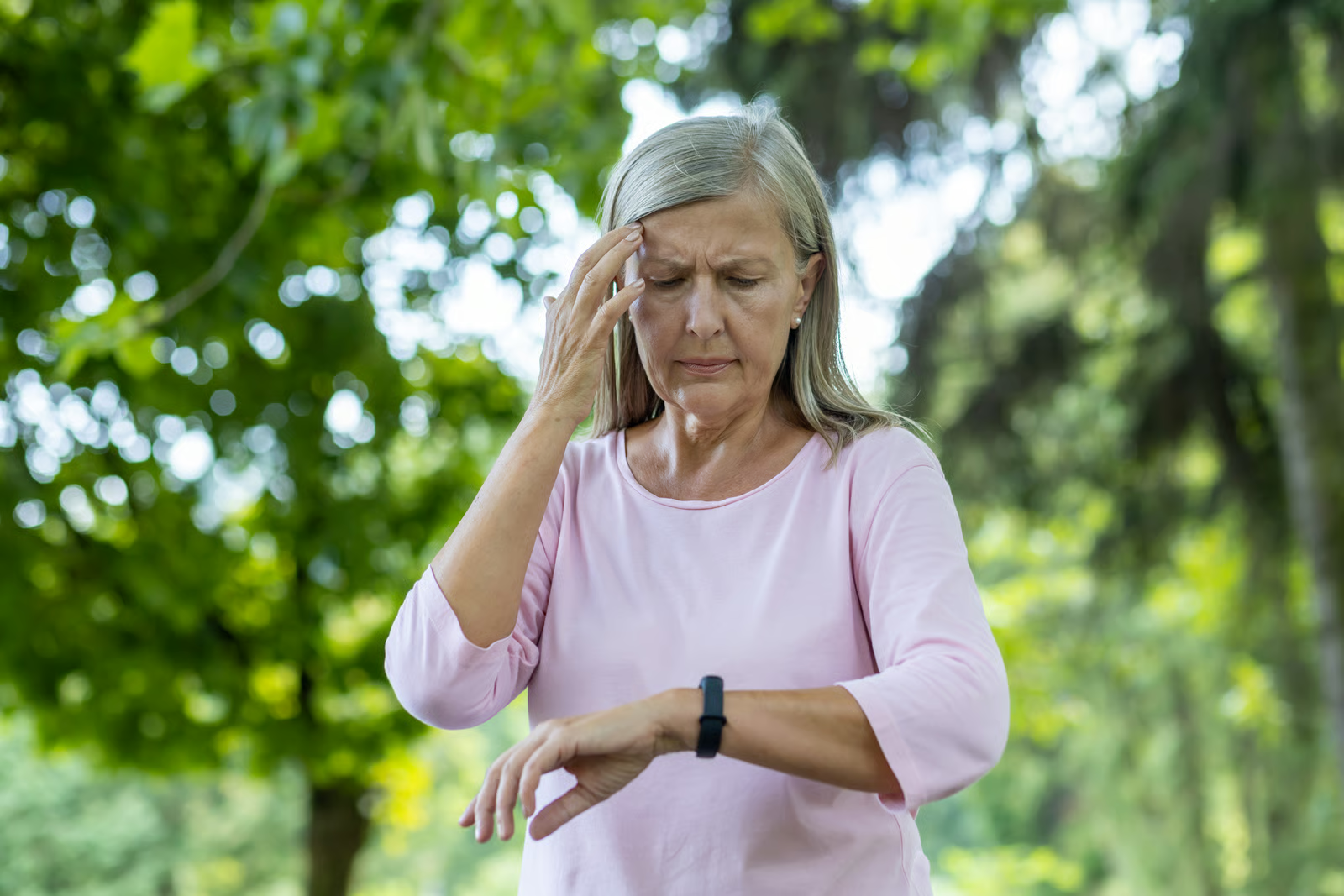
Older adults with weak and variable body rhythms that control wakefulness may be more likely to develop dementia. Researchers studied 2,300 older adults, gathering information on more than 1,000 of them for two years. The study found that physical inactivity at night and irregular sleep patterns, for example, are associated with an increased risk of developing dementia. The researchers characterized the daily rest–activity rhythms of the participants from activity data obtained using motion sensors attached to their wrists. They then evaluated the characteristics of the daily activity rest–activity rhythms in relation to the risk of subsequent dementia. Adults with a later activity time, less between-day consistency of their rest–activity time, and more fragmentation between sleep and wake time had an increased risk of dementia during follow up. These findings add to evidence that characteristics of people’s body clocks are linked to brain health. Monitoring a variety of routine measures of activity, such as how many steps a person takes in a day, could help identify older adults who are at risk of cognitive decline, the researchers noted. The study was published online Sept. 9 in the journal Neurology.
Why it matters
Traditionally considered a fixed element of our biology, our bodily “rhythms” are now being recognised as potentially modifiable risk factors for dementia. Our ‘body clock’ governs our sleep-wake time, the release of hormones, body temperature and much of our activity. A strong “clock” means that cells and tissues work in a highly synchronised fashion at optimal levels of efficiency. In contrast, a poor “rhythm” can lead to broken sleep, failure to remove toxic brain chemicals, inflammation and poor metabolism all of which can drive neurodegeneration and dementia. Recent animal and human findings have revealed that disturbances in circadian rhythms, or biological time of day, could promote inflammatory processes, alter protein clearance mechanisms implicated in neurodegenerative diseases, and worsen brain pathology related to dementia. Importantly, restoring natural circadian rhythmicity is a cost-effective measure to promote brain health that can begin through simple manipulation of light exposure, sleep, and daytime behavior, that may or may not involve going outside. Importantly, much of our natural rhythmicity is based on following the light–dark cycles of outside nature. The public health implications for preventing dementia are staggering as dementia affects millions of people worldwide and incidence dramatically increases with age. Currently, there are few effective preventions or treatments for dementia.
In the near-term, using wearables or activity monitors to assess whether individuals are following a normal circadian rhythm could help to identify those who need more frequent monitoring of cognitive function as well as those for whom evidence-based lifestyle interventions could reduce risk of dementia. In the immediate term, simple interventions such as increasing day active time, exposure to bright light in the morning, having a regular schedule of meal times, and treatment of sleep disorders can be implemented and monitored in community clinics, assisted living facilities, skilled nursing facilities, and other healthcare settings. While sleep-wake rhythm improvements and increased daytime activity that are very positive may even require an individualized assessment and treatment, a few small but regular improvements in sleep-wake behaviors delivered early to older adults could have major health benefits for populations as part of a broader behavioral and environmental medicine approach delivered in routine geriatric care settings. This is an opportunity to address sleep-wake rhythm improvements through behavioral and environmental approaches as part of routine geriatric care. Wearable technology allows for the easy assessment of body movement rhythm and other sleep and wake parameters in older adults. While initially used for steps taken per day and other exercise parameters, most older adults already wear consumer smart-watches and fitness trackers that contain accelerometers and heart rate monitoring sensors that can record activity parameters 24/7 objectively and passively. Several studies have used data from the accelerometer to make predictions of rhythm and other sleep and wake related exposures and outcomes and to investigate associations between activity and cognitive decline in older adults. Implementation of objective rhythm markers in primary care or memory clinics can facilitate timely identification of older adults and subsequent recommendations for healthy aging for each individual. However, to ensure that technology is implemented in an equitable fashion and does not overmedicalize normal aging, adoption must be paired with clinical interpretation.
Who it affects
Dementia in the elderly is influenced by several factors, amongst which the weakening of their internal rhythms and their unstable behaviour due to alterations in the function of their circadian rhythms with age are important. The weakening of function of the suprachiasmatic nucleus (SCN) and alterations in the expression of clock genes, contribute to a decrease in the strength of the circadian signal. Many elderly dementia patients have comorbid conditions, like chronic pain or depression, or medical conditions that cause sleep disturbances. The instability of daily routines in old age is common and understandable. However, the sleep problems of many elderly dementia patients remain unnoticed by clinicians. Simple questions such as: when do they go to sleep; how many hours do they sleep during the day; do they have a daily routine; and what time of the day do they go outside can help to uncover rhythm instability. For patients who require 24-h monitoring, measurement of rest-activity patterns can provide valuable, objective information regarding rhythm instability.
- Clinicians may start to incorporate routine questions about daily routines and consider objective rhythm screening for patients at risk. Practical bedside questions include typical bedtime and wake time, frequency and duration of daytime naps, timing of the highest energy period during the day, and exposure to daylight. For patients with irregular schedules or signs of rhythm fragmentation such as excessive daytime sleepiness or night awakenings, clinicians can offer structured recommendations: fixed wake and sleep times, morning light exposure, scheduled daytime activity, and treatment for sleep disorders. Where available and appropriate, short term accelerometer monitoring can quantify rest–activity patterns and aid risk stratification and follow up.
- Care settings should design environments that support healthy rhythms. Simple changes in long term care and hospital wards—such as bright daytime lighting, scheduled group activities, access to outdoor time, and reduced nighttime light and noise—help reinforce natural circadian cues and may improve sleep consolidation. Community programs that promote morning exercise groups, walking clubs, or daylight social activities for older adults serve a dual purpose: increasing physical activity and strengthening circadian entrainment. In hospital and care settings, medication timing should also be reviewed so that stimulating drugs are not given late in the day and sedating medications do not fragment nighttime sleep unnecessarily.
- Research and clinical trials should now test whether rhythm strengthening interventions reduce dementia risk or slow cognitive decline. Observational associations are strong, but causation must be established through well designed randomized trials of interventions such as bright light therapy, time restricted feeding, exercise timing, and structured daytime programming. Trials should include diverse populations and measure both cognitive end points and biological markers linked to neurodegeneration. If interventions prove effective, they could be deployed at scale as part of public health strategies to reduce future dementia incidence.
- Technology and data systems will be part of implementation, but must be used thoughtfully. Wearables and passive monitoring can identify at risk individuals with minimal burden, yet they require standardized metrics, validated thresholds, and clinical decision support to be useful. Health systems should pilot integration of accelerometer data into electronic health records with clear pathways for clinician review and patient feedback. Privacy, data ownership, and accessibility concerns must be addressed so that monitoring tools benefit all patients rather than only those with resources.
- Education and workforce changes are needed to bring rhythm science into routine care. Training for primary care teams, geriatric services, and care facility staff should cover how to recognize rhythm disturbances, simple behavioral interventions, and when to refer to specialists. Public awareness campaigns can teach families and older adults about the importance of consistent sleep schedules, morning light, and daytime activity. Community partnerships with senior centers and faith organizations can expand reach and support culturally adapted programs.
- Finally, policy and public health planning should prioritize early prevention strategies that include circadian health. Investing in community based programs that promote routine, in addition to conventional dementia risk reduction measures like blood pressure and diabetes control, may offer synergistic benefits. Policymakers should consider funding implementation science to identify cost effective, scalable approaches and ensure that interventions are accessible to underserved populations. Conclusion The emerging evidence that a weak or fragmented body clock may signal higher dementia risk reframes part of cognitive health as a lifestyle and environmental issue that clinicians and communities can influence. While more research is needed to prove causation and to identify the most effective interventions, current data support practical steps clinicians can take now: ask about routines, treat reversible sleep disorders, encourage morning light and consistent activity, and consider objective monitoring when appropriate. Care facilities and communities should adapt environments and programs to strengthen daily rhythms for older adults. If applied thoughtfully and equitably, these measures could become an important component of multifaceted dementia prevention strategies, helping people preserve cognitive function and quality of life as they age.
Behavioural rhythms can also affect caregivers, which play an increasingly important role in the management of dementia. Elderly people with dementia also live in environments, such as residential and nursing care facilities, where daily routines are organised and can conflict with or be dependent on their sleep-wake and activity-rest rhythms. Introduction: Quality and organization of sleep and rest is a critical aspect of aging well with dementia. Emerging evidence, as well as clinical experience, suggests that sleep and wake disturbances in individuals with dementia are influenced by caregiving practices. Wake time is often fragmented in care facilities, including those designed to support residents with dementia, due to the influence of institutional routines, such as morning and evening medications and meals. Additionally, practices such as overuse of artificial lighting at night and restriction of wakeful activities and wake time in the daytime can undermine sleep quality and negatively impact circadian entrainment, a critical process that helps protect cognitive function. Additionally, older adults with dementia and their families must have a good understanding of sleep-wake rhythms and their manipulation to maintain a day/night orientation to everyday life as they age in the community to reduce the risk of dementia.
In the secondary and tertiary stages of dementia, physicians such as geriatricians, sleep specialists, and neurologists, and psychologists are needed to help understand and manage sleep disturbances, and to address sleep and wake disturbances that have impacts on overall health. Sleep rhythmic disturbance can be treated by sleep medicine specialists. Neurologists and memory clinics assessing risk of cognitive decline may wish to consider monitoring sleep rhythmic disturbance in their patients. This consideration extends to the health system and public health levels, with consideration of sleep rhythmic assessment at population level and allocation of health resources to treat sleep rhythmic disorders. This requires a monitor or device to measure the sleep rhythm parameter(s) of interest, a system to monitor the data for the clinicians who will use the information and education of the staff responsible for data collection. Simple messages in public health regarding promotion of daytime activity, maintaining a regular sleep wake cycle and correct exposure to the light phase of the night could be a cost-effective measure to improve sleep. It is also important to consider the application of an equity lens to this area of research and practice. For example, older adults with lower socioeconomic status, who have limited mobility, or who live alone may be particularly vulnerable to rhythm disruption and not be reached by current interventions. As such, it is critical that programs are designed to be accessible and culturally relevant to these populations.
What changes
References:
https://www.alzinfo.org/articles/diagnosis/what-our-body-clocks-may-say-about-our-alzheimers-risk/ https://www.neurology.org/doi/10.1212/WNL.0000000000214513
One story a day
The story of the day, in your inbox
One health journey each morning — no advice, no alarm, just company for the road.