2026 CKM Guideline: Earlier, Integrated Prevention for Heart, Kidney and Metabolic Health
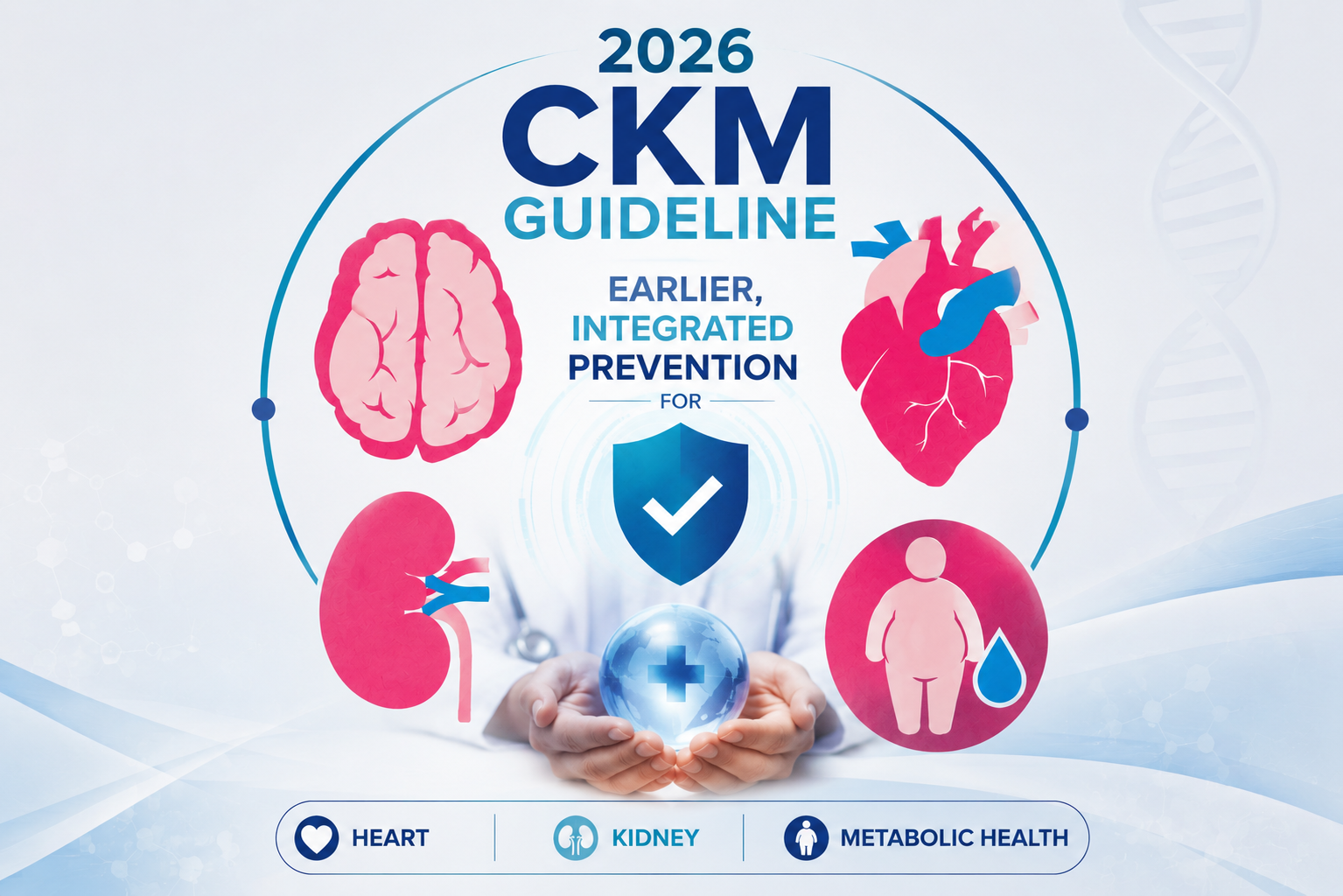
The 2026 CKM guideline calls for earlier, integrated prevention when cardiovascular, kidney and metabolic risks coexist, with action spanning primary care, endocrinology, nephrology and cardiology.
 Written and medically reviewed byDr. Abu BakarContributing writer · PharmD, PhD (Pharmacology)
August 30, 2026 · 7 min read
TheBrief:
The 2026 CKM guideline brings heart, kidney, and metabolic health into one prevention framework instead of treating them as separate problems. It encourages clinicians to identify shared risks early, stage CKM health, and coordinate treatments that can protect more than one organ before serious cardiovascular or kidney disease develops.
The consequential shift is earlier, integrated prevention
The joint American Heart Association, American College of Cardiology, American Diabetes Association and American Society of Nephrology guideline organizes prevention around cardiovascular-kidney-metabolic syndrome, or CKM syndrome. Its practical effect is to move care away from isolated disease thresholds and toward a longitudinal assessment of adiposity, metabolic abnormalities, kidney damage and cardiovascular risk.
That changes who is considered at risk. A patient can have clinically important CKM syndrome before myocardial infarction, heart failure, advanced chronic kidney disease or diabetes develops. Albuminuria may identify kidney and vascular injury despite a preserved estimated glomerular filtration rate. Excess or dysfunctional adiposity can represent an early disease stage even when glucose and blood pressure remain below diagnostic thresholds.
The guideline therefore makes screening itself a prevention intervention. Assessment should bring together blood pressure, lipids, glycemia, body size and adiposity, smoking, kidney filtration and urine albumin. Contemporary cardiovascular risk estimation, including the PREVENT equations when applicable, can then complement rather than replace clinical evaluation of CKM features that may not be fully captured by a conventional risk score.
How the recommendation was built
This is a multidisciplinary clinical practice guideline, not a randomized trial. It has no single enrolled population, comparator, effect estimate or follow-up period. The writing group synthesized evidence from cardiovascular, kidney, diabetes and obesity studies, then translated that evidence into recommendations spanning screening, lifestyle care, pharmacotherapy, risk prediction and specialty coordination.
Several pivotal outcome trials illustrate why a unified approach matters. They enrolled overlapping but nonidentical CKM populations, used different composite outcomes and generally compared an active drug with placebo on top of standard care. Their results support organ-protective treatment in selected high-risk groups; they do not establish that every person at an early CKM stage should receive every therapy.
| Trial | Population and size | Follow-up | Primary outcome result |
|---|---|---|---|
| DAPA-CKD | 4,304 adults with albuminuric CKD, with or without type 2 diabetes | Median 2.4 years | Dapagliflozin reduced the kidney or cardiovascular composite versus placebo: hazard ratio 0.61, 95% CI 0.51-0.72; P<0.001 |
| FIDELIO-DKD | 5,734 adults with type 2 diabetes and CKD | Median 2.6 years | Finerenone reduced the kidney composite versus placebo: hazard ratio 0.82, 95% CI 0.73-0.93; P=0.001 |
| FLOW | 3,533 adults with type 2 diabetes and CKD | Median 3.4 years | Semaglutide reduced the major kidney-disease composite versus placebo: hazard ratio 0.76, 95% CI 0.66-0.88; P=0.0003 |
These trials provide causal evidence for their studied therapies, populations and outcomes. They should not be interpreted as direct comparisons among drug classes, and their eligibility criteria limit extrapolation to lower-risk patients or people without the relevant treatment indications.
Staging makes subclinical disease actionable
The CKM framework describes a continuum. Stage 0 denotes no identified CKM risk factors. Stage 1 centers on excess or dysfunctional adiposity. Stage 2 includes metabolic risk factors or CKD.
Stage 3 adds subclinical cardiovascular disease, while stage 4 represents clinical cardiovascular disease in the setting of CKM syndrome.
The clinical value is not the label alone. Staging identifies what should happen next. Earlier stages emphasize prevention of risk-factor accumulation through nutritious dietary patterns, physical activity, sleep, smoking cessation and evidence-based management of excess adiposity. Stage 2 requires deliberate evaluation and treatment of hypertension, dyslipidemia, dysglycemia and kidney disease rather than waiting for a cardiovascular event.
Stage 3 may justify more intensive risk assessment because organ injury is already present, even without symptomatic cardiovascular disease.
Kidney assessment is central. Serum creatinine and estimated filtration alone can miss albuminuric CKD, so urine albumin-to-creatinine ratio belongs in evaluation when diabetes, hypertension or other CKM features create kidney risk. Abnormal findings should be confirmed and interpreted with attention to temporary causes, trajectory and medication safety.
Treatment remains indication-specific. Renin-angiotensin system blockade, sodium-glucose cotransporter-2 inhibitors, nonsteroidal mineralocorticoid receptor antagonists and glucagon-like peptide-1 receptor agonists each have evidence in defined populations. The guideline’s integration principle does not erase eligibility criteria, contraindications, monitoring needs or labeled indications. It instead asks clinicians to select treatments with benefits that may extend across more than one affected organ.
Responsibility can no longer sit within one specialty
Primary care is positioned to identify early-stage CKM syndrome, order kidney and metabolic screening, estimate cardiovascular risk and maintain longitudinal follow-up. Endocrinology has a broader role than lowering glucose: obesity treatment, selection of therapies with cardiovascular or kidney benefit and avoidance of treatment-related hypoglycemia can alter the wider risk trajectory.
Nephrology becomes relevant before kidney failure. Persistent albuminuria, falling estimated filtration, uncertain etiology, resistant hypertension or complicated electrolyte and medication issues may require specialist input. Cardiology should incorporate kidney function, albuminuria, diabetes and adiposity into prevention decisions rather than treating them as background comorbidities.
Pharmacists, dietitians, obesity-medicine clinicians and care managers can help reconcile medications, monitor laboratory results, support behavior change and address treatment access. Integrated care does not necessarily require that every patient see four specialists. It requires a shared plan, clear ownership of monitoring and fewer contradictory or duplicated decisions.
For health systems, the guideline supports closing routine gaps: underuse of urine albumin testing, fragmented risk calculators, incomplete referral pathways and electronic records that separate cardiovascular, kidney and diabetes measures. Coverage policy also matters because recommendations cannot produce population benefit when evidence-based obesity, diabetes and kidney therapies remain inaccessible.
Important uncertainties remain
CKM stages create a common clinical language, but not every stage boundary has been validated in prospective trials as a treatment threshold. Much of the therapeutic evidence comes from participants with established diabetes, albuminuric CKD, heart failure or high cardiovascular risk. Absolute benefit may be smaller in earlier-stage or lower-risk populations.
The trials also underrepresent some younger adults, people with very advanced kidney disease and populations facing the greatest barriers to preventive care. Composite outcomes and eligibility criteria differ across studies. Guideline authors disclose relevant relationships in the source document, but multidisciplinary consensus cannot eliminate limitations in the underlying evidence.
Future research must determine whether stage-based care pathways improve outcomes beyond well-delivered disease-specific guidelines, how frequently lower-risk adults should be reassessed and which team structures are sustainable. Cost-effectiveness and equitable access will be as consequential as pharmacologic efficacy.
Questions clinicians ask
Who should receive a CKM assessment?
Adults with obesity, hypertension, dyslipidemia, prediabetes or diabetes, CKD, heart failure or established atherosclerotic disease warrant an integrated review. The assessment should connect cardiovascular risk factors with glycemia, adiposity, estimated filtration and urine albumin rather than relying on a single diagnosis or laboratory value.
Does normal estimated GFR exclude kidney involvement?
No. Albuminuria can indicate kidney and vascular damage while estimated filtration remains preserved. Urine albumin-to-creatinine ratio is therefore important in at-risk populations, particularly people with diabetes or hypertension; an unexpected abnormal result generally needs confirmation because exercise, infection and acute illness can cause transient elevation.
Does CKM staging determine which medication to prescribe?
Not by itself. Staging describes overall risk and helps identify prevention priorities, while drug selection still depends on the patient’s diagnoses, kidney function, albuminuria, cardiovascular history, contraindications and the population studied in outcome trials. The framework favors therapies with demonstrated cross-organ benefit when their specific indications are met.
When is specialty referral most useful?
Referral is most useful when risk is advanced, progression is unexplained, treatment is complex or the required expertise is unavailable in primary care. Integrated management may involve consultation rather than permanent transfer; one clinician should retain responsibility for follow-up, laboratory monitoring and reconciliation of the shared plan.
Questions people ask
What is CKM syndrome?
CKM syndrome describes the close relationship between metabolic risk, kidney disease, and cardiovascular disease. The framework helps clinicians identify these problems earlier and manage them as connected conditions rather than waiting for each disease to appear separately.
Can someone have CKM risk without heart disease?
Yes. CKM risk can be present before a heart attack, heart failure, advanced CKD, or diabetes develops. Early metabolic abnormalities, excess adiposity, kidney injury such as albuminuria, and other risk factors may appear first.
References
1. Guideline for Cardiovascular-Kidney-Metabolic Syndrome — PubMed Central, 2026 2. Cardiovascular-Kidney-Metabolic Health: A Presidential Advisory From the American Heart Association — Circulation, 2023 3. Chronic Kidney Disease and Risk Management: Standards of Care in Diabetes—2024 — Diabetes Care, 2024 4. Dapagliflozin in Patients with Chronic Kidney Disease — The New England Journal of Medicine, 2020 5. Effect of Finerenone on Chronic Kidney Disease Outcomes in Type 2 Diabetes — The New England Journal of Medicine, 2020 6. Effects of Semaglutide on Chronic Kidney Disease in Patients with Type 2 Diabetes — The New England Journal of Medicine, 20
One story a day
The story of the day, in your inbox
One health journey each morning — no advice, no alarm, just company for the road.