Bridging the Chasm in Ventricular Tachycardia: Medtronic’s Sphere-9 FDA Breakthrough Designation
The U.S. Food and Drug Administration (FDA) has officially granted Breakthrough Device Designation to Medtronic’s Sphere-9 catheter for
 Written and medically reviewed byRayan SalihContributing writer · PharmD, RPh
May 18, 2026 · 8 min read
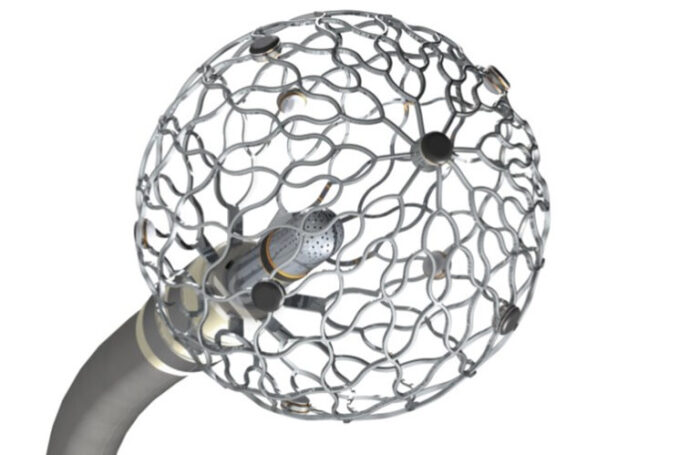
The U.S. Food and Drug Administration (FDA) has officially granted Breakthrough Device Designation to Medtronic’s Sphere-9 catheter for the treatment of ventricular tachycardia (VT). Coupled with this regulatory milestone, late-breaking clinical data presented at the Heart Rhythm Society (HRS) annual meeting and the FDA’s approval of a U.S. pivotal Investigational Device Exemption (IDE) trial mark a transformative moment in cardiac electrophysiology. Originally FDA-approved for treating persistent AFib and atrial flutter, the Sphere-9 catheter, integrated with the Affera™ mapping and ablation platform, is poised to reshape how we approach ventricular arrhythmias. For healthcare providers, this announcement represents far more than an incremental update to a medical device portfolio; it is an overhaul of a suboptimal treatment landscape.
New Innovation
For cardiac electrophysiologists and advanced heart failure specialists, the clinical management of recurrent, sustained monomorphic ventricular tachycardia (VT) has long been one of the most daunting challenges in modern cardiology. Ventricular mapping and ablation have historically been limited by thick, scarred myocardial tissue, complex subendocardial and epicardial substrates, and catheters designed primarily for the thinner architecture of the atria. However, a major paradigm shift is underway.
The Sphere-9 introduces a dual-energy paradigm, allowing operators to seamlessly switch between Radiofrequency (RF) thermal energy to penetrate dense scars and non-thermal Pulsed Field Ablation (PFA) for rapid, tissue-selective safety. Its unique 9mm expandable lattice-tip offers superior stability, shifting procedures from tedious point-by-point burning to precise, contiguous substrate modification.
Why It Matters
Solving a Persistent Suboptimal Legacy
To understand why the FDA’s Breakthrough Designation for the Sphere-9 in the ventricular space is so significant, one must look closely at the historical data for VT ablation.
Traditionally, catheter ablation for VT has been utilized as a therapy of last resort or a secondary intervention when antiarrhythmic drugs (AADs) fail or cause intolerable systemic toxicities. Despite its status as an established treatment option, long-term outcomes have remained stubbornly suboptimal. Standard RF ablation strategies targeting ventricular scars frequently suffer from high recurrence rates, often hovering between 40% and 50% within the first year, depending on the severity of the underlying cardiomyopathy.
The primary culprit has always been transmurality and lesion durability. Ventricular myocardium can be exceptionally thick, and ischemia-induced scar tissue is highly heterogeneous. Standard focal RF catheters often fail to deliver deep, durable lesions through dense fibrotic scars without risking catastrophic collateral damage, such as steam pops, cardiac perforation, or inadvertent damage to adjacent coronary vessels and the conduction system.
The Clinical Data That Demanded Breakthrough Status
The FDA’s Breakthrough Device Designation is reserved only for technologies that provide more effective treatment for life-threatening or irreversibly debilitating conditions and address a massive unmet clinical need. The data supporting this decision, presented as a late-breaking clinical trial at HRS, highlights why the Sphere-9 earned this status.
In an ongoing early feasibility study (EFS) evaluating the Affera mapping and ablation system alongside the Sphere-9 catheter for the treatment of recurrent, sustained monomorphic VT following a myocardial infarction (ischemic cardiomyopathy), the interim results demonstrated remarkable efficacy:
- 65.5% of patients remained entirely free from VT recurrence at six months post-ablation.
- This builds upon earlier feasibility data showing a 100% acute procedural success rate, defined as the complete non-inducibility of any clinically relevant VT at the end of the procedure.
- The procedures demonstrated exceptional safety, an essential metric given the fragile hemodynamic status of post-infarct VT patients.
For an early feasibility study tackling ischemic VT—a disease state notorious for its complex, multi-layered reentry circuits—a 65.5% freedom-from-recurrence rate at six months is an extraordinary clinical signal. It proves that the physical and energetic design of the Sphere-9 is capable of achieving what legacy systems could not: stable, deep, and highly targeted substrate modification in the ventricles.
Who It Affects
Expanding the Circle of Care
The clinical implications of this technology span an extensive network across the healthcare ecosystem, directly altering the treatment pathways for patients, electrophysiologists, and the broader healthcare system.
The Patients: Escape from the Shock-Anxiety Cycle
The primary beneficiaries of this innovation are patients suffering from recurrent, sustained monomorphic VT, particularly those with a history of myocardial infarction (ischemic cardiomyopathy).
Currently, these patients are managed with aggressive antiarrhythmic medication regimens (such as amiodarone) and rely heavily on Implantable Cardioverter-Defibrillators (ICDs) or Cardiac Resynchronization Therapy Defibrillators (CRT-Ds). While ICDs are indisputably life-saving devices, they do not prevent arrhythmias; they merely terminate them.
Living with an ICD frequently traps patients in a debilitating cycle of psychological trauma. The experience of receiving high-energy internal defibrillation shocks, often described by patients as feeling like being kicked in the chest by a horse, leads to severe anxiety, depression, and post-traumatic stress disorder (PTSD). Frequent shocks are also independently associated with increased mortality and accelerated heart failure decompensation. By achieving a higher rate of long-term VT suppression, the Sphere-9 directly mitigates the frequency of ICD interventions, dramatically improving the quality of life and psychological well-being for these individuals.
Furthermore, while the current clinical data centers on ischemic cardiomyopathy, the upcoming U.S. pivotal IDE trial is set to expand its scope to include non-ischemic cardiomyopathy (NICM) patients. This is highly significant, as non-ischemic VT substrates are notoriously difficult to map and ablate due to their mid-myocardial and epicardial distributions.
The Electrophysiologists: A Unified Tool for Complex Workflows
For the electrophysiologist (EP), the Sphere-9 catheter completely redefines the ergonomics and workflow of a ventricular procedure.
VT ablations are notoriously grueling, often lasting several hours and requiring multiple catheter exchanges. EPs routinely have to switch back and forth between high-density mapping catheters to define the scar boundaries and specialized ablation catheters to deliver energy. This increases procedure time, heightens the risk of vascular access complications, and introduces mapping registration errors due to patient movement or changing cardiac volumes.
The Sphere-9 features an all-in-one, dual-energy lattice-tip design. It integrates high-definition mapping and ablation capabilities into a single focal platform. Electrophysiologists no longer need to sacrifice mapping resolution for ablation power. They can map the subtle fractionated potentials and late potentials within a ventricular scar and immediately deliver therapy using the same catheter, maintaining perfect spatial orientation.
The Healthcare System: Decreasing the Burden of Heart Failure Admissions
From an administrative and healthcare utilization perspective, recurrent VT is an expensive, resource-intensive pathology. Patients experiencing “VT storms” or frequent ICD shocks repeatedly present to emergency departments and require prolonged stays in cardiac intensive care units (CICUs). These admissions place a massive financial burden on hospital systems and consume critical-care resources. A highly effective, durable ablation tool that cuts recurrence rates translates directly to fewer emergency readmissions, reduced ICU length-of-stay, and lower overall lifetime care costs for the heart failure cohort.
What Changes
The Dawn of the Dual-Energy Lattice Era
The introduction of the Sphere-9 catheter into the ventricular domain changes the fundamental mechanics of how an ablation procedure is performed. The technology introduces three distinct operational shifts:
Shift 1: The Dual-Energy (RF + PFA) Paradigm in the Ventricle
Perhaps the most revolutionary aspect of the Affera system is its ability to deliver both Radiofrequency (RF) and Pulsed Field Ablation (PFA) energy through the same lattice-tip catheter.
| Sphere-9 Lattice-Tip Catheter | |
|---|---|
| Radiofrequency (RF) Thermal, continuous energy Ideal for dense, deep fibrotic scar Consolidates boundaries | Pulsed Field Ablation (PFA) Non-thermal, tissue-selective Rapid energy delivery Avoids critical collateral damage |
| Tailored, durable transmural ventricular lesions |
Historically, EPs had to choose a single energy source. RF relies on thermal conduction to create lesions, which can be limited by the “sink effect” of intramyocardial blood flow and the high impedance of existing fibrotic scars. PFA, on the other hand, is a non-thermal modality that utilizes high-voltage, ultra-rapid electrical fields to cause irreversible electroporation in cell membranes. Its primary benefit is tissue-selectivity, preferential to cardiomyocytes while sparing adjacent structures like blood vessels and nerves.
With the Sphere-9, the operator can toggle between tailored ventricular settings (PULSE3V for PFA and longer modified thermal profiles for RF). In practice, a combination of RF and PFA energy was utilized in 95% of the patients in the EFS study. Electrophysiologists can use the thermal power of RF to penetrate dense, deep fibrotic scars and consolidate lesion boundaries, and then instantly deploy PFA to rapidly and safely treat regions adjacent to critical anatomy, maximizing both lesion depth and procedural safety.
Shift 2: From Small-Tip Point-by-Point to Large-Footprint Lattice Mapping
Standard ablation catheters utilize a solid 3.5mm or 4mm metal tip. The Sphere-9 utilizes a unique, expandable 9mm lattice-tip design.
This larger footprint provides unparalleled mechanical stability against the beating, thick walls of the left ventricle. Despite its larger profile, the lattice structure is interspersed with micro-electrodes that allow for ultra-high-definition mapping. Instead of a tedious “point-by-point” drag across the ventricular wall, the lattice tip allows for broader, more stable contact, meaning faster electroanatomical mapping and more uniform, contiguous lesion creation.
Shift 3: An Accelerated Regulatory Pathway via U.S. Pivotal Trial
Because Sphere-9 has received Breakthrough Device Designation for VT, its journey to commercial availability is heavily accelerated. The designation ensures that Medtronic will receive prioritized, interactive reviews from the FDA throughout the upcoming U.S. pivotal trial.
This changes the timeline for clinical availability. Rather than languishing in regulatory pipelines for a decade, this advanced technology is on a fast track to becoming the standard of care in electrophysiology labs across the United States. While the device is currently commercially available only for atrial indications, the formalization of the ventricular trial means that centers participating in the IDE will immediately gain access to these advanced investigational waveforms, bringing cutting-edge care to the most critically ill patients today.
A New Standard of Care on the Horizon
For decades, ventricular tachycardia ablation has been viewed as a high-wire act, a technically demanding, lengthy procedure with a high ceiling of risk and a frustratingly low floor of long-term success. The stagnation of tool innovation in the ventricular space left a massive void in our heart failure and electrophysiology portfolios.
Medtronic’s Affera platform and the Sphere-9 catheter represent the definitive bridge across this technological chasm. By combining high-definition mapping, an expandable lattice design, and the versatile synergy of dual-energy RF and PFA, the system directly answers the critical unmet needs of the electrophysiology community.
The clinical data from the Heart Rhythm Society meeting, highlighting a 65.5% freedom from recurrence at six months and a 100% acute success rate, validates the FDA’s decision to grant Breakthrough Device Designation. As the U.S. pivotal IDE trial begins enrolling patients with ischemic and non-ischemic cardiomyopathy, healthcare providers should prepare for a fundamental shift in their clinical workflows. The era of suboptimal, legacy tools for ventricular arrhythmias is drawing to a close; the era of precise, dual-energy lattice ablation has officially arrived.
Reference
- https://www.massdevice.com/medtronic-fda-breakthrough-sphere-9-vt/
One story a day
The story of the day, in your inbox
One health journey each morning — no advice, no alarm, just company for the road.