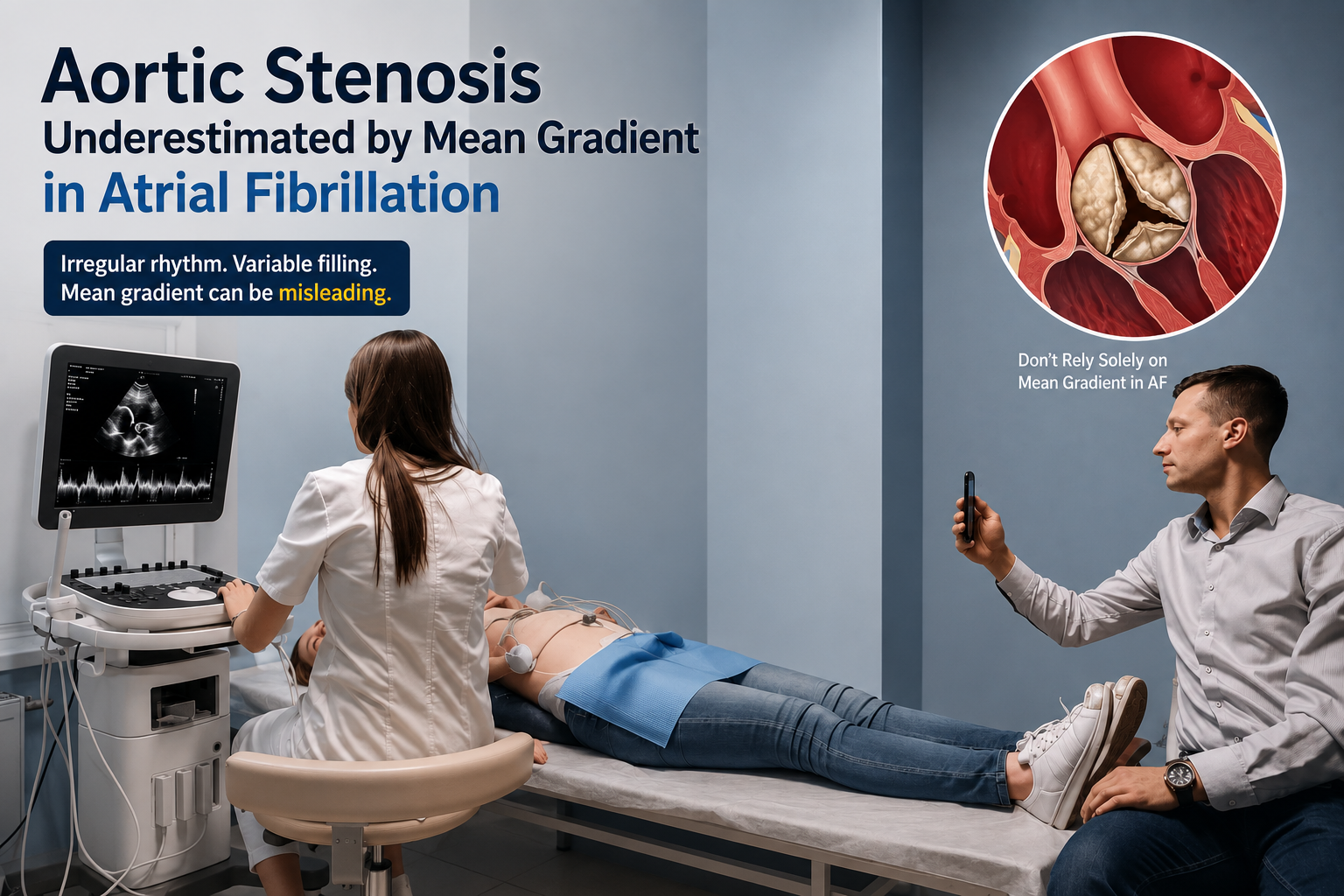
Earlier Intervention May Improve Aortic Regurgitation Outcomes
Aortic regurgitation is a common heart valve problem where the aortic valve doesn’t close tightly.
 Written and medically reviewed byDr. Abu BakarContributing writer · PharmD, PhD (Pharmacology)
August 9, 2026 · 6 min read

Aortic regurgitation is a common heart valve problem where the aortic valve doesn’t close tightly. This allows blood to leak back into the left ventricle each time the heart beats. Over time, this extra volume load makes the left ventricle work harder and gradually stretch. Traditionally, doctors watched patients until clear symptoms or major heart enlargement appeared before considering surgery. However, new thinking suggests treating some patients sooner, even while they still feel fine to prevent irreversible heart damage.
Why It Matters
For decades, doctors carefully monitored patients with severe aortic regurgitation and only recommended surgery once symptoms became obvious or heart function fell. This cautious approach made sense when surgery was very risky. Today, surgery is much safer than in the past, and studies show that acting earlier can preserve heart function. Intervening while the left ventricle is still handling the extra volume — rather than waiting for it to fail — leads to better long-term outcomes and a lower chance of permanent damage.
There really is a “window of opportunity.” The heart often adapts quietly for years even as it enlarges. Many patients feel no symptoms at first. But that silence can be dangerous. Symptoms like shortness of breath, fatigue, or decreased exercise capacity usually appear late — after the heart’s compensations start to give out. By then, the heart muscle may have already developed subtle injury or scarring that won’t completely reverse. Catching these cases early through careful imaging and check-ups can change a patient’s clinical course.
On a system level, shifting toward earlier intervention has wide implications. Care would move from episodic, symptom-driven visits to continuous monitoring. This means more frequent, high-quality imaging (for example, regular echocardiograms or cardiac MRIs) to track heart size and function. Hospitals and clinics will need clear referral pathways to valve centers. They must also have capacity for more evaluations and, potentially, more procedures. These changes raise questions about costs, scheduling, and resource allocation.
Who It Affects
Patients with aortic regurgitation are most directly affected by these changes. In particular, the new treatment technique focuses on patients who are suffering from valve leakage but don’t show any symptoms at the moment. When imaging tests reveal that their left ventricle is expanding or its pumping capacity is declining, then the vast majority of cardiologists will advocate earlier surgery or valve repair. Of course, age and general condition matter a lot. For example, young and healthy patient could get surgery sooner while the older one wouldn’t.
Clinicians and care teams will feel the shift as well. The family physicians and general cardiologists need some kind of guideline for referring a patient to a valvular specialist. The radiology departments have to provide accurate measurement of the performance and the dimensions of the heart. Some of the clinics have started employing cardiac MRI and newer echocardiography modalities in order to have better estimation of the volume of the ventricles as well as early detection of remodeling. The surgeons and the interventional cardiologists have to determine on a case-by-case basis whether a leaking valve requires repair, replacement or catheterization.
Health systems and payers also have a stake in this evolution. More early interventions can raise short-term costs and use more hospital resources, but they aim to reduce costly complications down the line. Insurance providers and policymakers will need to update coverage policies to support the new timing: for example, paying for regular imaging surveillance and for earlier valve procedures when indicated. Hospitals especially smaller or rural ones may need extra training, equipment, or telemedicine support to connect patients with specialists. Without such support, delays in care could widen existing health disparities. Planning for staff, training, and equipment is essential to make this shift work.
What Changes
- Earlier referral guidelines. Instead of waiting for symptoms, doctors will consider sending patients to specialists when imaging shows early warning signs. For example, if an asymptomatic patient’s ejection fraction drops into the mid-50s (rather than letting it fall below 50) or if their left ventricular end-systolic dimension grows beyond about 50 mm (about 25 mm/m² indexed), that patient may be a candidate for surgery. Guidelines have been updated to recommend surgery at these earlier thresholds for suitable patients.
- Enhanced imaging. Clinics will use advanced scanning tools more often. In addition to routine echocardiograms, many centers perform cardiac MRI to get precise measurements of ventricular volumes and function. MRI and other methods can show dilation or subtle damage that regular ultrasound might miss. Other new techniques (like strain imaging on echo) and even blood biomarkers may help catch heart stress earlier. The more accurately we can measure changes in the heart, the better we can time intervention.
- Shared decision-making. Patients will be more involved in deciding when to intervene. Clinicians should explain in clear, practical terms what could happen with watchful waiting versus early surgery or repair. These conversations should include each patient’s daily life goals and how each option might affect them in the long run. When patients understand their choices and join the decision process, they become active partners and feel more prepared if surgery is chosen.
- Coordinated care pathways. Health systems should streamline care for valve patients. This could mean setting up dedicated valve clinics or heart teams where cardiologists, surgeons, and imaging experts work together. Hospitals should plan for an increase in referrals and follow-up visits. Insurers might create special care bundles or programs for valve disease to align incentives. Training and telehealth support can help smaller hospitals connect patients to specialists when needed. All of these steps aim to ensure timely care.
- Nuanced clinical judgment. Even with new guidelines, doctors will still tailor decisions to the individual. Factors like age, overall health, and valve anatomy remain crucial. For example, a 40-year-old with a congenitally bicuspid valve might be encouraged to have surgery earlier than an 80-year-old with other serious conditions. The experience of the surgical or interventional team also influences timing. In short, earlier intervention is an option for many patients, but not a one-size-fits-all rule.
Future innovations. Research in heart imaging and treatment continues to evolve. Scientists are looking into new imaging markers and blood tests that could reveal damage to the heart muscle even sooner. Medical device companies are developing transcatheter valves specifically for aortic regurgitation, which could expand options for patients who cannot undergo open-heart surgery. As these tools are proven in trials, they may shift practice further. Still, we will need real-world outcome data to guide care decisions.
Practical next steps. In day-to-day practice, the message to clinicians is clear: step up monitoring for moderate and severe aortic regurgitation. Use consistent imaging methods, and when possible add secondary tests like cardiac MRI to double-check any worrisome findings. Don’t hesitate to refer patients to a valve center earlier, before clear symptoms emerge. Finally, have documented conversations with patients about the potential risks of delaying surgery. By doing these things, clinicians can help ensure that patients who stand to benefit from early intervention receive it in time to preserve heart function and long-term health.
References
- Otto, C. M., Nishimura, R. A., Bonow, R. O., Carabello, B. A., Erwin, J. P., Gentile, F., et al. 2020 ACC/AHA Guideline for the Management of Patients With Valvular Heart Disease: Executive Summary. Circulation. 2021. Direct URL
- Wang, Y., Jiang, W., Liu, J., Li, G., Liu, Y., Hu, X., & Dong, N. Early surgery versus conventional treatment for asymptomatic severe aortic regurgitation with normal ejection fraction and left ventricular dilatation. European Journal of Cardio-Thoracic Surgery. 2017. Direct URL
- Heuts, S., Kawczynski, M. J., Maessen, J. G., & Bidar, E. Does early surgery result in improved long-term survival compared to watchful waiting in patients with asymptomatic severe aortic regurgitation with preserved ejection fraction? Interactive CardioVascular and Thoracic Surgery. 2022. Direct URL
- Ni, J.-R., Xin, W.-L., Hu, Y., Liu, S.-D., Li, J.-K., Wan, Z.-H., & Lei, J.-Q. Prognostic Value of Cardiac Magnetic Resonance Imaging in Chronic Aortic Regurgitation: A Systematic Review and Meta-Analysis. Reviews in Cardiovascular Medicine. 2023. Direct URL
One story a day
The story of the day, in your inbox
One health journey each morning — no advice, no alarm, just company for the road.