Emotional Discomfort Linked to Poor Stroke Recovery Outcomes
Share emotions to aid stroke recovery. Expressing your fears and emotions after suffering a stroke is important to
 Written and medically reviewed byDr. Abu BakarContributing writer · PharmD, PhD (Pharmacology)
February 19, 2026 · 8 min read
Share emotions to aid stroke recovery.
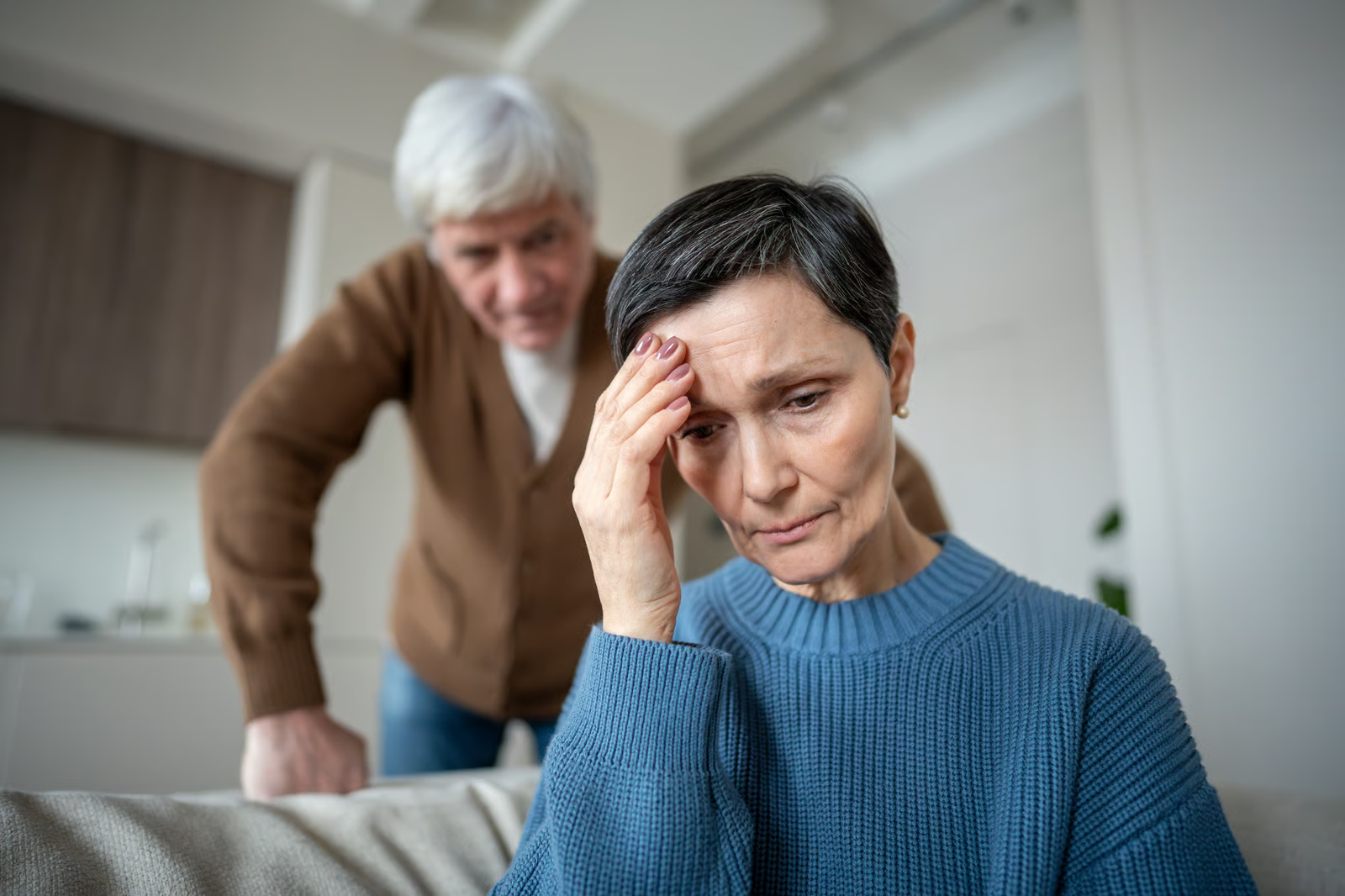
Expressing your fears and emotions after suffering a stroke is important to your complete physical and mental recovery, research has found. Patients are often worried that sharing their thoughts and feelings would cause distress to family members, and therefore keep them locked away. However, not sharing your emotions could cause more ‘emotional discomfort’ to all concerned and hinder your healing.
A large study of more than 700 stroke and transient ischaemic attack (TIA) patients found that those who felt unable to discuss the stroke with family and friends were more likely to be lonely a year on and have poorer physical and mental recovery. In fact, feeling unable to share thoughts about the stroke was as great a predictor of long-term disability as the severity of the stroke itself. Patients may store away their concerns. Not talking about their stroke and their recovery may lead to them pulling away from support, under-participating in treatment, missing clues from health professionals and storing away fears and questions about their recovery which may be linked to their anxiety and depression. Talking about the stroke and their recovery can have a profound impact and give them hope and direction. One of our patients was getting worse from the effects of her stroke on her mental health until she started talking about her stroke experience. For many issues, giving patients the choice to talk about their experiences, if they wish to do so, can make a world of difference to stroke patients and their families. Research published in the Journal of Clinical Nursing suggests that patients who share their feelings during the post stroke period have better outcomes than those who do not express their emotions. With the health care system becoming more medicalized and patients being discharged from hospital earlier, it is increasingly important to understand the role that emotional expression plays in the physical recovery of stroke patients. Knowing that emotional expression is valued and is OK can be a powerful tool for recovery, both physical and emotional.
Why it matters
- Stroke survivors and their families. Patients themselves are directly affected by this issue. After a stroke, survivors can experience a wide range of emotions, from fear about the future to frustration with lost abilities. Those who struggle to express these feelings often carry a heavy emotional burden alone. Meanwhile, family members and caregivers are also deeply impacted. They may feel anxious, helpless, or unsure how to help their loved one cope. If the patient keeps feelings bottled up, family members might feel shut out or guilty for not understanding the patient’s needs. This strain can affect everyone involved in the recovery process.
- Healthcare providers and therapists. Doctors, nurses, rehabilitation therapists, social workers, and psychologists are on the front lines of stroke care. They play a crucial role in noticing emotional distress and offering support. For example, a rehabilitation therapist may observe that a patient is unusually quiet or agitated during sessions. A neurologist might suspect depression if a patient shows little interest in getting better. All these professionals need to be aware that a patient’s willingness to share feelings can influence recovery. If providers miss the signs of emotional struggle or fail to encourage open discussion, opportunities for help can be lost.
- Healthcare systems and support networks. Hospitals, stroke rehabilitation centers, and community health programs must recognize emotional support as part of effective care. This means ensuring that protocols and resources are in place to help patients talk about their experiences. It also means insurance programs and health policies should cover counseling or support group services for stroke survivors, not just physical therapy. In the community, groups like stroke support organizations become part of the solution by connecting survivors and families. When healthcare systems prioritize mental health in stroke care, everyone benefits: patients recover better, families cope more easily, and long-term health costs can be reduced. In short, this issue touches an entire circle of people. Stroke survivors need emotional care, their loved ones need tools to support them, clinicians need training and time to listen, and healthcare leaders must plan for integrated care. No single person is responsible; rather, an entire support network of family, providers, and programs must work together to address these emotional challenges.
Stroke is one of the world’s most serious health problems. It strikes nearly 800,000 people each year in the U.S. and is a leading cause of serious disability. Millions of people die from stroke each year around the globe, and millions more are left with lasting effects. Stroke effects can last a lifetime. Many stroke survivors have trouble walking, trouble talking, and trouble thinking. Even simple tasks such as bathing and dressing may require assistance. Stroke recovery is not just about physical rehabilitation; emotions can also be tough to handle. People who have had a stroke can experience a range of emotions, including fear, frustration, sadness, anxiety, anger, and confusion. Some stroke survivors experience significant levels of depression or anxiety following stroke, with as many as 30% reporting high levels of both. Stroke-related depression can impede recovery, prevent patients from participating in rehabilitation and even increase the risk of having another stroke or dying in the months and years following stroke. How someone experiences and processes their emotions can be affected by how stroke changes brain function. Individuals with brain injury are often described as being emotionally labile, swinging quickly from a state of tears to anger. These individuals and their families often find the post brain injury adjustment as difficult or more difficult than the initial trauma of the injury. This is because emotional lability is a major feature of post brain injury adjustment and because it is often a subject that is avoided in discussions with the medical team. As a result of hiding their feelings, the participation in and benefit of rehabilitation can be compromised. Patients may skip sessions, refuse to continue with a rehabilitation activity too soon, or appear disinterested in a topic that they desperately need to discuss. This is very distressing for the individual and the rehabilitation team. However, an open discussion of this area is important to try to maximise benefit of the rehabilitation process. After their stroke, many patients feel isolated or lonely. However, many stroke patients feel afraid to express feelings of loneliness or other negative emotions and consequently experience chronic loneliness. Loneliness and stress can further decrease a person’s immunity and impede their body’s natural healing process. Expressing emotions like loneliness to family members, loved ones, support groups, or healthcare providers can be key in a stroke patient’s rehabilitation by helping him or her identify what needs to be done to recover, as well as finding support and motivation to complete rehabilitation. Emotions clearly play a significant role in stroke recovery. Most stroke survivors are left with some element of “hidden disability” as they are not supported to the full extent of their mental and emotional recovery post-stroke. Instead, they and their families are left to cope as best they can, with little recognition or support from the medical team for their anxiety, depression and other emotions that they may be feeling. They may be physically discharged from hospital and expected to get on with their rehabilitation, while others, such as family members, are left to pick up the emotional pieces. Recognising the importance of emotional communication and how it can aid support of stroke survivors and their families, is something that has been lacking and is crucial to a survivor reaching their full potential post-stroke.
Who it affects
- Screen for emotional health in routine care. Healthcare providers should include simple checks for mood and feelings during stroke follow-up visits. For example, doctors or nurses can ask brief questions about depression, anxiety, or loneliness. Validated screening tools for depression and anxiety – which are already recommended by stroke care guidelines – can help identify patients at risk. When a patient screens positive, the care team can offer counseling, therapy, or social support resources.
- Encourage an open, supportive environment. Clinicians and caregivers should make it clear that talking about fears and feelings is safe and normal. This can be done by using open-ended questions (“How are you coping with the changes?”) and listening without judgment. Training for staff on communication skills can help them recognize signs of distress and respond with empathy. Families can be coached on how to ask gently and supportively about a loved one’s emotional state. For instance, scheduling family meetings or letting patients journal their feelings can open doors to discussion. Simply acknowledging that it’s okay to feel worried or sad can lift a burden from patients’ shoulders.
- Include mental health specialists on the care team. Ideally, stroke rehabilitation teams should have access to psychologists, counselors, or social workers. These professionals can work alongside doctors and therapists to address the emotional aspects of recovery. They might offer individual therapy, teach coping strategies, or run group sessions. In places where a full-time mental health specialist is not available, tele-health options or referral to community mental health services can fill the gap. Having a mental health expert involved from early on – even a consultation with a psychologist during the hospital stay – ensures emotional issues are treated alongside physical therapy.
- Educate patients and families about emotional recovery. Education materials and sessions should emphasize that emotional changes after stroke are common and important to discuss. Patients should learn that mood swings, frustration, or fear are not signs of weakness but normal parts of recovery. Hospitals and rehab centers can provide brochures, videos, or classes on managing post-stroke emotions. Peer-led education, where former patients talk with new survivors, can also reinforce this message. When patients and families understand that talking about emotions can actually speed up recovery, they may feel more comfortable opening up.
- Promote peer support and community resources. Connecting survivors with support groups or stroke clubs can give them outlets to share experiences. Peer support groups – whether in person or online – offer a community of people who truly “get it.” Studies show that group meetings where survivors and caregivers talk together can reduce feelings of isolation and build coping skills. Healthcare providers should have information on local stroke support organizations or community programs to share with patients. Even casual mentorship programs, where a new survivor is paired with someone further along in recovery, can make it easier for patients to voice fears and tips in a more relaxed setting.
- Train caregivers and loved ones. Loved ones often become an extension of the care team. Providing them with guidance on how to listen and respond can make a big difference. Simple advice – such as setting aside quiet time to talk each day, watching for signs of distress, and validating the patient’s feelings – can help families support their relative’s emotional healing. Caregivers may also need support themselves, through counseling or respite services, so they can stay strong for the patient.
What changes
New ways to help stroke survivors have been suggested by experts.
References:
https://pmc.ncbi.nlm.nih.gov/articles/PMC11408949/ https://www.nm.org/conditions-and-care-areas/neurosciences/comprehensive-stroke-centers/recover-and-support/emotional-impact-of-stroke
One story a day
The story of the day, in your inbox
One health journey each morning — no advice, no alarm, just company for the road.