Immunometabolic Topography of Bacterial Control in TB Granulomas
TB is a global health crisis because, despite a robust immune response, the lesions formed by that response,
 Written and medically reviewed byRayan SalihContributing writer · PharmD, RPh
February 26, 2026 · 10 min read
TB is a global health crisis because, despite a robust immune response, the lesions formed by that response, granulomas, do not clear the bacteria. The granuloma was once a model of successful immunity to TB, but there has been some reluctance to return to the subject. However, a growing appreciation for the immunometabolism of TB has led to a renewed interest in the disease, and even the granuloma. The spatial organization of different immune cells, in different metabolic states, predicts clearance or persistence of bacteria. Here we map this internal landscape of the granuloma and explain why some lesions fail to achieve effective immunity. This knowledge provides a framework for evaluating next-generation TB therapies to determine whether they can overcome the limitations of the granuloma.
Why It Matters
Tuberculosis (TB) is a disease caused by bacteria that almost always starts in the lungs. TB is easily spread from person to person by coughing, sneezing or being exposed to spit from an infected individual. However, TB is both preventable and treatable. The vast majority of individuals infected with TB will show no symptoms and will not be contagious. Approximately 5-10% of individuals infected with TB will develop illness due to the disease. People with certain medical conditions such as diabetes, respiratory disease, or compromised immune systems are more likely to develop serious complications as a result of this disease. Additionally, babies and young children are particularly vulnerable to this disease.
TB is killing 5,000 people every day. This is the reality we are facing in 2024. It is killing people in every part of the world. It is the world’s number one killer disease caused by a single infectious agent. In fact, TB is one of the world’s top 10 causes of death. TB and AIDS are found in every country and every region of the world, affecting all age groups and both men and women. But the disease mostly affects men, 5,800,000 compared to 3,700,000 women. Furthermore, 1,200,000 children need TB treatment.
Risks and Prevention
Are you at risk for TB? There are several factors which increase a person’s likelihood of contracting TB.
- diabetes
- weakened immune system (for example, from HIV)
- undernutrition
- tobacco use
- excessive use of alcohol
In some countries, babies and children are vaccinated against TB with the BCG vaccine in order to prevent death and serious illness. In addition to this, people at risk of TB should be offered testing for TB. This includes HIV positive people and people living with someone who has TB (such as family members living together) and people working with someone who has TB (such as health workers). Once someone has TB, they can avoid transmitting the disease to others by practicing good hygiene (not leaving home until treatment starts and wearing a mask) covering their mouth and nose when coughing or sneezing and safely disposing of sputum and used tissues such as tissues, handkerchiefs, or saliva-soaked objects. In locations such as healthcare facilities, prisons and other crowded settings, the use of respirators and good ventilation should also be considered in order to prevent transmission of TB.
TB Treatment
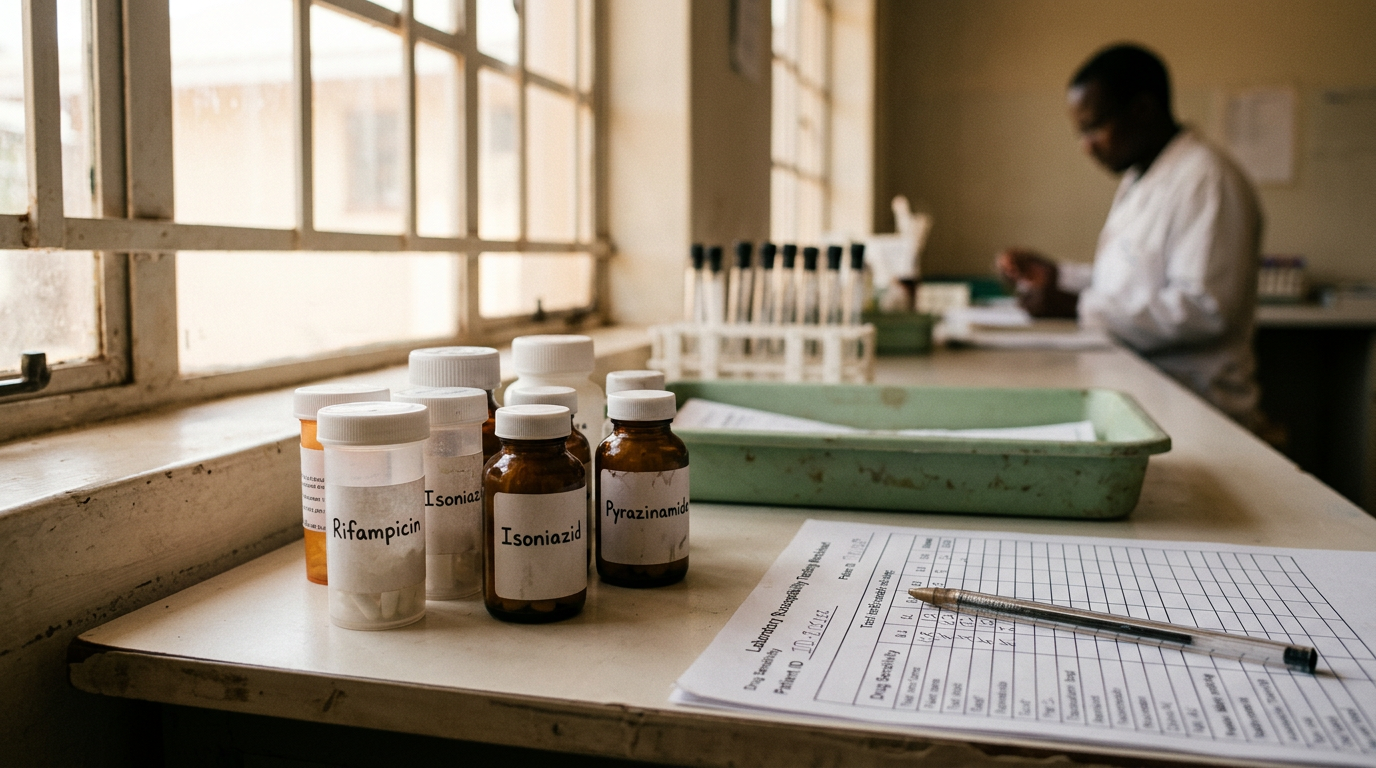
TB is almost always cured with antibiotics. If left untreated, TB can be fatal. The most commonly prescribed antibiotics for TB are: Isoniazid, Ethambutol, Pyrazinamide, Rifampicin.
- rifampicin
- isoniazid
- pyrazinamide
- ethambutol
These antibiotics have to be taken every day for 4 to 6 months. Stopping any of these medications early without advice of a doctor can lead to any TB that may be present in the body becoming resistant to that particular antibiotic.
If TB is not treatable with the normal antibiotics (see above), it is called drug-resistant TB and treated with other drugs.
Granulomas and Mycobacterium tuberculosis
Walling off Mycobacterium tuberculosis is the primary function of granulomas, often thought of as static containment structures. In reality, they are dynamic lesions with marked variability in composition and function, some allowing pathogen survival for months or even years. Recent studies are beginning to elucidate the immunometabolic topography that accounts for this variability, which is determined by the local oxygen and nutrient environment as well as the metabolic programmes of individual immune cells.
Metabolism does more than supply energy to cells; cells can have different functions by engaging in different metabolic processes. Some immune cells (e.g. macrophages) have a more “aggressive” or “inflammatory” profile than others (e.g. Tregs), while still others become “exhausted”. Granulomas also have different zones of function, and some of these zones become hypoxic, or low in oxygen. This can induce changes in local immune cells which can actually prevent killer lymphocytes from entering to carry out their function of killing pathogen-infected cells. TB bacteria can form complex communities known as persistent bacterial aggregates (PBAs), which form hidden spaces or niches within these granulomas. The lesions formed during TB infection create their own environment that can inhibit the action of antibiotics and the host immune response.
Clinical Implications
Tetlow & Wiesener observed that granulomas can persist for decades. For this reason, some of the challenges to treating them include: 1) many drugs do not penetrate well into granulomas, and 2) most drugs require oxygen to be active, and granulomas are typically poorly oxygenated. In addition, the physical structure of many lesions prevents lymphocytes from accessing the bacteria within the lesion. Thus, even extended or intensified courses of antibiotic therapy may be required. Treatment must address the pathogenic bacteria as well as the lesion environment in order to reconstitute host defensive capabilities.
Identifying the granuloma environments most predictive of poor bacterial clearance will inform strategies to shorten treatment, prevent relapse and curb the selection of drug resistance transmitting strains. Early identification of such cases and strategic patient management could be key. Imaging methods and biomarkers will need to be evaluated for their feasibility, accuracy, cost and availability for use in resource-poor settings.
Who It Affects
Patients
The influences of the granuloma micro-environment on the disease dynamics of active pulmonary TB are critical for understanding disease transmission and control.
In some lesions, certain “hypoxic-immunosuppressive niches” facilitate extended periods of infectiousness, delayed cure, and increased risk of relapse. Such contributions to ongoing transmission are likely to be prolonged and to gradually abate unless rapidly brought under control.
Clinicians
For each new case of TB diagnosed, whether in a hospital in a wealthy country or a clinic in a developing world, clinicians of all specialties and levels of TB experience — from infectious disease specialists and pulmonologists to public health professionals and primary care providers — will need to understand how granulomas are formed. These same clinicians will need to apply this knowledge to make decisions about the optimal duration of treatment for TB patients and the use of host-directed therapies. Furthermore, they will need simple clinical guidelines translated into low-cost clinical and diagnostic tools. In low-resource settings, front-line providers will need these resources.
Health Systems and Payers
As immunometabolic barriers are targeted through the introduction of new diagnostics and/or therapies and/or through augmented monitoring and adjunctive therapies, a host of questions about reimbursement, prioritization and equity will surface in health systems and among payers. These questions will require a thoughtful assessment of the trade-offs between potential shortening of treatment duration and reduction of long-term costs versus up-front costs of the new diagnostics and/or therapies. Policymakers will need to make informed decisions about which innovations should be considered essential components of national TB programs and ensure their access and correct utilization in high-burden countries.
Researchers and the Pharmaceutical Industry
The leprosy research world has entered a new era. We have moved beyond the simple model of killing bacteria in a petri dish in a controlled laboratory environment. The new challenge is to understand how bacteria are destroyed in the tough, metabolic, and often hypoxic environment of a granuloma. The drug developer of the future will have to look at compounds through a different lens, testing not only their ability to kill Bacillus in a petri dish but to also combat the pathogen in the much more hostile environment of a lesion. Potential vaccines and host-directed therapies will be designed to decrease bacterial loads by fundamentally changing host metabolism and combating hypoxia in order to reverse suppress of the leprosy immune response.
More than 1,000 clinical trials of tuberculosis are set to take place around the world over the next 35 years, researchers have found. A new study that screened trials set to start between 1990 and 2025 reveals what could be promising new treatments for TB as well as inequities in resources allocated to tackling the disease. Many of the trials are being funded by academic groups rather than the pharmaceutical industry, and children and women with TB—two patient populations that face the greatest challenges in battling the disease—feature too infrequently in trials already in progress. Addressing TB will require cooperation between industry scientists and those based in academia to design and conduct trials that are both effective and fair.
- Clinical frameworks will expand beyond antibiotics to include host-directed strategies that modify the granuloma environment. For example, treatments aimed at improving oxygenation, reprogramming immune-cell metabolism, or enhancing lymphocyte access.
- Diagnostics and monitoring will evolve: imaging and molecular biomarkers that report on lesion metabolism or immune accessibility could guide personalized treatment length and adjunctive therapy selection.
- Drug development priorities will shift toward compounds with activity under variable metabolic conditions and toward combination regimens that pair antimicrobials with agents that normalize lesion microenvironments.
- Health policy and program planning will need to account for higher upfront costs and infrastructure requirements if new adjunctive treatments and diagnostics are adopted, while weighing potential long-term savings from reduced relapse and transmission.
What Changes
Future Plans
Translating insights obtained from basic research into tangible patient benefit requires several steps. Firstly biomarkers for the lesion state of patients need to be validated. Then it needs to be shown that interfering with a pathway of the granuloma metabolism translates into a relevant and effective treatment. Most importantly safety needs to be established, as fiddling with the immune system always comes with risks. In fact, improving immunity using a host-directed approach could potentially lead to uncontrolled inflammation or even lesions. Therefore, achieving the right balance is essential.
According to PLOS, China is conducting 224 trials that involve TB patients, followed by South Africa with 216 trials. But while China and South Africa are conducting the most trials that include TB patients, the US and UK have completed the largest number of clinical trials involving patients with the deadly disease, reports Xinhau.
Challenges to Overcome
Several operational challenges must be addressed. Many TB-endemic countries do not have routine access to imaging such as CT or specialized laboratory capacity. Thus, there will be concerns about equity if future TB diagnostics are developed and implemented in high-resource settings but not in low-resource settings. Implementation science will be important for translating and implementing these diagnostics to low-resource settings. In addition, pragmatic trials will be crucial for determining the performance of diagnostics in real-world settings to guide their implementation. Training of the TB health care workforce in the interpretation and utilization of patient metabolic data and spatial information regarding patient lesions will be crucial in the rollout of these novel technologies.
Remaining Questions
From an immunometabolic perspective there are some new and interesting questions on TB that need to be addressed. Can adding anti-inflammatory agents to standard therapy shorten the duration of treatment by promoting a remodelling of the granuloma to allow antibiotics to more effectively kill B. tuberculosis? Which patients are more likely to benefit from such an approach? Can a better understanding of how lesions contributing to chronic disease pathogenesis can be prevented from occurring, or made to resolve more rapidly, help to prevent the emergence of drug resistance by ensuring that all bacterial organisms are killed. Answering these questions will require a combination of clinical research, studies of safety and toxicity, and efforts to formulate appropriate policy for access and for cost.
Practical Takeaways
In the coming years and months, moving towards a lesion aware TB care paradigm that adequately accounts for the complex interactions between Mtb, host immunity and the tissue environment will become increasingly important. Tracking down valid biomarkers and trial results and translating these into a functional health system and treatment algorithm will be key. As we continue to dissect the immunometabolic topography of the TB lesion, it is hoped that this will translate into practice in the near future and usher in a new era of TB treatment that moves beyond the one-size fits all antibiotic-based model and towards a more precise, pathogen and tissue environment informed approach.
One story a day
The story of the day, in your inbox
One health journey each morning — no advice, no alarm, just company for the road.