MiniMed 780G Pump Secures CE Mark With Abbott Instinct Sensor
The MiniMed 780G, an automated insulin delivery system from Abbott, has received FDA clearance to work with the
 Written and medically reviewed byRayan SalihContributing writer · PharmD, RPh
April 16, 2026 · 10 min read
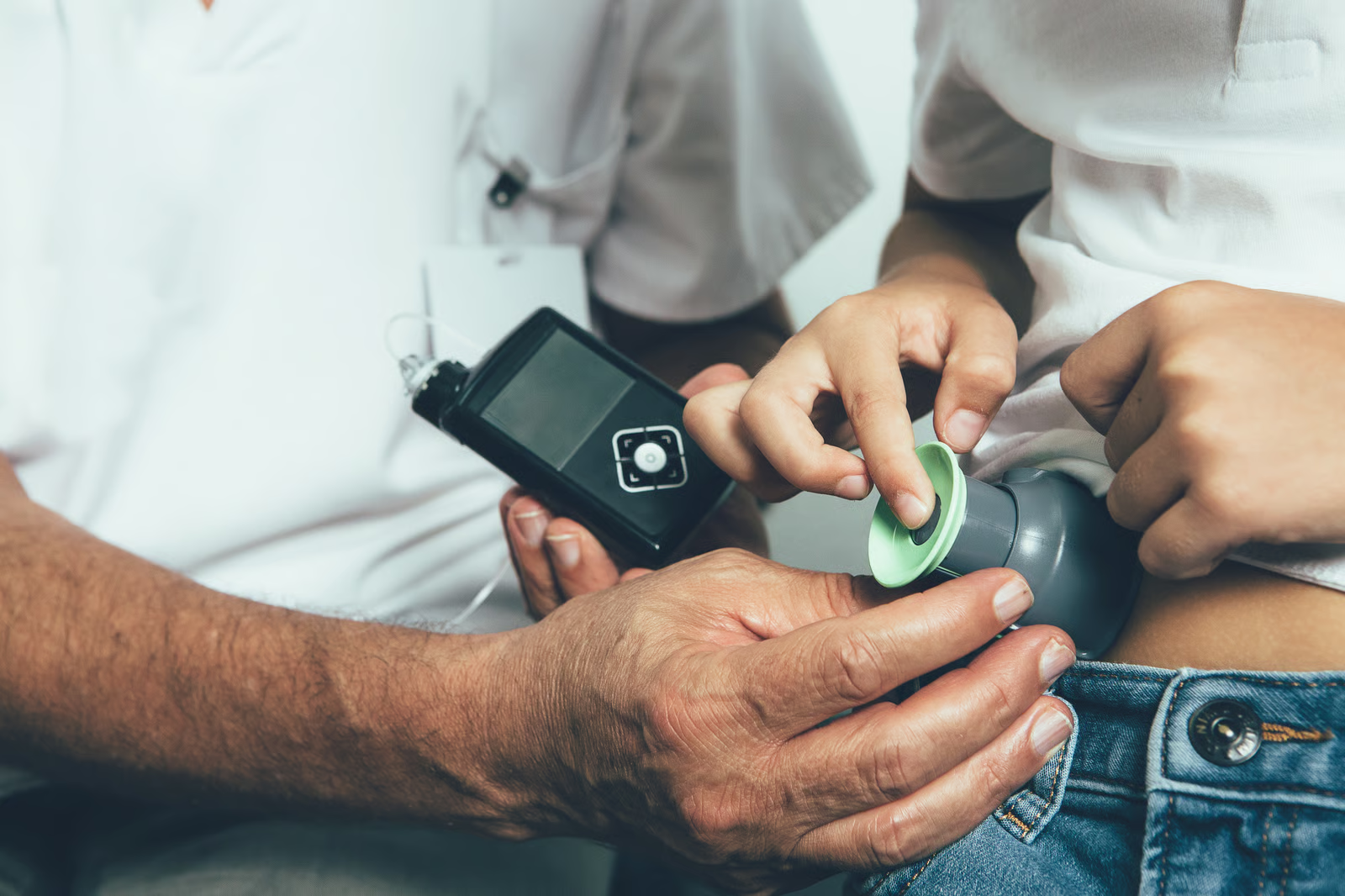
The MiniMed 780G, an automated insulin delivery system from Abbott, has received FDA clearance to work with the company’s newer-generation Instinct continuous glucose monitor. That means users of the system will have a second CGM to choose from. The development also suggests that a key component of closed-loop diabetes devices may be more replaceable than initially thought, with potential implications for patients, clinicians and payers.
Regulatory Milestone
This Medtronic diabetes certification event is a significant step forward for the company’s offerings. For European patients, this new Medtronic Integrated option in the MiniMed 780G glucose monitoring system – featuring Medtronic SmartGuard Hybrid Closed Loop technology integrated with Abbott’s FreeStyle Libre 3 sensing technology (Instinct sensor) – offers glucose monitoring interoperability choice. By “Integrated” here we mean glue strip integration of Medtronic glucose monitoring with Abbott sensing technology. The Instinct sensor from Abbott features Abbott world-class sensing technology with 15-day sensor life and small form factor. Additionally, the Medtronic Integrated option combines Medtronic SmartGuard technology featuring new footprint-reduced architecture with small form factor sugar sensing hardware from Abbott, and the meal detection algorithms and automated bolus insulin delivery every 5 minutes that are integral to the SmartGuard Hybrid Closed Loop system.
Why It Matters
additional companion for an existing sensor
Automated insulin delivery (AID) systems using cellular technology combine an insulin pump and continuous glucose monitor (sCGM), linked to a patch on the body, and an algorithm. This algorithm analyses glucose readings and delivers insulin automatically. Among the most popular AID systems is the MiniMed 780G system from Medtronic. A further sensor is now available as a companion product to the MiniMed 780G, namely the Abbott Instinct sensor. While this may seem a small step, it is a big advantage for people with diabetes. In future, they will no longer be let down by stock shortages. Neither will they have to put up with painful skin reactions caused by certain products. Of course, price is a relevant consideration. But with another option available for the approved sensor, there is a reduced risk of lapses in glucose control. And above all, the danger of developing high or low blood sugar, also known as hypo- or hyperglycaemia, is reduced.
Systems Level Implications
This approval will likely drive the industry and the broader diabetes device market towards increased modularity at the system level. Manufacturers and regulators will need to consider these changes from both a clearance and product sales perspective, but the approval will have far-reaching impacts throughout the health system including pharmacies, distributors, payers, and clinics. Educators and prescribing providers will also need to consider how to counsel patients on not only appropriate pump settings, but also sensor options, sensor performance, and proper sensor use and troubleshooting. The payment structure for products is likely to impact access to different sensors, and which ones will be deemed cost-effective and therefore covered by payers in different markets and countries.
This approval will allow Medtronic to offer the 780G with non-proprietary sensors, effectively breaking Medtronic out of the “walled garden” where the only Guardian (now Abbott) sensors approved for pairing with Medtronic insulin pumps for AID were proprietary Guardian sensors requiring Guardian Link transmitter. This opens up the opportunity for the Abbott Instinct enzyme sensor to pair with the popular Minimed Revel FreeStyle insulin pump, offering a lower profile option for patients and the elimination of fingerstick calibrations that can be a huge advantage for pediatric patients and active adults and their families.
practical implications
While accuracy is a major concern when it comes to the implications for patients, the features of different products are not limited to glucose reading accuracy. Products have different features and characteristics around wear time, size, adhesive quality and alarm functionality. One of the new features of the Abbott Instinct glucose sensor is that it is “low-profile” and can be worn for up to 15 days. For active individuals, such as busy parents, athletes and employees in physically demanding professions, this could be a huge quality of life improvement. However, as with the pump, there will be questions around accuracy, the need for calibration and how the pump’s algorithm handles the data from the new sensor. The decision to discontinue the use of combination therapy in adult patients with Crohn’s disease who are in clinical remission will ultimately be left up to
Supply Chain Implications
This partnership addresses the needs of the patient and clinical use cases from a Diabetes and Continuous Glucose Monitoring perspective. It provides both companies a competitive advantage from an integrated system perspective versus other integrated systems that Tandem and Dexcom could develop in the future.
From a supply chain perspective, this modular approach can provide some protection as we begin to launch the product to the market. The experiences with one sensor (Glide Pump) do not have to translate into delays for the other device (Enlite) should one manufacturer encounter some production challenges. For example, while Tandem is working to resolve any challenges with Glide Pump sensor production, clinicians and patients can seamlessly transition to and be fitted with an Enlite sensor while the production issues are being worked. Clinicians and patients do not have to start over learning how to use a new pump to address a sensor issue.
Our phased launch across Europe will also focus on the integration of data from the Abbott developed sensor into the CareLink software. This will enable clinicians to view data from both sensors within one platform and make dose decisions, such as unit increase to basal or increase to insulin-to-carb ratio, from one data set. This integration is different from other integrations on 780G, as it increases the compliance of patients by removing a barrier to their use of the system, rather than simply adding a feature to the practitioners’ use of the system.
Who It Affects
patients on Insulin Therapy
The approval of insulin pump systems that combine continuous glucose monitoring with external insulin delivery for people with diabetes is significant, especially for people with insulin-requiring diabetes who may consider using the MiniMed 780G system (Tandem Diabetes Care Inc.) and their healthcare team. Many people with both type 1 and type 2 diabetes will be eligible for this new technology. Some will choose to use this new combo for various reasons including comfort, cost or supply. Others will consider this technology option after discussion with their diabetes care team.
Clinicians and Diabetes Educators
These changes will require some understanding of the Clinicians and diabetes educators on how different sensors work and how they interact with the 780G algorithm for proper troubleshooting. This in turn will lead to new ways of problem solving and identifying causes of unexpected highs and lows in individuals who are using this new pump with the Instinct sensor. The basics of how to manage with diabetes have not changed. The nuances of the sensor, pump configuration and handling of parts will require a new set of understanding and a retooling of how to apply these concepts. With limited time spent with each patient, efficiently and accurately identifying the cause of unexpected readings will be important.
Healthsystems and Payers
- More sensor choices for MiniMed 780G users. Patients no longer have to rely on a single manufacturer if they prefer a different fit, wear time, or pricing structure.
- Clinical workflows will need updating. Diabetes educators and clinicians must be prepared to support a new sensor-pump pairing, including guidance on placement, signal loss troubleshooting, and algorithm behavior.
- Payer decisions and procurement strategies may shift. Formularies and supply contracts could expand or consolidate depending on cost, availability, and real-world performance.
- Greater emphasis on interoperability and user preference. As modularity grows, the market will face pressure to improve device compatibility, patient data sharing, and user-facing software to make switching easier.
Healthsystems and payers are going to want a piece of this pie, therefore there will be a ‘product manager’ assigned to evaluate and secure authorized kits, formulary decisions and educational material for this technology. Payers will also want to view the long-term data to understand the value of this technology against the up front costs. However, based on past experience I believe the sensor that makes the most sense to ease carbohydrate counting in an consistent manner for people with Diabetes will be cost-effective in the long run to avoid expensive ER visits and hospital stays. This is an evolving process and there will be a temporary access barrier while this process works itself out.
What Changes
Practical Considerations for Patients and Clinicians
You currently use an insulin pump but are exploring the option of an continuous glucose sensor? Ask your diabetes team what they think you should know before you make the transition. They can explain the key differences they have observed in your diabetes management and the specific functions of the new sensor. Ask about the calibration process and how long the sensor is expected to last. Also ask about follow-up management with this new device. There will be a brief period of time for both you and the new device to get acquainted. Most algorithms are designed with the characteristics of a specific monitoring device in mind, and require only a few weeks of data collection to adjust insulin settings when making a switch to a new monitoring device, typically within a 1-3 week timeframe.
Providers and patients should be on the look out for complications in the days following handoff to Cgm. A short clinic or telehealth visit can be very helpful to work through any issues that have arisen. Diabetes team members (nurses, endocrinologists, home care nurses, pharmacists) who educate patients and families about their diabetes and glucose management should also be familiar with the features of the new sensors. For practices that see a large number of cycled pump patients, creating a checklist for attaching and calibration of the new sensor can be very helpful to prevent errors and reduce the number of line calls.
Risks, Trade-offs, and Real-World Challenges
As more options become available, people with diabetes have more choice and flexibility to find what works best for them. However, as more options become available, choice and flexibility can turn to complexity. Different sensors may employ different methods to estimate glucose levels and rapid change. This can translate into different alerts and a different pattern of forced, occasional, corrections. The overall positive of the new feature may only be realised by the individual after a period of time and with more effort to achieve the same level of comfort and control that they currently experience. Skin reactions to adhesives have been a problem for a long time. But that doesn’t have to be the case—especially for thinner bio and health wearables on people with sensitive skin.
Cost and coverage of the new devices are likely to be two of the biggest issues in this emerging marketplace. Payers will view devices with “complementary” features as not having parity in reimbursement. A patient with diabetes may find that they have to pay co-pay for different sensors for continuous glucose monitoring transcutaneous sensors, or that a claim is denied because the insurer does not cover the sensor that their CDE prefers to use.
Infusion set issues in the pipeline also need to be solved. The good news is that there are several approved combinations that should prevent future product shortages. However, having the money and efficient distribution channels to move the products smoothly through the supply chain is also important. But there is also the issue of the coverage policies and prior authorization requirements that will impact a provider and patient’s timely access to the new technology. Even with FDA approval and payer coverage, are the new devices being distributed and handled smoothly enough that a provider and patient can easily make a switch if needed?
What’s Next
Following on the theme from earlier this morning that diabetes technology is becoming more modular, some components will be designed to be fully compatible with other devices including being swappable over time. This should help in the long run to drive more long term innovation as well as allow for better customization to the needs of individual patients. But in the short term, there will be a need for better interoperability as well as data standards and cybersecurity. Diabetes consumers will expect to be able to easily download data from one glucose monitor and send it to another glucose management device, whether that is a pump or app. Cabling manufacturers are predicting that as device manufacturers select their components, they will also be required to ensure that connections are made securely and reliably.
Policy & Reimbursement
How quickly we might receive this future will depend on the policies and reimbursement for the various medical device combinations and components. As payers and health systems move towards reimbursement based on outcomes, patient preferences, and truly cost-effective medical device strategies, a “modular” future may arrive sooner than we expect. On the other hand, a static procurement system may stifle progress until patients start paying out of pocket for “components” of cataract surgery they read about online. Physicians can accelerate the evolution of cataract surgery by documenting the benefits and harms of “device swaps” in their practices and sharing them with colleagues at events such as AAO Retina or ASCRS. This practice-based information will guide patient selection and provide the data that payers and guideline bodies rely on for decisions regarding device coverage.
- https://www.massdevice.com/minimed-ce-mark-780g-instinct-abbott/
Looking Forward
This approval will allow users of the MiniMed 780G to have more options to achieve better glucose control with reduced glucose monitoring burden. This is a good step but there are still many other challenges to overcoming barcodes on boxes, aligning reimbursement, and clinical and patient support.
References
One story a day
The story of the day, in your inbox
One health journey each morning — no advice, no alarm, just company for the road.