VB Spine To Acquire CT-Fluoro Spine Technology From Augmedics: A New Era for Affordable Spine Navigation
VB Spine, a major privately held spine-tech company, announced a deal to acquire exclusive rights to Augmedics’ CT-to-fluoroscopy
 Written and medically reviewed byDr. Abu BakarContributing writer · PharmD, PhD (Pharmacology)
July 18, 2026 · 9 min read
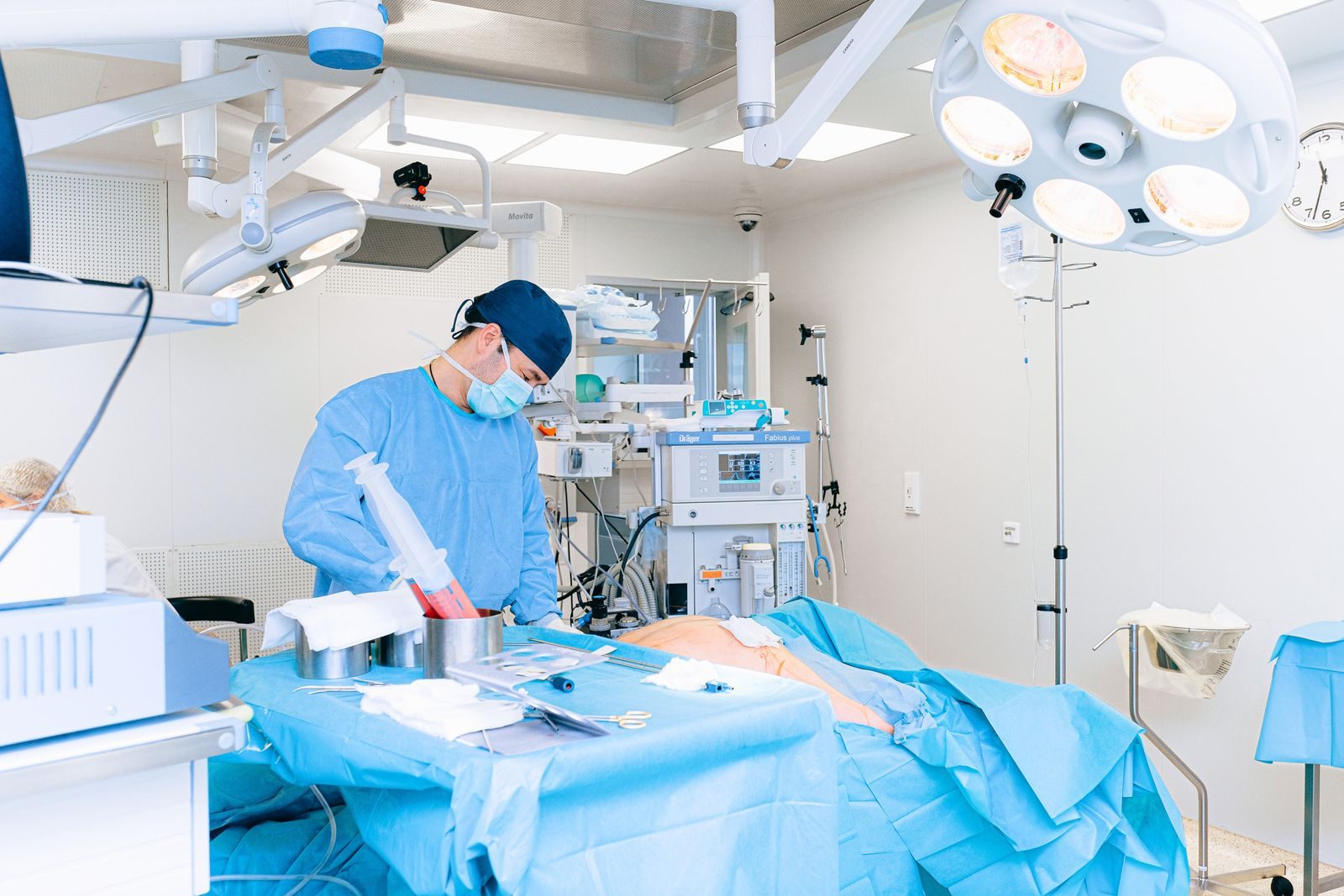
VB Spine, a major privately held spine-tech company, announced a deal to acquire exclusive rights to Augmedics’ CT-to-fluoroscopy (CT-Fluoro) registration technology. This innovation lets surgeons align a patient’s pre-operative CT scan with live 2D X-ray (fluoroscopy) images during spine surgery. In practice, the system would give surgeons “X-ray vision” navigation without bringing a bulky 3D scanner into the operating room. By adding CT-Fluoro to its portfolio on the heels of acquiring Augmedics’ AR-based xvision system, VB Spine aims to make advanced image guided navigation available in more hospitals. In effect, smaller centers that only have a standard C-arm fluoroscope could now offer navigation assisted spine procedures that were once possible only in large specialty centers.
Why It Matters
Precision navigation in spine surgery typically depends on expensive imaging hardware. Most advanced systems require an intraoperative CT or cone-beam CT scan to map the patient’s spine in 3D during the operation. Those machines are sometimes called O-arms or 3D C-arms that can cost hundreds of thousands of dollars, making them scarce outside big hospitals. The CT-Fluoro approach changes that balance. It uses a routine pre-op CT scan (readily done in any imaging center) and a few quick X-ray shots from the operating room fluoroscope to register the patient’s anatomy. That means a surgeon can use the same navigation workflows and even augmented reality “x-ray vision” displays with only a standard C-arm machine, rather than a dedicated 3D scanner. This could extend navigation’s benefits to many more ORs. Navigated spine surgery is known to improve accuracy and safety. Peer reviewed studies consistently find that computer-assisted navigation places screws more precisely than relying on fluoroscopy alone. More precise screw placement means fewer breaches of the bone, lower risk of nerve or spinal cord injury and often avoids re-operations. Navigation can also let surgeons work through smaller incisions and reduce X-ray exposure over the whole case. All of these factors matter for patient outcomes. However, that promise has been limited by equipment availability. By removing the need for an intra op CT scan, CT-Fluoro aims to break down a major barrier to using navigation more widely. If hospitals don’t have to buy a new 3D scanner, they can more easily justify adding navigation software to their existing C-arm. At the same time, some trade offs exist. The CT-Fluoro method assumes the patient’s spine hasn’t shifted between the pre-op scan and the surgery. In many routine cases a planned lumbar fusion, for example that is true. But in cases with severe deformity, recent trauma, or infection, the spine’s shape can change, making the old CT less accurate. Surgical teams will need to establish checks, such as confirming a few landmarks under fluoroscopy, to ensure the registration is still correct. They must stay alert: if the alignment seems off, the team might need to re-register or use a quick 3D scan after all. In short, CT-to-fluoro navigation offers a practical compromise between precision and cost. It won’t replace 3D scanners in every case, but it could bring most of the benefits of navigation into hospitals that lack the fancy hardware.
Who It Affects
Patients. If CT-Fluoro navigation becomes common, more patients could benefit from guided spine surgery close to home. Instead of being referred to a tertiary center that has an intra-op CT suite, a patient might have surgery at their local hospital using the new method. This could cut down travel time and wait lists. Overall, navigation is a tool that might improve outcomes – it gives the surgeon extra information, but it does not guarantee perfect results. Patients and families should understand that this method is simply a new way to get those navigation benefits without special equipment. Surgeons and OR Teams. Spine surgeons and their staff will notice changes in case setup. With CT-Fluoro, the team will do more imaging work before the incision: the patient needs a standard CT scan beforehand, and in the OR they will take one or two targeted X-ray shots with the C-arm. Surgeons will have to trust the software’s registration of those shots to the CT data. This means surgeons (and radiology techs) will need training on how to acquire the right images, how to adjust the patient or C-arm if the registration isn’t perfect, and how to interpret the navigation readouts. The upside is smoother logistics: setting up a few X-ray images is usually faster than wheeling in a large 3D scanner and waiting for it to spin around the patient. That could speed up the surgery and turnover times. Over time, OR staff will develop routines and checklists (for example, verifying a vertebra under navigation before inserting a screw). With practice, many teams should feel comfortable with this workflow. Hospitals and Health Systems. Administrators will compare the economics of this approach to other options. Buying an O-arm scanner can exceed half a million dollars over a few years. In contrast, CT-Fluoro registration mainly requires software licensing and perhaps minor hardware. The capital outlay is lower, though there will be costs for software, training, and possibly annual fees. For big centers that already have 3D imaging, CT-Fluoro may simply be a useful add-on feature. But for community hospitals and surgical centers without any navigation, this deal could unlock a new service line. Insurers and payers, who currently reimburse spine surgeries at fixed rates, will watch for evidence. If navigation through CT-Fluoro clearly lowers complications or revisions, payers might later give incentives for its use. For now, hospitals should ask vendors for transparent total-cost estimates and plan to collect their own outcomes data. Understanding how this new tool affects OR time, screw accuracy, radiation dose, and downstream savings will be important in making it pay off. Medical Device Industry. This deal is another sign of consolidation around navigation and augmented-reality platforms. VB Spine is building a suite of spine tools – they also picked up Augmedics’ AR-based xvision system and another visualization platform (SpineHawk) earlier. On one hand, a hospital could benefit from buying a bundled solution that integrates implants, navigation, and AR displays. On the other hand, it raises questions about interoperability. Will hospitals be locked into one ecosystem for tools and software? How will VB Spine’s combined platform work with other surgical robots or imaging vendors? The competition will intensify: other companies may form partnerships or acquire navigation technology to keep up. Ultimately, the market is moving toward packaged offerings, and this acquisition tells hospitals to pay close attention to vendors’ long-term strategies.
What Changes
- Practical implication: A greater number of operating theatres would be able to carry out navigation-assisted spine surgeries by avoiding the need to buy an expensive 3D CT scan or cone-beam imaging equipment. Thus, the entry cost for performing the procedure in small hospitals and outpatient surgery facilities is reduced. An institution possessing only a regular C-arm (a usual fluoroscope) would be able to buy the appropriate software and utilize its preoperative CT scans to conduct procedures which have been unavailable until now. Consider, for example, a community hospital performing a lumbar spine fusion surgery using all the same safety devices as in a university hospital.
- Workflow Impact: Surgical teams will rely more on preoperative planning. They will import a routine CT scan of the patient’s spine and then capture a couple of fluoroscopic X-ray shots in the OR for registration. That means some imaging work shifts to before the surgery starts. In the OR, the staff will focus on getting clear fluoroscopy images quickly and checking that the navigation overlay lines up with known anatomy. Teams will develop new protocols: for example, marking a landmark under navigation and confirming it matches the fluoroscopy shot. If the alignment looks off, they might adjust the patient position or acquire an extra image. Over time, this workflow should become routine, streamlining cases by avoiding the time needed for a big 3D scan.
- Access and Cost: We can expect spine cases to spread toward community hospitals and away from only academic centers. Patients may no longer need to travel far for routine fusions with navigation. Whether this saves money overall will depend. The system still requires licensing fees, and staff training takes time. But if the navigation reduces complications or revision surgeries (as some studies suggest it can), those savings could be significant. One cost analysis found that an O-arm’s expense is offset if it prevents even a handful of revisions. Using pre-op CT with standard fluoroscopy could achieve similar accuracy for many cases at lower cost. Hospitals will need to track metrics like revision rates and operative time to see the true economic impact.
- Market Dynamics: VB Spine’s move underscores how spine-tech companies are bundling navigation, AR, and visualization tools. In theory, a unified platform lets surgeons “mix and match” instruments, implants, and now imaging modes for each patient. In practice, however, this raises issues of interoperability. Hospitals should be aware of potential vendor lock-in. VB Spine’s expanding portfolio could make it convenient to buy one integrated solution, but that may limit flexibility to use third-party software or hardware down the road. Observers and purchasing committees should also watch pricing carefully. Often the software itself might have per-use fees or ongoing service charges. Buyers should ask for transparent total-cost-of-ownership and make sure upgrades or consumables are clearly explained.
In simple terms, CT-Fluoro registration gives surgeons a practical path to navigation without buying a new imaging machine. The technique is already FDA-cleared for use with Augmedics’ AR system, and VB Spine’s deal secures its exclusive spine applications as part of the xvision ecosystem. In Dr. Frank Phillips’ first case using CT-Fluoro, for example, he reported the workflow was “more efficient” than setting up a 3D scanner, with navigation-quality visuals that he found excellent. With VB Spine distributing the technology, more surgical teams will have a chance to try it.
Looking ahead, this acquisition is one more signal that high-tech navigation is moving into the mainstream of spine care. It doesn’t mean every hospital will stop using O-arms or robots; those will still be important for the most complex cases. Instead, CT-Fluoro expands the toolbox. The key questions will be how fast hospitals adopt the method, what they charge for it, and whether real-world data support its promise. For now, the industry is watching closely: deals like this reshuffle who controls the software and algorithms that guide modern spine surgery. If VB Spine’s strategy succeeds, surgeons will have more flexibility – they can use pre-op CT plus a regular C-arm for most cases, and still reserve expensive 3D scans for the toughest jobs. That balance of precision, cost, and convenience could reshape referral patterns and patient care in the years to come.
References
- VB Spine LLC. VB Spine to Acquire CT-Fluoro Technology for Spine Applications from Augmedics. Yahoo Finance (via Business Wire). 2026. View source. [\[finance.yahoo.com\]](https://finance.yahoo.com/healthcare/articles/vb-spine-acquire-ct-fluoro-130000771.html)
- U.S. Food and Drug Administration. xvision Spine system (K250255) 510(k) substantial equivalence letter and summary. FDA. 2025. View source. [\[accessdata.fda.gov\]](https://www.accessdata.fda.gov/cdrh_docs/pdf25/K250255.pdf)
- Perdomo-Pantoja A, Ishida W, Zygourakis C, Holmes C, Iyer RR, Cottrill E, et al. Accuracy of Current Techniques for Placement of Pedicle Screws in the Spine: A Comprehensive Systematic Review and Meta-Analysis of 51,161 Screws. World Neurosurgery. 2019. View PubMed. [\[pubmed.ncb…lm.nih.gov\]](https://pubmed.ncbi.nlm.nih.gov/30880208/)
- Bhatt FR, Orosz LD, Tewari A, Boyd D, Roy R, Good CR, et al. Augmented Reality-Assisted Spine Surgery: An Early Experience Demonstrating Safety and Accuracy with 218 Screws. Global Spine Journal. 2023. View PubMed. [\[pubmed.ncb…lm.nih.gov\]](https://pubmed.ncbi.nlm.nih.gov/35000409/)
One story a day
The story of the day, in your inbox
One health journey each morning — no advice, no alarm, just company for the road.