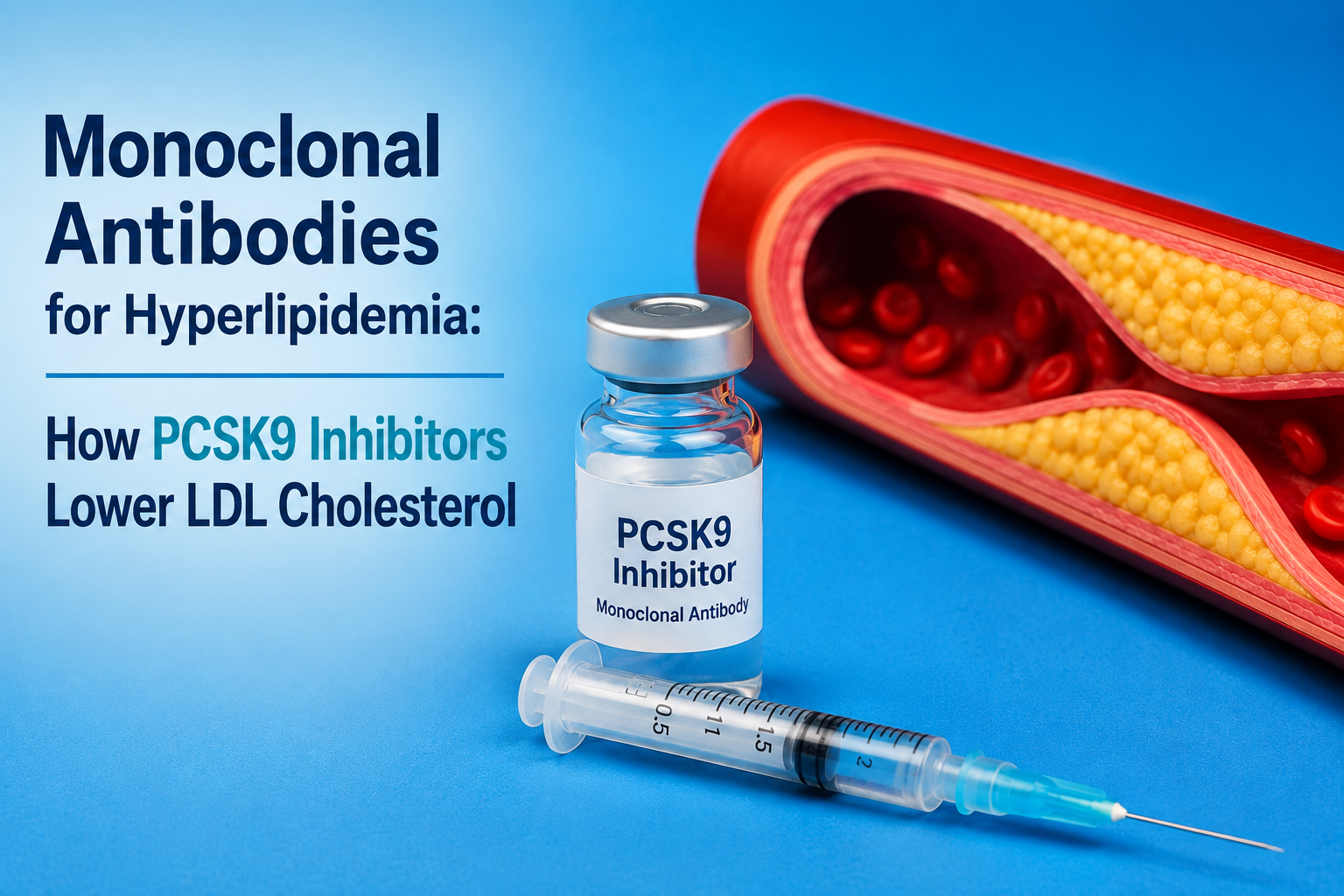
What the FDA Approval and Phase 3 Data for Enlicitide Means for Preventive Cardiology
For decades, low-density lipoprotein cholesterol (LDL-C) management has served as the bedrock of primary and secondary cardiovascular disease
 Written and medically reviewed byRayan SalihContributing writer · PharmD, RPh
July 30, 2026 · 8 min read
For decades, low-density lipoprotein cholesterol (LDL-C) management has served as the bedrock of primary and secondary cardiovascular disease prevention. Yet, despite strong consensus guidelines recommending aggressive LDL-C lowering in high-risk patients, a persistent gap remains: millions of individuals with established atherosclerotic cardiovascular disease (ASCVD) or heterozygous familial hypercholesterolemia (HeFH) fail to achieve target LDL-C levels.
While the introduction of subcutaneous proprotein convertase subtilisin/kexin type 9 (PCSK9) monoclonal antibodies and small interfering RNA (siRNA) therapies revolutionized lipidology, their clinical adoption has been hampered by administration logistics, needle phobia, cold-chain supply requirements, and stringent prior authorization hurdles.
Recent Research
The therapeutic paradigm has now fundamentally shifted. With the FDA approval of enlicitide decanoate (Lipfendra), the first once-daily oral PCSK9 inhibitor, and the publication of its pivotal Phase 3 CORALreef Lipids trial (NCT05952856) in The New England Journal of Medicine, clinicians now possess a potent, non-injectable PCSK9-targeted therapy.
Below is an in-depth breakdown for healthcare providers examining why this milestone matters, who it affects, and what clinical practice changes are required to integrate oral PCSK9 inhibition into routine patient care.
Why It Matters
The Persistent Gap in Lipid-Lowering Therapy
Current multi-society clinical guidelines, including those from the American College of Cardiology (ACC), American Heart Association (AHA), and European Society of Cardiology (ESC), recommend driving LDL-C levels below 55 mg/dL or 70 mg/dL for patients at high or very high risk for major adverse cardiovascular events (MACE). High-intensity statins remain first-line therapy, frequently combined with ezetimibe.
However, real-world registry data reveal that up to 70% of high-risk ASCVD patients fail to reach these target thresholds on oral therapy alone. Statins can yield up to a 50% reduction in LDL-C, and ezetimibe adds an incremental 15% to 20%, but for patients presenting with extreme baseline LDL-C elevations or significant statin intolerance, this dual oral combination falls short.
Overcoming the “Injectable Barrier”
Injectable PCSK9 inhibitors (such as evolocumab, alirocumab, and inclisiran) provide profound LDL-C reductions ranging from 50% to 60%. Despite their robust cardiovascular outcome trial (CVOT) validation, clinical uptake has lagged behind clinical need. Reasons include:
- Patient Apprehension: Needle phobia and reluctance to self-inject subcutaneous therapeutics.
- Storage and Logistics: Requirements for refrigeration and temperature-controlled handling.
- Practice Overhead: Subcutaneous administration in office settings or specialty pharmacy delivery channels that impose administrative burdens on outpatient clinic workflows.
By delivering the potent biochemical efficacy of PCSK9 monoclonal antibodies in a once-daily oral capsule, enlicitide removes the administration friction that has historically limited advanced lipid-lowering therapy to a small fraction of eligible patients.
Biochemical Innovation: Macrocyclic Synthetic Peptides
PCSK9 is a circulating plasma protein that binds to low-density lipoprotein receptors (LDLR) on the hepatic cell surface, targeting them for lysosomal degradation rather than recycling back to the plasma membrane. Inhibiting PCSK9 preserves cell-surface LDLRs, dramatically accelerating hepatic clearance of circulating LDL-C.
Historically, targeting PCSK9 orally presented a massive pharmacological hurdle: the flat, featureless binding interface between PCSK9 and the LDLR requires a molecule with a large contact surface area, which typically precludes traditional small-molecule oral absorption. Enlicitide decanoate overcomes this via a novel chemical architecture: a macrocyclic synthetic peptide formulated with a permeability enhancer (sodium caprate). This structure allows it to bind PCSK9 with nanomolar affinity in the gut while achieving adequate oral bioavailability to produce systemic target inhibition.
Evidence from the Phase 3 CORALreef Lipids Trial
The FDA approval was grounded in robust evidence from the randomized, double-blind, placebo-controlled Phase 3 CORALreef Lipids trial (NCT05952856), published by Dr. Ann Marie Navar and colleagues in The New England Journal of Medicine.
Trial Design & Patient Population
- Cohort Size: 2,909 adult participants with hypercholesterolemia across multi-center international sites.
- Inclusion Criteria: Adults with established ASCVD (LDL-C ≥ 55 mg/dL) or at high risk for a first ASCVD event (LDL-C ≥ 70 mg/dL) who were receiving stable lipid-lowering therapy, including at least a statin (unless documented statin intolerant).
- Randomization: Participants were randomized to receive enlicitide decanoate 20 mg once daily or placebo for up to 52 weeks.
Efficacy Highlights
- Primary Endpoint (Week 24): Enlicitide achieved a 57.1% mean reduction in LDL-C from baseline, compared with a 3.0% increase in the placebo group—yielding an adjusted between-group difference of *-55.8% (p < 0.001)*.
- Durability (Week 52): Reductions in LDL-C were fully sustained through 52 weeks of continuous once-daily therapy.
- Secondary Lipid Endpoints: Enlicitide demonstrated significant improvements across the broader atherogenic lipid profile at Week 24:
- Apolipoprotein B (ApoB): Reduced by ~45% to 50%.
- Non-HDL-C: Reduced by ~50%.
- Lipoprotein(a) \[Lp(a)\]: Significant reductions of ~25% to 30%.
Safety & Tolerability
Over 52 weeks, enlicitide demonstrated a favorable safety profile that was virtually indistinguishable from placebo. Overall rates of treatment-emergent adverse events (TEAEs), serious adverse events, and study drug discontinuations were comparable between the enlicitide and placebo arms. Crucially, there were no signals for liver function test abnormalities, gastrointestinal toxicity, or immunogenicity concerns.
Who It Affects
The arrival of an oral PCSK9 inhibitor impacts multiple stakeholders across the healthcare ecosystem:
High-Risk Patient Populations
- ASCVD Patients Above Target Goal: Individuals with prior myocardial infarction, ischemic stroke, or symptomatic peripheral artery disease who remain above target LDL-C thresholds despite maximally tolerated statin +/- ezetimibe therapy.
- Heterozygous Familial Hypercholesterolemia (HeFH): Genetic patients presenting with severely elevated baseline LDL-C (>190 mg/dL) who require multi-mechanism combination therapy to reach acceptable clinical targets.
- Statin-Intolerant Individuals: Patients experiencing statin-associated muscle symptoms (SAMS) or hepatic enzyme elevations who cannot tolerate high-intensity statin regimens and have refused subcutaneous injections.
- Needle-Phobic or Non-Compliant Patients: Individuals who previously declined alirocumab, evolocumab, or inclisiran due to self-injection aversion or challenging home storage requirements.
Clinicians and Multidisciplinary Teams
- Primary Care Physicians (PCPs): PCPs manage the vast majority of hypercholesterolemic patients. The availability of a familiar once-daily oral pill empowers primary care providers to initiate advanced PCSK9 therapy directly, without referring patients out to specialized lipid clinics.
- Cardiologists & Endocrinologists: Specialists can rapidly escalate lipid-lowering therapy during post-acute coronary syndrome (ACS) follow-up visits or routine diabetic dyslipidemia reviews.
- Clinical Pharmacists: Pharmacists play a pivotal role in guiding administration rules (e.g., taking enlicitide on an empty stomach with water to optimize absorption) and assisting with formulary navigation.
Health Systems and Payers
- Pharmacy Workflows: Transitioning from specialty drug channels and buy-and-bill models (common with subcutaneous or IV biologics) to retail prescription drug distribution simplifies practice management and reduces administrative burdens.
- Formulary Tiering & Access: Payers will evaluate enlicitide’s cost-effectiveness relative to existing injectable PCSK9 inhibitors and generic lipid-lowering therapies, potentially reshaping step-therapy protocols.
What Changes
Clinical Integration & Practice Shifts
The clinical arrival of enlicitide requires key changes in how providers manage dyslipidemia:
1. Re-Ordering the Lipid Escalation Cascade
Traditional lipid-lowering algorithms follow a sequential step-wise approach: High-Intensity Statin –> Add Ezetimibe –> Add Subcutaneous PCSK9 Inhibitor.
With an oral PCSK9 inhibitor delivering near 60% LDL-C lowering, clinicians can consider early oral triple combination therapy (Statin + Ezetimibe + Enlicitide) for very-high-risk patients presenting with extreme baseline LDL-C levels.
Clinical Action: Evaluate every post-MI or high-risk ASCVD patient at their 4-to-8 week follow-up. If LDL-C remains ≥ 55 mg/dL on statins, introduce enlicitide immediately rather than waiting through multiple cycles of treatment hesitancy.
2. Comparative Clinical Decision-Making Matrix
To help guide drug selection in clinical practice, the following table compares available non-statin lipid-lowering options:
| Feature | Ezetimibe | Injectable PCSK9 mAbs (Evolocumab / Alirocumab) | siRNA Therapy (Inclisiran) | Enlicitide (Lipfendra) |
|---|---|---|---|---|
| Mechanism | NPC1L1 Inhibitor | Monoclonal Antibody vs. PCSK9 | Small Interfering RNA | Macrocyclic Peptide PCSK9 Inhibitor |
| Administration Route | Oral Pill | Subcutaneous Injection | Subcutaneous Injection | Oral Capsule |
| Dosing Frequency | Once Daily | Every 2 Weeks or Monthly | Every 6 Months | Once Daily |
| Mean LDL-C Reduction | 15% – 20% | 50% – 60% | 45% – 52% | 55% – 57% |
| Lp(a) Reduction | None | ~20% – 30% | ~15% – 20% | ~25% – 30% |
| CVOT MACE Reduction | Proven (IMPROVE-IT) | Proven (FOURIER / ODYSSEY) | Ongoing (ORION-4) | Ongoing (CORALreef Outcomes) |
| Special Storage | Room Temperature | Refrigerated | Room Temp / Clinic Admin | Room Temperature |
3. Practical Prescribing Guidance & Administration Protocols
To maximize the therapeutic benefit of enlicitide in clinical practice, healthcare providers should incorporate the following protocols:
- Administration Instructions: Enlicitide utilizes a permeability enhancer for intestinal absorption. Patients should take the capsule once daily in the morning on an empty stomach with a glass of water, waiting at least 30 minutes before consuming food, beverages, or other oral medications.
- Monitoring Timeline:
- Obtain a baseline lipid panel (LDL-C, Non-HDL-C, ApoB, Triglycerides).
- Re-check lipid levels 8 to 12 weeks after treatment initiation to assess therapeutic response.
- Monitor baseline liver function tests as part of routine hyperlipidemia management.
- Patient Counseling Points: Reinforce that enlicitide is designed to complement, not replace, background statin therapy unless statin intolerance has been formally established.
4. Navigating the Evidence Horizon: CVOT Outcomes
While the Phase 3 CORALreef Lipids trial convincingly met its surrogate lipid-lowering endpoints, clinicians must keep the broader evidence landscape in mind. Subcutaneous PCSK9 monoclonal antibodies have established cardiovascular outcomes trial (CVOT) data proving significant reductions in major adverse cardiovascular events (MACE) like myocardial infarction and ischemic stroke.
The definitive CVOT for enlicitide, the large-scale CORALreef Outcomes study, is actively underway to confirm that enlicitide’s profound LDL-C reductions translate directly into hard cardiovascular risk reduction. Given the well-established linear relationship between absolute LDL-C reduction and MACE lowering (the CTT Collaboration framework), clinicians can feel confident in the biological plausibility of enlicitide’s long-term cardioprotective benefit.
Conclusion
The approval of enlicitide decanoate marks a landmark milestone in preventive cardiology. By uniting the robust efficacy of PCSK9 inhibition with the convenience and scalability of a once-daily oral pill, healthcare providers now have an unprecedented tool to close the treatment gap in dyslipidemia management.
By proactively identifying high-risk patients who remain above target LDL-C guidelines, addressing patient hesitancy around injectable therapies, and embedding oral PCSK9 inhibition into routine outpatient workflows, clinicians can dramatically optimize lipid control and help reverse the tide of atherosclerotic cardiovascular disease.
References
1. 1. Navar AM, Mikhailova E, Catapano AL, et al. A placebo-controlled trial of the oral PCSK9 inhibitor enlicitide. N Engl J Med. 2026;394(6):529-539. doi:10.1056/NEJMoa2511002 2. US Food and Drug Administration. FDA approves first oral PCSK9 inhibitor to lower LDL cholesterol in adults with high cholesterol. FDA Press Release. Published July 16, 2026. Accessed July 27, 2026. https://www.fda.gov/news-events/press-announcements/fda-approves-first-oral-pcsk9-inhibitor-lower-ldl-cholesterol-adults-high-cholesterol 3. National Institutes of Health, US National Library of Medicine. A study of enlicitide decanoate (MK-0616 oral PCSK9 inhibitor) in adults with hypercholesterolemia (CORALreef Lipids). ClinicalTrials.gov identifier: NCT05952856. Updated September 10, 2025. Accessed July 27, 2026. https://clinicaltrials.gov/study/NCT05952856
One story a day
The story of the day, in your inbox
One health journey each morning — no advice, no alarm, just company for the road.