Convenience Kit Recall: FDA Classifies Medline’s BD ChloraPrep-Related Recall as Class I
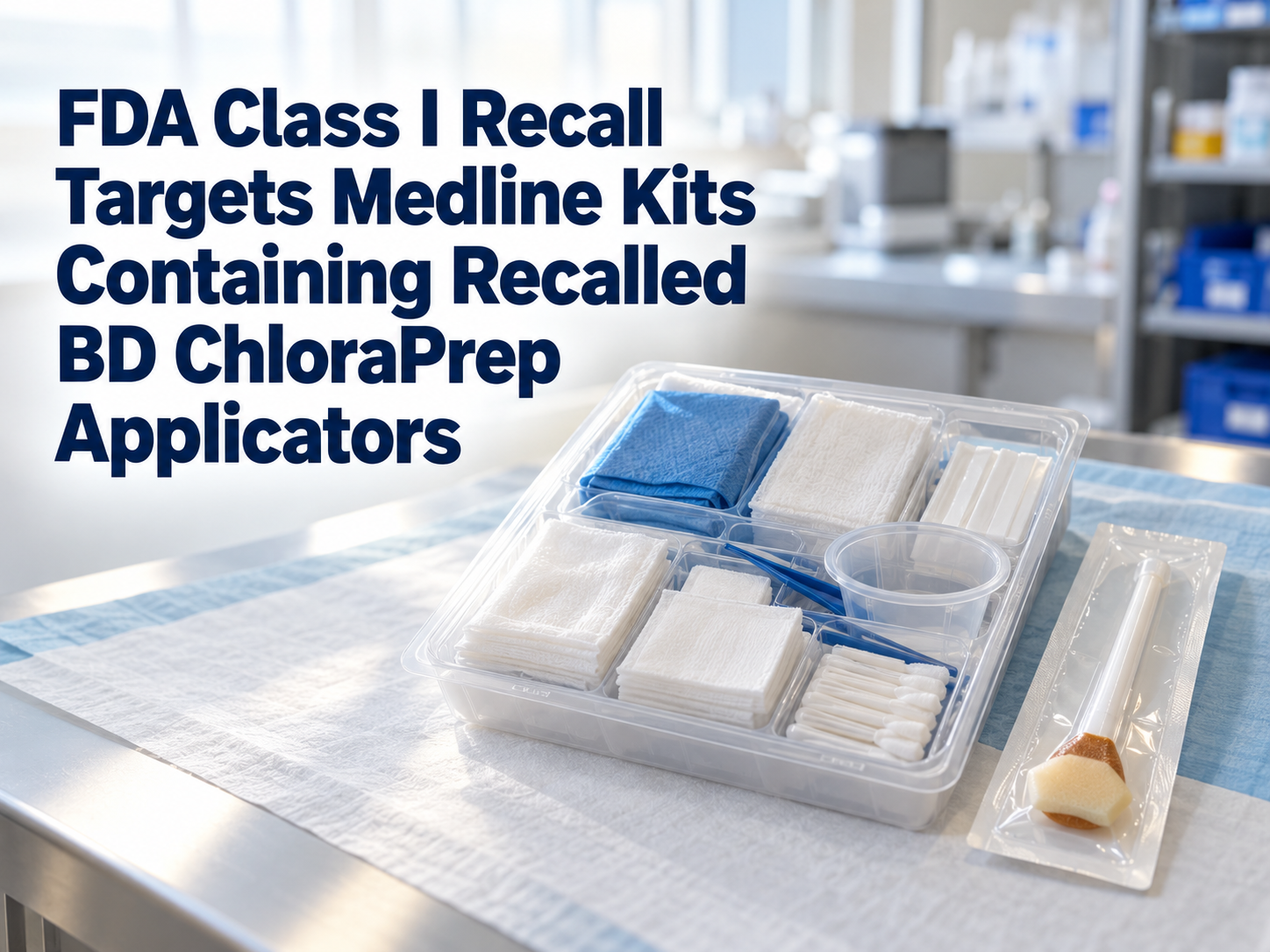
The Class I recall applies to specified Medline convenience kits containing recalled BD ChloraPrep applicators. Hospitals and other users should match both kit identifiers and lots against the FDA notice.
 Written and medically reviewed byDr. Abu BakarContributing writer · PharmD, PhD (Pharmacology)
November 2, 2026 · 6 min read
Which products require attention
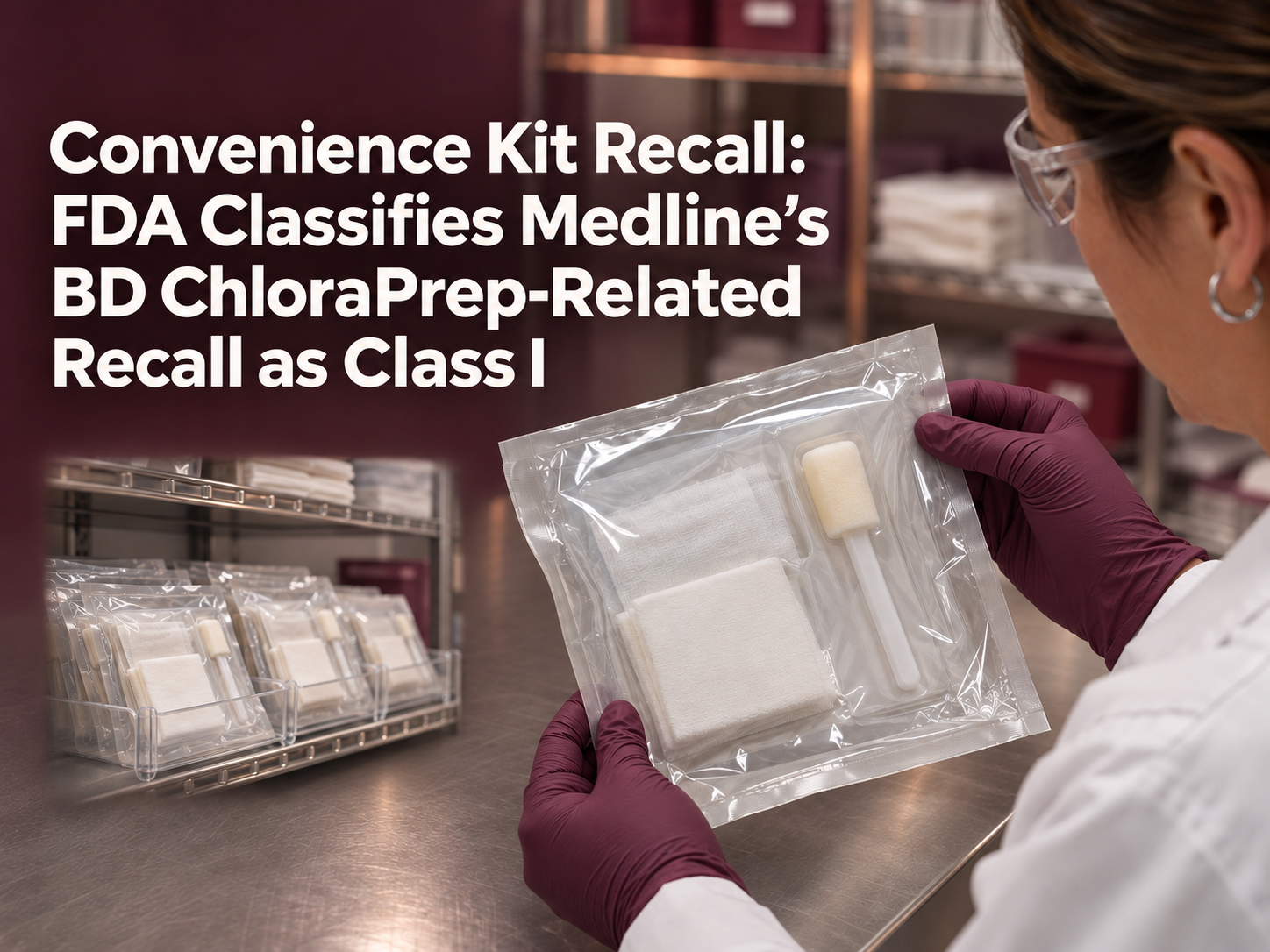
The recall does not encompass every convenience kit, every Medline product or every BD ChloraPrep applicator. It applies to the specific Medline convenience kits identified in the FDA’s affected-product information because they contain applicators included in the underlying BD ChloraPrep recall.
Inventory teams should therefore match the complete product identity in the FDA notice, including the Medline kit identifier and affected lot information. A familiar kit description or the presence of a ChloraPrep applicator alone is not sufficiently specific. Conversely, an unopened outer kit should not be presumed unaffected when its identifiers match the recall: the potentially contaminated applicator is packaged as a component of that kit.
The practical scope extends beyond central supply. Matching kits may already have moved into operating rooms, procedural suites, catheter carts, emergency departments, outpatient centers or other point-of-use storage. Product tracing should include stock transferred from the original receiving location, kits held in satellite areas and any affected inventory distributed within an affiliated health system.
The FDA classified the action as Class I, its most serious recall category. That designation means there is a reasonable probability that use of or exposure to the affected product could cause serious adverse health consequences or death. It does not establish that every recalled applicator is contaminated or that infection will occur after every exposure.
Why mold contamination changes the risk assessment
BD ChloraPrep is used to prepare skin before procedures. Potential contamination of an applicator used for that purpose undermines the infection-prevention function of the product and creates a possible route of exposure at a site where the skin barrier may subsequently be punctured, incised or otherwise disrupted.
The organism identified in the recall is Aspergillus penicillioides, an environmental mold. Aspergillus exposure does not produce the same outcome in every person. The Centers for Disease Control and Prevention notes that most people inhale Aspergillus spores without becoming ill, while invasive disease is more likely in people with weakened immune systems or underlying lung disease. The exposure scenario in this recall is different from routine environmental inhalation, however, because the concern involves a product used directly on skin around clinical procedures.
According to the FDA recall notice, use of an affected applicator may lead to local or systemic infection, sepsis, serious illness or death. Those outcomes are biologically and clinically plausible if contamination reaches vulnerable tissue or the bloodstream, but the notice does not provide an incidence rate, comparative risk estimate or exposure threshold. “May” is important: the recall identifies a potentially severe hazard, not a measured probability for an individual patient.
Sepsis is the body’s extreme response to an infection and is a life-threatening medical emergency, according to the CDC. Risk can be influenced by host susceptibility, the procedure performed, the integrity of the skin, the degree of contamination and the timeliness of recognizing infection. The FDA notice does not stratify risk by procedure or patient group.
What inventory tracing should accomplish
The immediate objective is to prevent further use of kits that match the FDA’s affected-product listing. Health systems should use the current FDA notice as the controlling source because similar kit names, locally shortened descriptions and substituted components can make text-only searches unreliable.
A defensible trace starts with the exact identifiers in the recall notice and follows each matching unit through the supply chain. Electronic inventory, purchasing and distribution records can identify where stock was received or transferred, but physical verification remains important in areas where kits may be removed from their original cartons or stored under local labels.
Facilities should segregate matching inventory so that it cannot be selected during routine care, then follow the FDA and recalling firm’s instructions for disposition, acknowledgment and any required reporting. If local records indicate that affected kits were previously distributed or used, infection prevention, clinical leadership, risk management and occupational or patient-safety teams may need to assess next steps under institutional policy and the recall communication.
The FDA notice should also guide adverse-event reporting. A temporal link between use of a recalled kit and a later infection does not by itself prove that the applicator caused the infection. Clinical cultures, organism identification, timing, competing sources and procedure details all matter. Suspected events should nevertheless be documented and reported through the channels specified by the regulator and manufacturer because surveillance helps define a risk that was not quantified in the recall announcement.
What the regulatory evidence can and cannot show
This is a regulatory safety action, not a clinical trial, cohort study or case-control analysis. There is no randomized comparator, enrolled population, prespecified follow-up period, effect size, confidence interval or P value. The evidence supports removal of identified products because the possible consequence is severe; it does not support calculation of an individual patient’s absolute infection risk.
The principal limitation is therefore uncertainty about clinical frequency. The recall notice identifies potential contamination and serious possible outcomes, but it does not establish how many applicators, if any, contain viable mold at the point of use. It also does not quantify dose, distinguish risk across procedures or provide evidence that routine screening of every potentially exposed patient improves outcomes.
General CDC information on aspergillosis and sepsis helps explain why susceptibility and early clinical recognition matter, but it cannot supply product-specific risk estimates. Decisions about evaluating a person with possible prior exposure should remain based on the clinical context, symptoms, procedure and immune status rather than recall status alone.
Questions clinicians ask
Does the recall include every kit containing ChloraPrep?
No. The action covers the Medline convenience kits specifically identified by the FDA because they contain applicators affected by the underlying BD ChloraPrep recall. Staff should match the full kit and lot information in the notice rather than removing products solely because “ChloraPrep” appears in the description.
Is an unopened convenience kit safe to use?
Not if its identifiers match the affected-product listing. An intact outer package does not resolve concern about a potentially contaminated component already packaged inside. Matching kits should be segregated and handled according to the FDA and recalling firm’s instructions rather than opened to remove or inspect the applicator unless expressly directed.
Should everyone exposed to an affected applicator be tested?
The FDA notice establishes a recall but does not provide evidence for universal laboratory testing or screening of all potentially exposed people. Clinical assessment should account for symptoms, the procedure, timing, immune status and alternative infection sources; suspected adverse events should be documented and reported through the applicable safety channels.
What symptoms would make prior exposure more concerning?
New or worsening signs compatible with infection after a relevant procedure warrant clinical assessment, particularly in a medically vulnerable person. Sepsis can present with systemic deterioration and requires urgent recognition, but symptoms are not specific to Aspergillus or to this product; microbiologic findings and the broader clinical context are needed.
References
Convenience Kit Recall: Medline Removes Convenience Kits Affected by BD ChloraPrep Applicator Recall — U.S. Food and Drug Administration, 2026
About Aspergillosis — Centers for Disease Control and Prevention, n.d.
About Sepsis — Centers for Disease Control and Prevention, n.d.
One story a day
The story of the day, in your inbox
One health journey each morning — no advice, no alarm, just company for the road.