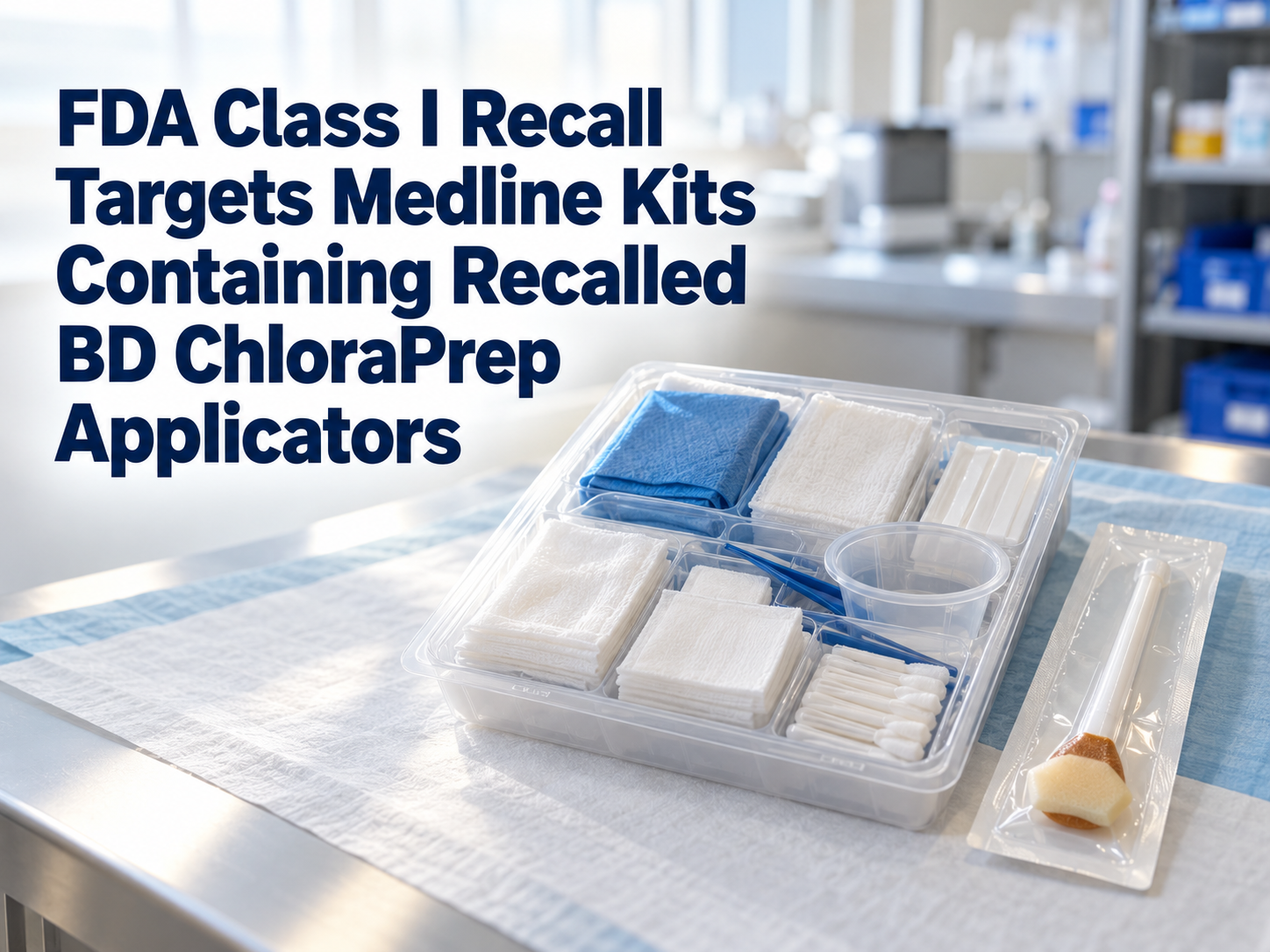
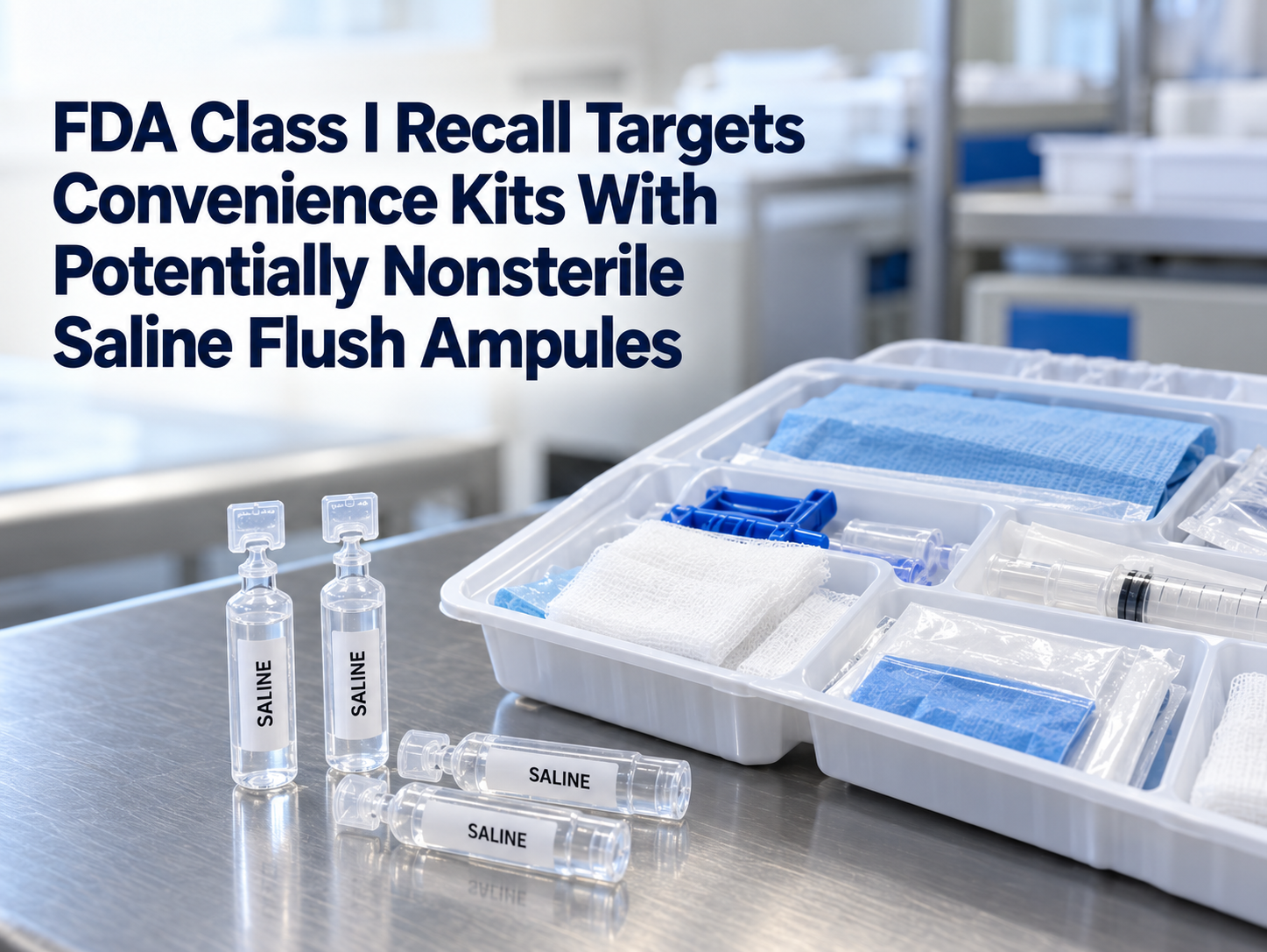
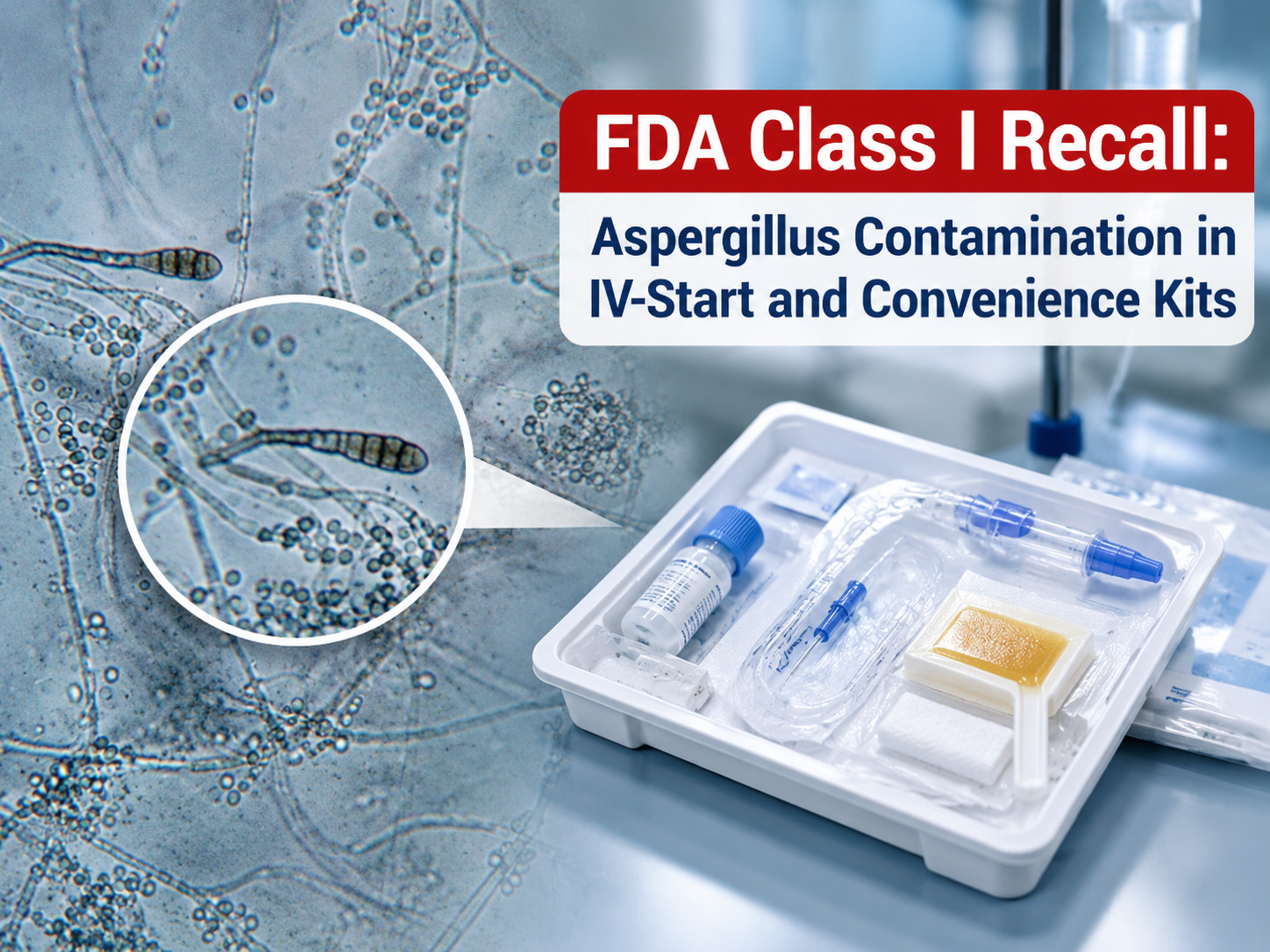
FDA Class I Recall Targets Convenience Kits With Potentially Nonsterile Saline Flush Ampules
A Class I recall covers convenience kits containing potentially nonsterile 0.9% sodium chloride flush ampules. Affected ampules should be removed and discarded to prevent intravenous exposure.
 Written and medically reviewed byRayan SalihContributing writer · PharmD, RPh
October 21, 2026 · 6 min read

What the recall establishes
The FDA recall database record, dated July 23, 2026, concerns convenience kits containing 0.9% sodium chloride flush ampules that may not be sterile. The recall applies only to the affected products identified in the agency record and associated recall communications, not to every saline flush or convenience kit on the market.
The Class I designation is the FDA’s highest recall classification. The agency uses it when there is a reasonable probability that exposure to or use of a violative product will cause serious adverse health consequences or death. Classification reflects the potential severity and likelihood of harm considered in the regulatory assessment; it does not, by itself, establish that every affected unit is contaminated or that patients have experienced every listed outcome.
The practical concern is direct access to the vascular system. A saline flush ampule may look clear, remain sealed and show no visible defect while still failing sterility requirements. Appearance therefore cannot verify microbial safety. An affected ampule should not be retained for use on the assumption that visual inspection, wiping the exterior or reserving it for a lower-risk patient will resolve the underlying concern.
Why compromised sterility can become systemic harm
A flush solution should be sterile because it may be introduced through an intravenous catheter or another vascular-access device. If an ampule contains viable microorganisms, flushing can bypass normal skin barriers and enter the catheter or bloodstream. The clinical consequences may range from a localized catheter-related infection to bloodstream infection and sepsis.
Microbial contamination can also provoke an inflammatory response. Once the host recognizes organisms or microbial products, immune signaling may become systemic rather than remaining confined to the point of access. Fever, chills, hypotension and altered mental status are possible manifestations, although the presentation depends on the organism, inoculum, patient and timing. Patients with central venous access, impaired immunity, critical illness or limited physiologic reserve may be especially vulnerable to rapid deterioration, but the recall is not restricted to those groups.
Sepsis is the most consequential infectious pathway identified by the risk assessment. The CDC describes sepsis as the body’s extreme response to an infection and a life-threatening medical emergency. Dysregulated inflammation and circulatory abnormalities can reduce tissue perfusion and contribute to organ dysfunction, including kidney, respiratory, cardiovascular or neurologic impairment. These outcomes are biologically connected, but their inclusion in a recall risk statement should not be read as an incidence estimate.
Thrombosis is another plausible downstream complication. Infection and systemic inflammation can activate coagulation, impair normal anticoagulant pathways and injure the vascular endothelium. A contaminated catheter system may also create local conditions favorable to clot formation. Thrombosis can, in turn, compromise line function or blood flow and complicate treatment.
The FDA record identifies risk, but it does not provide comparative data showing how frequently thrombosis follows use of an affected ampule.
What removal means in practice
Facilities should identify the affected kit configurations and lots from the FDA record and supplier recall materials, then prevent further distribution or use. Remove and discard the implicated flush ampules in accordance with the recall instructions and institutional procedures. If a kit contains other components, staff should follow the manufacturer’s directions on whether to quarantine the complete kit or manage unaffected components separately.
Removal should extend beyond the central storeroom. Convenience kits may already be staged in procedure areas, emergency carts, operating rooms, catheter-insertion supplies, ambulatory sites or satellite inventory. Because the recalled flush may be nested inside a larger kit, searching only stand-alone saline inventory could miss affected units. Documentation should preserve lot-level traceability where available and distinguish product reconciliation from patient follow-up.
For a patient who may already have been exposed, the regulatory record supports clinical vigilance rather than assuming that infection occurred. Review should consider the product and lot used, route of administration, timing and whether symptoms compatible with bloodstream infection, sepsis or thrombosis are present. Diagnostic testing and treatment remain clinical decisions based on the patient’s condition; the recall does not supply a screening schedule or justify preventive antimicrobial therapy in an asymptomatic person.
Routine infection-prevention measures remain important, but they cannot correct intrinsic contamination inside a sealed ampule. Hand hygiene, aseptic access and proper hub disinfection reduce contamination introduced during handling. They do not make a potentially nonsterile solution suitable for intravenous use. Substituting an unaffected, appropriately labeled sterile flush is the relevant product-control response.
Limits of the available evidence
This is a regulatory recall, not a clinical trial, cohort study or surveillance analysis designed to quantify outcomes. There is no study population, comparator, effect estimate, confidence interval or follow-up period in the cited recall record. The source therefore supports conclusions about the affected product, recall classification and potential harms, but not the absolute risk to an individual patient.
The public record may also be updated as distribution, lot reconciliation or investigation progresses. It does not establish that all potentially exposed patients will become ill, identify which microorganism might be present in any particular unit or quantify how often systemic infection, sepsis, thrombosis or organ dysfunction occurred. Those gaps limit risk stratification. They do not reduce the need to remove affected ampules, because clinicians cannot confirm sterility at the bedside.
Questions clinicians ask
Can an affected ampule be used if the solution looks normal?
No. Clear solution, intact packaging and the absence of visible particles do not demonstrate sterility. Because the defect raises concerns about potential microbial contamination and intravenous use can bypass normal host barriers, visual inspection cannot replace removal and disposal under the recall instructions.
Does prior exposure mean the patient needs antibiotics?
Not automatically. The recall identifies a potential exposure, not a confirmed infection, and it does not recommend preventive antimicrobial treatment for every exposed patient. Clinical assessment should be guided by symptoms, examination, exposure details and the patient’s vulnerability, with diagnostic testing or treatment determined by the clinical picture.
What symptoms warrant attention after possible use?
Concern rises with fever, chills, unexplained hypotension, altered mental status, respiratory deterioration or other signs of systemic infection and organ dysfunction. New pain, swelling, catheter dysfunction or limb changes may also prompt evaluation for local complications or thrombosis, depending on the access site and clinical context.
Should the entire convenience kit be discarded?
Follow the product-specific recall instructions. Do not use the affected flush ampule, but disposition of the remaining kit components depends on how the recalled product was packaged and whether the manufacturer or distributor permits separation. Quarantine the kit while that determination is made rather than returning it to available stock.
References
1. Class I Device Recall: Convenience Kits Containing Potentially Nonsterile Saline Flush Ampules — U.S. Food and Drug Administration, 2026 2. Recalls, Corrections and Removals (Devices) — U.S. Food and Drug Administration, 2024 3. About Sepsis — Centers for Disease Control and Prevention, 2024
One story a day
The story of the day, in your inbox
One health journey each morning — no advice, no alarm, just company for the road.