Cyclosporiasis Outbreak Sharpens Need for Targeted Testing
CDC reports 1,645 confirmed domestically acquired cases since May 1, 2026. Prolonged or relapsing watery diarrhea should prompt consideration of Cyclospora-specific stool testing.
 Written and medically reviewed byRayan SalihContributing writer · PharmD, RPh
August 18, 2026 · 7 min read
A large outbreak changes the diagnostic threshold
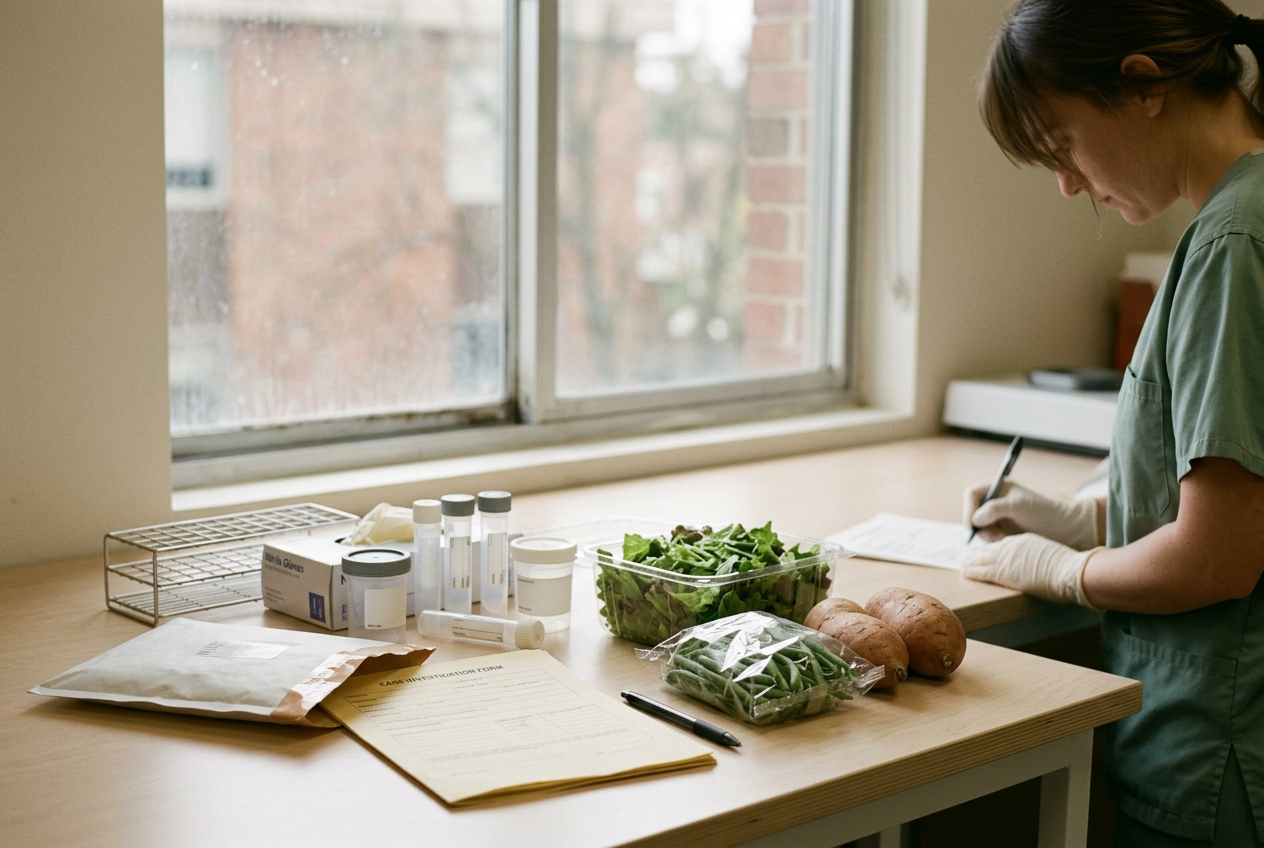
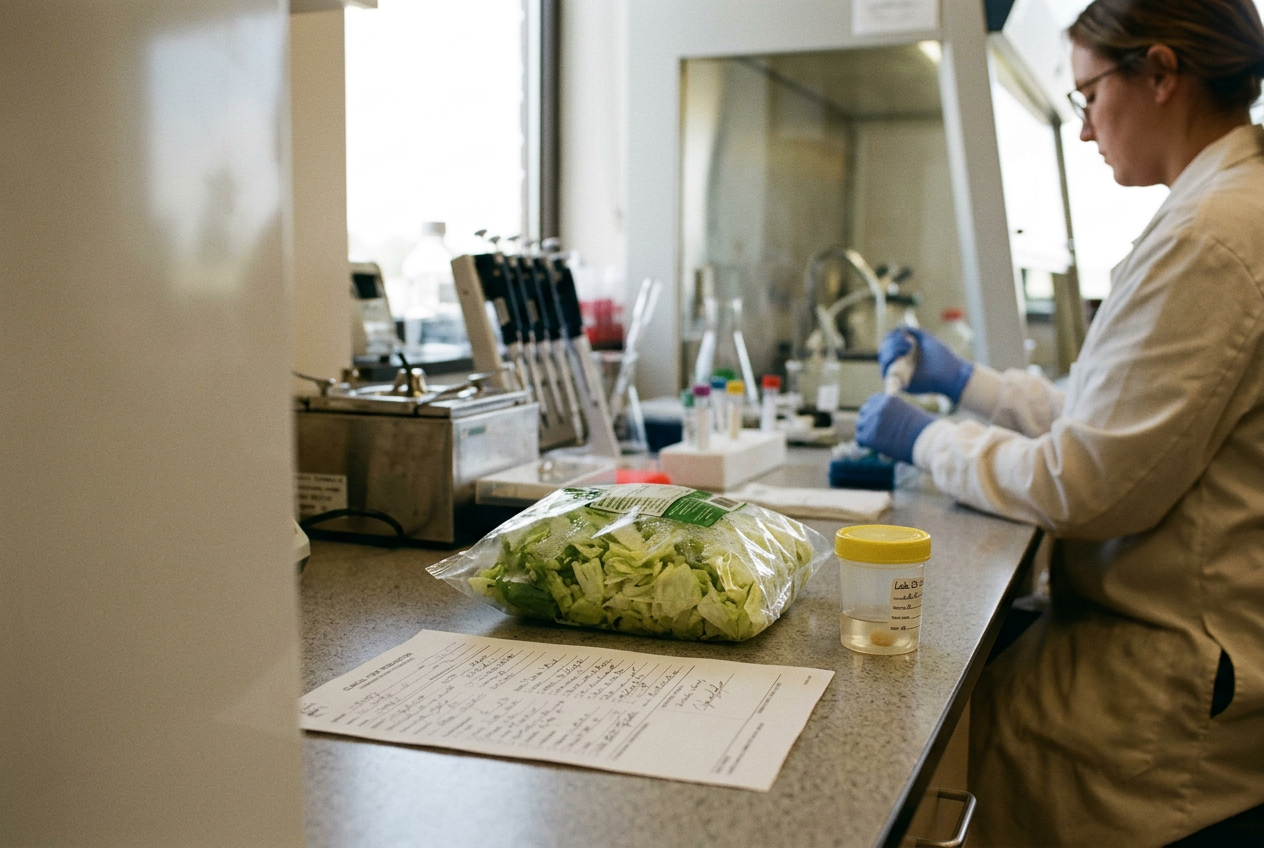
The practical problem fits on a lab slip. A patient has had watery diarrhea for nine days, the clinician orders stool studies, and the result comes back without answering the Cyclospora question because the laboratory was never asked to look for it.
CDC’s July 2026 advisory describes a large multistate outbreak that remains under investigation. All 1,645 confirmed cases included in the count were acquired in the United States. During this outbreak, recent international travel is too narrow a requirement for testing.
Cyclospora cayetanensis belongs higher on the differential diagnosis when watery diarrhea persists, returns after easing, or follows possible exposure to iceberg lettuce. That exposure may be hard to reconstruct. Iceberg lettuce can be tucked into a restaurant sandwich, mixed with other greens, or included in a prepared meal whose ingredients the patient never saw.
The lettuce link comes from epidemiologic evidence. It does not show that every infection came from one product or meal, and a patient who cannot remember eating iceberg lettuce may still have an illness that warrants testing. Food histories help clinicians and public health investigators, but memory of an ordinary lunch is often incomplete.
Cyclospora commonly causes frequent watery diarrhea. Loss of appetite and weight can follow. Patients may also report abdominal cramping, bloating, gas, nausea, or fatigue, while fever and vomiting tend to be less prominent. Symptoms generally begin about one week after ingestion and, without effective treatment, can continue for weeks or improve briefly before returning.
Which patients warrant targeted testing
Testing is most useful when the result could distinguish cyclosporiasis from another infectious cause, inflammatory disease, or a medication effect. During the current investigation, clinicians should consider targeted testing for otherwise unexplained watery diarrhea that has lasted about a week, is getting worse, or has returned after apparent improvement.
This is where the lab slip matters again. The patient may describe two better days followed by another stretch of diarrhea, while an initial workup offers no explanation, and the unanswered question is whether the selected assay covered the parasite circulating in a domestic outbreak.
Suspicion may rise with possible iceberg lettuce exposure, illness after a shared meal, or a venue associated with other reports of diarrhea. Testing may be reasonable before an illness reaches the conventional 14-day definition of persistent diarrhea if both the symptoms and the exposure fit.
Travel remains relevant because cyclosporiasis has long been associated with tropical and subtropical regions. It is not required in this investigation. The current CDC count concerns infections acquired in the United States.
Targeted testing also deserves consideration after a negative initial bacterial workup, when symptoms return after temporary improvement, or when an immunocompromised patient has a prolonged illness. Other possibilities remain, including protozoal or bacterial infection, viral gastroenteritis, medication effects, inflammatory bowel disease, and noninfectious malabsorption.
| Clinical or epidemiologic feature | Why it raises suspicion | Practical laboratory step |
|---|---|---|
| Watery diarrhea lasting about a week or longer | Cyclospora illness can persist or relapse | Request testing that specifically includes Cyclospora |
| Possible iceberg lettuce exposure | It matches the vehicle identified in the CDC advisory | Record remembered food and meal details |
| Domestic illness without international travel | Current cases were acquired in the United States | Do not rule out testing because travel is absent |
| Negative routine stool studies | Standard cultures and some molecular panels miss Cyclospora | Ask what the selected assay includes |
| Compatible illness after one negative specimen | Oocyst shedding can vary over time | Discuss specimens collected on separate days |
Ordering the test correctly matters
Routine stool culture does not detect Cyclospora. A general ova-and-parasite examination may omit it unless the laboratory is directed to look for it, and gastrointestinal multiplex molecular panels do not all cover the same organisms. The word “panel” can sound more comprehensive than the test is.
The clinician holding the lab slip needs to confirm that Cyclospora is included, either through a specific request or by checking the test’s organism list with the laboratory. Without that step, a negative result may be given more weight than it deserves.
Diagnostic methods include molecular testing and microscopic examination of stool. For microscopy, laboratories may use modified acid-fast or modified safranin staining. Cyclospora oocysts also have characteristic autofluorescence under ultraviolet microscopy. Performance depends partly on the method and the laboratory’s experience, which means obtaining a specimen does not settle the question if the chosen assay never looked for the organism.
Cyclospora may be shed intermittently and in small numbers. If suspicion remains high after one negative result, CDC diagnostic materials support collecting more stool specimens on separate days. The laboratory can advise which container or preservative fits its method and whether the specimen should be fresh or placed in transport medium.
Testing should not delay evaluation for dehydration, electrolyte disturbance, or another urgent cause of diarrhea. Bloody stool, severe abdominal findings, hemodynamic instability, marked volume depletion, or systemic toxicity require a broader assessment because these findings are not specific to cyclosporiasis and may point to another diagnosis.
How results affect management and surveillance
A positive result can direct treatment and limit empiric treatment for pathogens that are not present. Trimethoprim-sulfamethoxazole is the established treatment of choice in CDC materials and infectious diarrhea guidance. Selection still requires review of allergy history, pregnancy status, kidney function, interacting medications, and the patient’s other circumstances. The outbreak advisory does not offer comparative treatment-effect estimates.
The result also matters outside the exam room. Confirmed cases should be reported under state or local requirements because cyclosporiasis is nationally notifiable. Timely reports let investigators compare where patients ate and obtained food.
A useful history reaches back roughly two weeks before symptoms began. Patients may remember the restaurant but not the lettuce beneath an entrée, or they may remember buying lettuce without knowing which type it was. Investigators can still use incomplete details when they compare many reports, including whether another person who shared the meal became sick.
Patients should understand that Cyclospora is usually acquired by ingesting food or water contaminated with feces containing mature oocysts. Direct person-to-person spread is considered unlikely because newly passed oocysts need time in the environment to become infectious. Standard hand hygiene and food-safety practices remain appropriate, although this transmission pattern differs from that of infections that spread readily within a household.
The lab slip has a smaller job. It tells the laboratory which organism to seek. The food history and public health comparison happen elsewhere.
What the advisory cannot establish
The advisory reflects surveillance and outbreak-investigation evidence, not a controlled study. There is no unexposed comparison group or attack-rate denominator. It provides no effect estimate, confidence interval, or p-value. The case count captures confirmed and reported infections rather than everyone who may have been ill.
Undercounting is likely. Some people never seek care because their illness resolves, access to testing varies, and clinicians may order routine studies without realizing that Cyclospora needs specific attention. If the lab slip does not point the laboratory toward the parasite, that illness cannot become a laboratory-confirmed case.
Food histories have limits too, particularly when lettuce was an ingredient rather than the name of the dish. The association with iceberg lettuce does not identify where contamination occurred, and it does not prove that every domestically acquired case belongs to one outbreak. Traceback work and laboratory evidence may change the picture as the investigation continues.
Questions clinicians ask
When should I order Cyclospora testing during this outbreak?
Consider targeted testing for unexplained watery diarrhea that has lasted about a week, is worsening, or has returned after improvement, especially after possible iceberg lettuce exposure or a shared meal associated with illness. Lack of international travel should not lower suspicion by itself because domestic acquisition defines the current outbreak count.
Does a negative gastrointestinal panel exclude cyclosporiasis?
Not necessarily. Multiplex panels vary, and some do not include Cyclospora. Routine bacterial culture will not detect it. Check the panel’s organism list and determine whether Cyclospora-specific molecular testing or microscopy was performed before treating a negative result as exclusionary.
Should I repeat testing after a negative specimen?
If clinical and epidemiologic suspicion remains substantial, stool specimens collected on separate days may improve detection because oocyst shedding can be intermittent or sparse. Coordinate with the laboratory before collection so specimen handling matches the requested method.
What details should accompany a public health report?
Include symptom onset, the laboratory method and result, travel history, remembered food exposures, meal or shopping locations, and illness among people who shared the food. Information from roughly two weeks before symptoms is useful because it covers the usual incubation window while allowing for imperfect recall. That history goes into the report. The lab slip stays on the desk with Cyclospora included in the requested test.
Questions people ask
Can a routine stool test miss Cyclospora?
The story found that routine stool culture does not detect Cyclospora, and some ova-and-parasite examinations and molecular panels omit it. A negative result therefore did not exclude infection unless the selected assay specifically included the parasite.
Can cyclosporiasis occur without international travel?
Yes. The cases described in the CDC advisory were acquired in the United States, so the story found that recent international travel was not necessary for suspicion during this outbreak. Epidemiologic evidence linked the investigation to iceberg lettuce, although it did not establish that every case came from the same product or meal.
Why might Cyclospora testing be repeated after a negative result?
The story explained that Cyclospora oocysts may be shed intermittently and in small numbers. It found that specimens collected on separate days could improve detection when the first specimen was negative but suspicion remained substantial.
References
- CDC Issues HAN Advisory on Large Domestic Cyclosporiasis Outbreak Linked to Iceberg Lettuce — Centers for Disease Control and Prevention, 2026
- DPDx: Cyclosporiasis — Centers for Disease Control and Prevention, n.d.
- 2017 Infectious Diseases Society of America Clinical Practice Guidelines for the Diagnosis and Management of Infectious Diarrhea — Clinical Infectious Diseases, 2017
One story a day
The story of the day, in your inbox
One health journey each morning — no advice, no alarm, just company for the road.