E. Coli and Salmonella Outbreak Linked to Alfalfa Sprouts
A multistate outbreak linked to affected alfalfa sprouts requires exposure-specific histories, testing for both pathogens and prompt coordination with public health agencies.
 Written and medically reviewed byDr. Abu BakarContributing writer · PharmD, PhD (Pharmacology)
August 30, 2026 · 6 min read
What the outbreak signal shows
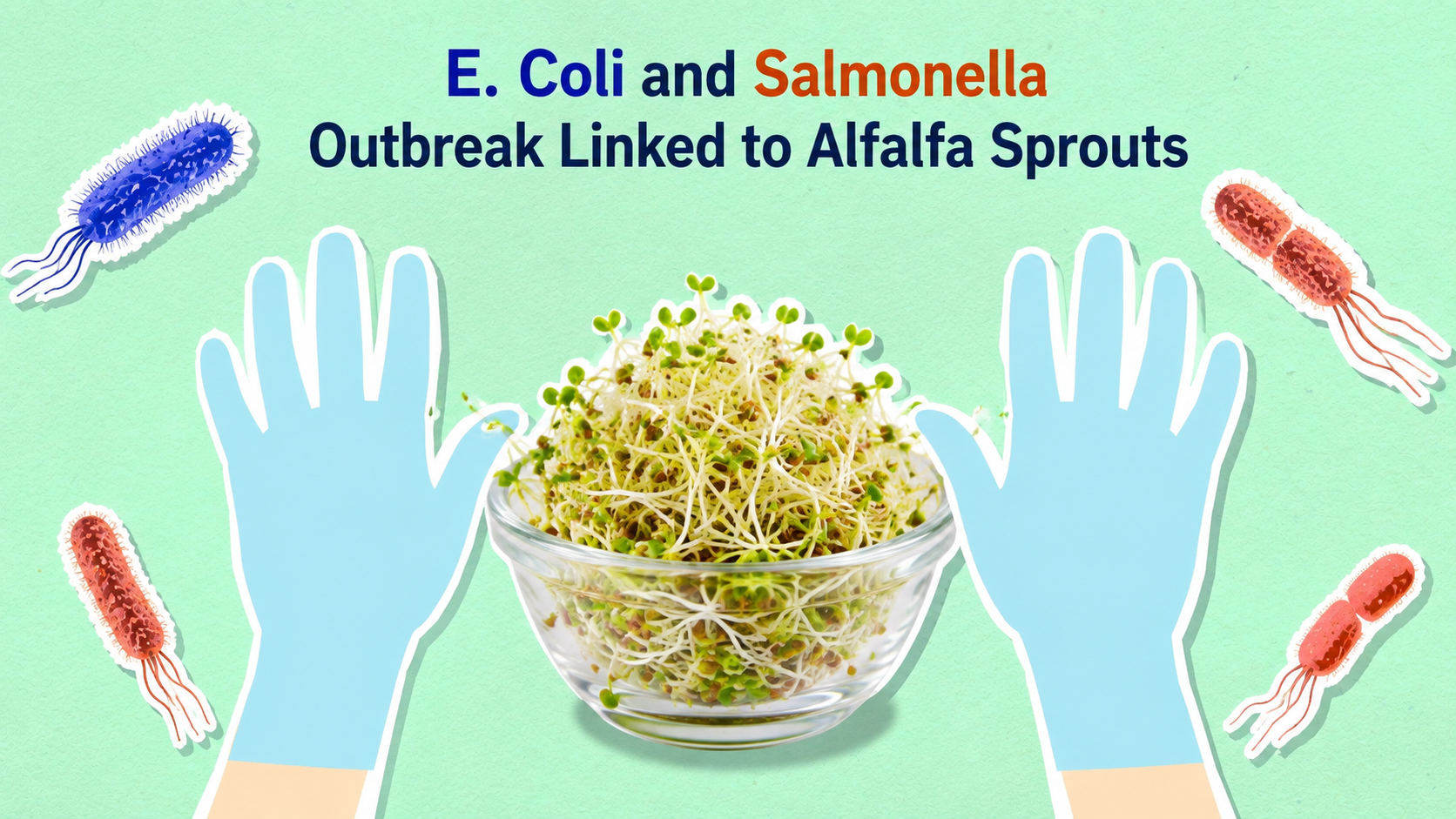
CDC’s investigation identifies affected alfalfa sprouts as the shared food exposure in a multistate cluster involving two enteric pathogens. The central prevention message is categorical: people and businesses should not eat, sell or serve products identified in the outbreak notice. Because outbreak details can change as traceback and laboratory work continue, clinicians, food-service operators and health departments should use the CDC investigation page for the current product descriptions, dates and distribution information.
This is a descriptive outbreak investigation, not a controlled study. Case interviews, laboratory surveillance and food traceback can identify converging signals, but there is no unexposed comparator, prespecified effect estimate or confidence interval. The evidence supports an outbreak association between the implicated sprouts and reported illnesses; it does not quantify an individual consumer’s absolute risk after a particular serving.
A dual-pathogen outbreak has an immediate bedside implication. A history framed only around “food poisoning” or a test ordered for one suspected organism may miss clinically and epidemiologically relevant information. Shiga toxin-producing Escherichia coli can lead to hemolytic uremic syndrome, whereas Salmonella may cause invasive disease in susceptible people. Early symptoms can overlap, including diarrhea, abdominal pain, fever, nausea and vomiting.
The exposure history that matters
Ask directly about alfalfa sprouts rather than relying on spontaneous recall. Sprouts may be a minor ingredient in sandwiches, wraps, salads, bowls or garnishes, and patients may not regard them as a distinct food. The relevant interval should cover the days before symptom onset, with dates recorded as precisely as possible.
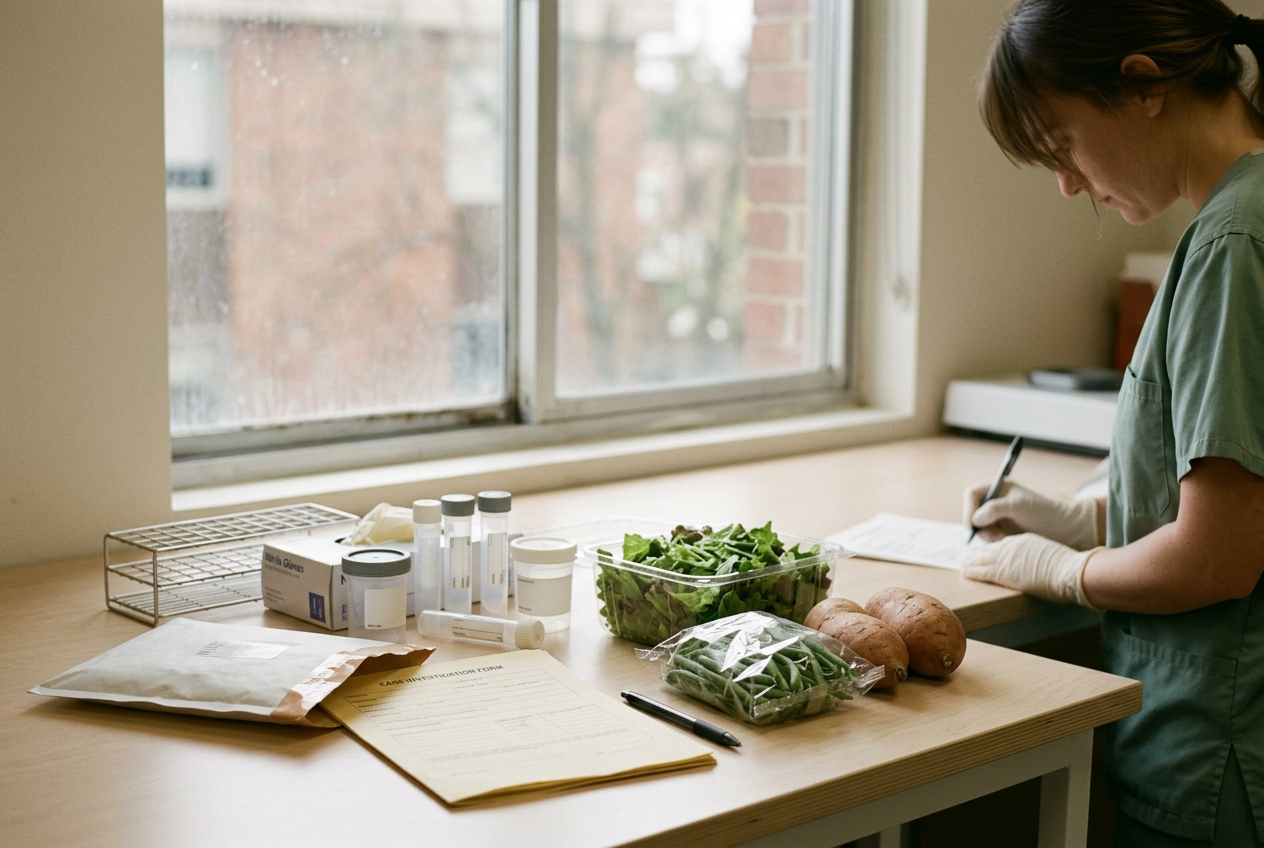
Document whether sprouts were eaten at home, in a restaurant, at a workplace or school, or through catered food. Capture the brand, package size, lot or date code, universal product code, retailer, restaurant location, purchase date and consumption date when available. A photograph of packaging or an electronic receipt can preserve details that would otherwise be lost. Ask whether any product remains refrigerated and advise against eating it while public health officials determine whether collection or disposal is appropriate.
Exposure assessment should also identify others who shared the meal and whether they became ill. Record symptom-onset dates, hospitalization, bloody diarrhea and any laboratory results among dining companions or household members. These links can help investigators distinguish a common-source event from secondary household transmission.
The history should not stop with sprouts. Recent travel, untreated water, animal contact, other high-risk foods, sick contacts, childcare exposure and healthcare work remain relevant competing exposures. Recent antibiotic use may alter both the differential diagnosis and test yield. Immunocompromising conditions, pregnancy, infancy, older age and major chronic disease affect the risk assessment for severe or invasive infection.
Testing when two pathogens are under investigation
For acute diarrheal illness compatible with the outbreak, testing should account for both Salmonella and Shiga toxin-producing E. coli. A multiplex gastrointestinal nucleic acid panel may detect targets from both organisms, but panel composition varies. Clinicians should confirm that the selected assay includes Salmonella and Shiga toxin or Shiga toxin-producing E. coli rather than assuming that a broad panel covers them.
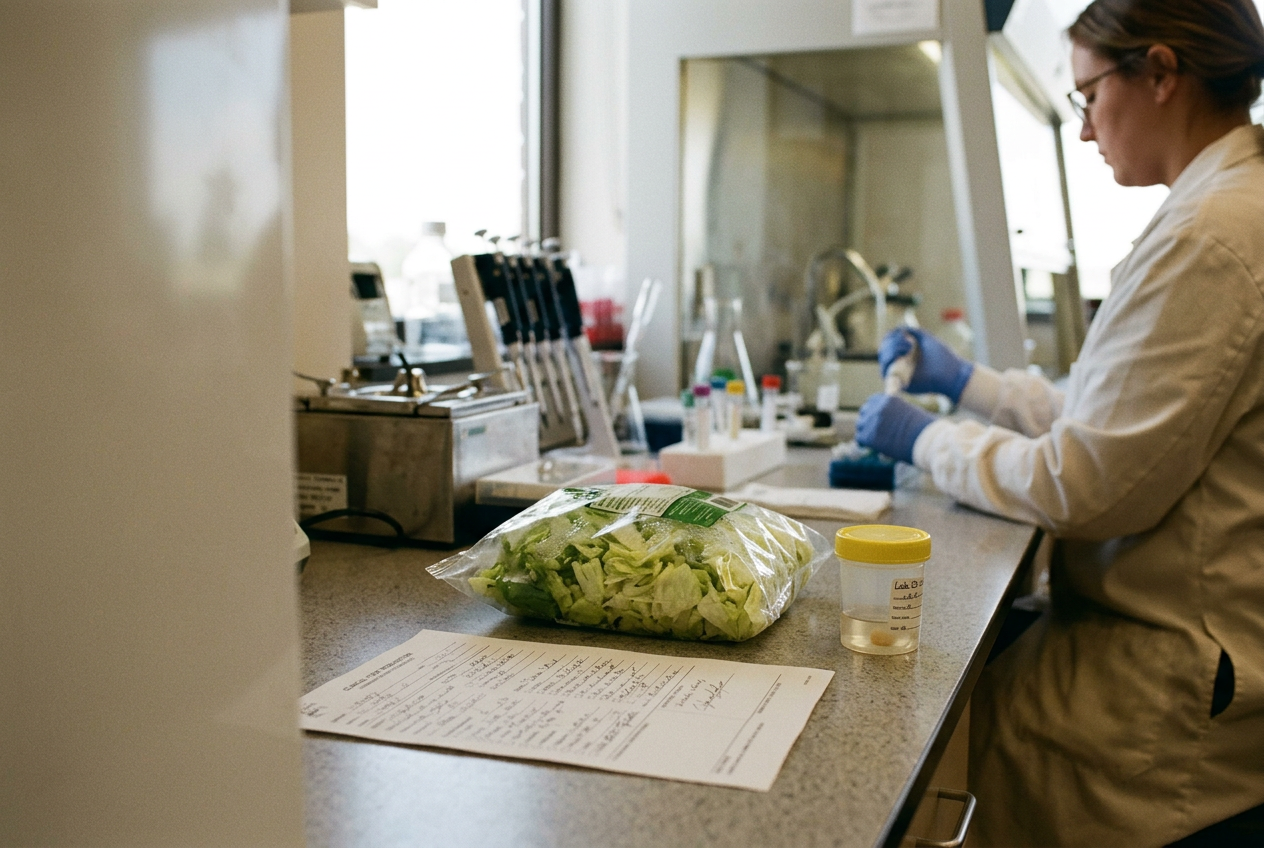
Culture remains important for public health surveillance. When a culture-independent diagnostic test is positive, reflex culture or submission of the specimen to a public health laboratory may be needed to recover an isolate for characterization and outbreak matching. Local laboratories and health departments can clarify specimen requirements because workflows differ by jurisdiction.
The laboratory requisition and clinical note should mention the alfalfa sprout exposure and the active multistate investigation. That context can accelerate reporting, isolate recovery and referral to public health laboratories. A negative result does not necessarily exclude infection if specimen collection was delayed, the assay lacked the relevant target or antibiotic exposure reduced organism recovery.
Initial management is generally centered on hydration and assessment of severity while results are pending. Suspected Shiga toxin-producing E. coli warrants particular caution: CDC advises against antibiotics and antimotility agents in patients with this infection because these treatments may increase the risk of hemolytic uremic syndrome or other complications. Patients with bloody diarrhea, reduced urine output, pallor, unusual bruising, marked fatigue or worsening abdominal pain require prompt reassessment for complications.
Salmonella treatment decisions differ. Many uncomplicated intestinal infections resolve without antibiotics, while severe illness, invasive infection and selected high-risk patients may warrant antimicrobial therapy. Because early clinical presentations overlap, an exposure to sprouts during this outbreak should not be used by itself to select empiric treatment. Severity, host risk, microbiology and public health guidance all matter.
Counseling and public health coordination
Counseling should repeat CDC’s product advice without dilution: affected sprouts should not be eaten, sold or served. Restaurants, retailers, institutions and households should check the outbreak page for the current identifying information. Rinsing does not reliably make an implicated product safe. Food handlers should avoid serving it, and surfaces or refrigerator areas that contacted the product or its liquid should be cleaned to reduce cross-contamination.
Patients with diarrhea should receive practical advice on hand hygiene and preventing fecal-oral spread. People who prepare food, provide healthcare or childcare, or attend childcare may be subject to jurisdiction-specific exclusion or clearance requirements. Clinicians should involve the local or state health department rather than improvise return-to-work criteria.
Suspected outbreak-associated illness should be reported promptly according to local rules, even if testing is pending when the exposure is compelling. Public health authorities may request food histories, receipts, loyalty-card records, leftover product or additional specimens. Preserving packaging and purchase information can be as valuable to traceback as documenting the clinical syndrome.
Limits of the current evidence
Outbreak surveillance is designed to detect and interrupt a shared exposure, not to estimate treatment effects or prove causation at the individual level. Case ascertainment favors people who seek care and receive testing, while mild or asymptomatic infections are likely undercounted. Recall errors can obscure ingredients such as sprouts, and product distribution data may evolve.
The investigation page is a living source. Case counts, states affected, hospitalization data and product scope may change after publication of this brief. No comparator group, effect size, confidence interval or formal follow-up period is available from this surveillance design. Clinical and policy decisions should therefore rely on the latest CDC notice and jurisdiction-specific public health instructions.
Questions clinicians ask
Should every patient with diarrhea be tested for both organisms?
Not necessarily. Testing is most useful when illness is severe, bloody, prolonged or epidemiologically linked to the affected sprouts, or when the result would change clinical or public health management. If outbreak exposure is plausible, verify that the chosen assay can detect both Salmonella and Shiga toxin-producing E. coli.
What details should accompany a positive laboratory result?
Report the alfalfa sprout exposure, consumption and symptom-onset dates, product or restaurant identifiers, illness severity and whether others who shared the food became ill. Ask the laboratory or health department whether an isolate, residual specimen, packaging, receipt or leftover product should be retained for outbreak investigation.
Should antibiotics be started while results are pending?
Exposure alone does not justify empiric antibiotics. When Shiga toxin-producing E. coli is possible, antibiotics and antimotility drugs may increase complication risk and should be avoided according to CDC guidance. Severe disease or a host at risk for invasive Salmonella requires individualized assessment and timely infectious disease or public health input.
What should patients do with sprouts they may still have?
They should not eat, share or serve products covered by the CDC notice. Product identifiers and disposal or return instructions should be checked against the current investigation page; if health officials may want the package or food for testing, patients should seek instructions before discarding it and keep it securely separated from other foods.
Questions people ask
Can alfalfa sprouts cause both E. coli and Salmonella infections?
Yes. Contaminated raw sprouts can carry foodborne pathogens, and the current CDC investigation links affected alfalfa sprouts with illnesses involving both E. coli and Salmonella. The exact exposure and product details may change as the investigation continues.
What symptoms should people watch for?
Common symptoms include diarrhea, abdominal cramps, fever, nausea, and vomiting. STEC infection can cause bloody diarrhea and, in some patients, HUS. Reduced urination, unusual bruising, marked fatigue, pallor, or reduced alertness are warning signs that require urgent medical attention.
References
1. E. coli and Salmonella Outbreak Investigation Linked to Alfalfa Sprouts — Centers for Disease Control and Prevention, 2026 2. About Escherichia coli Infection — Centers for Disease Control and Prevention, 2024 3. About Salmonella Infection — Centers for Disease Control and Prevention, 2024
One story a day
The story of the day, in your inbox
One health journey each morning — no advice, no alarm, just company for the road.