FDA Salmonella Outbreak Linked to Recalled Shell Eggs: What Clinicians and Consumers Should Know
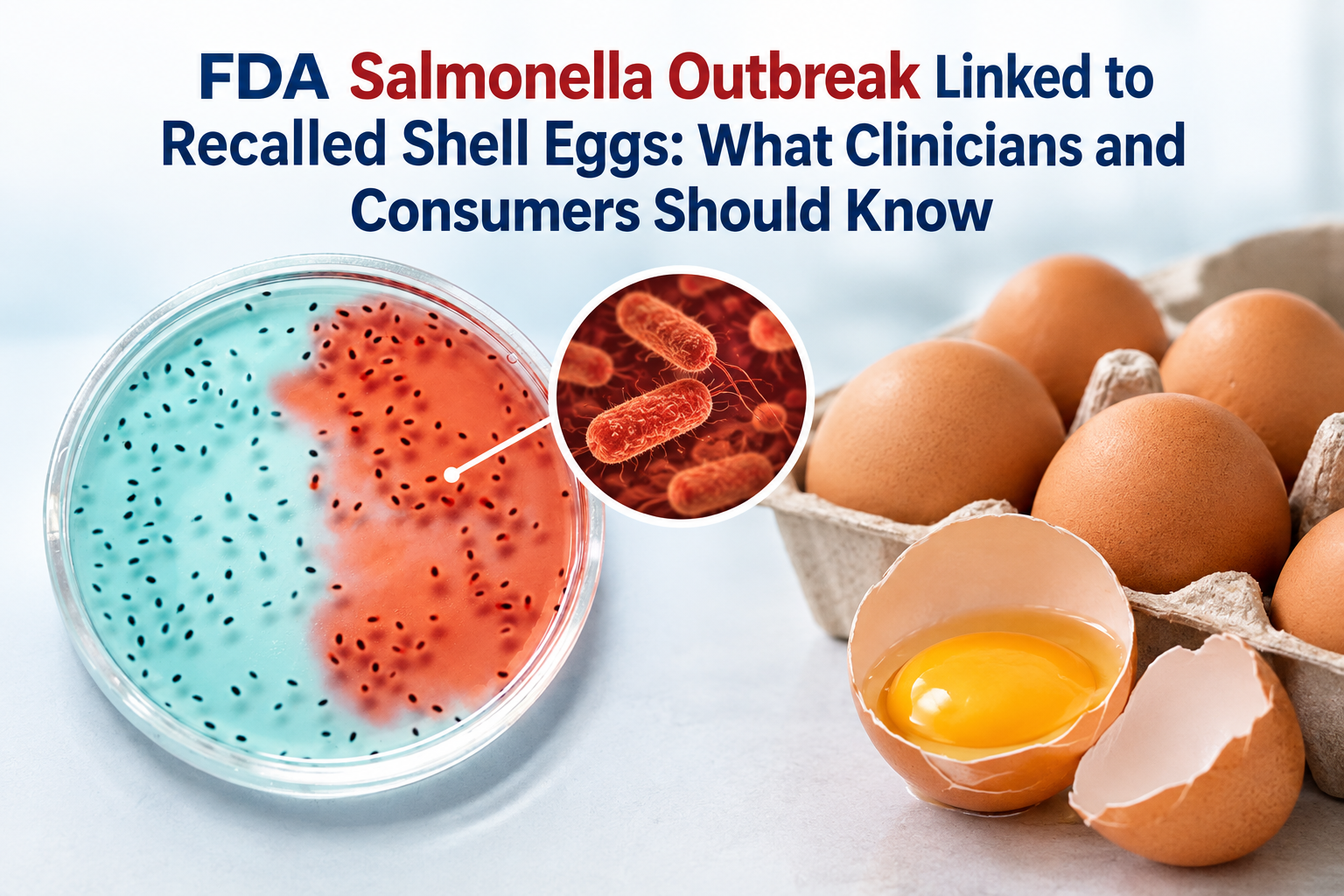
FDA is investigating 98 Salmonella Enteritidis illnesses, including 26 hospitalizations, linked to recalled shell eggs. A detailed food history can connect compatible illness to the July 24 recall.
 Written and medically reviewed byDr. Abu BakarContributing writer · PharmD, PhD (Pharmacology)
September 7, 2026 · 6 min read
What the outbreak signal shows
The FDA’s July 2026 investigation links a multistate cluster of Salmonella Enteritidis infections to shell eggs covered by an associated recall dated July 24, 2026. Among 98 reported illnesses, 26 people were hospitalized. That is 26.5% of identified cases, a substantial clinical burden within the outbreak investigation but not an estimate of risk for everyone who ate the eggs.
| Measure | FDA outbreak data |
|---|---|
| Reported illnesses | 98 |
| Hospitalizations | 26 |
| Hospitalized among reported illnesses | 26.5% |
| Evidence frame | Outbreak surveillance, interviews and product traceback |
| Comparator group | None reported |
These data come from public health surveillance rather than a prospective cohort. The investigation does not provide the total number of consumers exposed, an attack rate, a relative risk, a confidence interval or a formal comparison with consumers of other eggs. It therefore cannot show how likely an individual exposed consumer was to become ill or require hospitalization.
Case counts may also change as laboratory results, interviews and traceback records are incorporated. Outbreak totals commonly undercount mild infections because many people recover without testing or clinical care, while severe cases are more likely to be diagnosed and reported. The observed hospitalization proportion may consequently be higher than the proportion among all infections.
Turning the recall into an exposure history
A general question such as “Have you eaten eggs recently?” is unlikely to establish or exclude exposure. The useful history identifies what was eaten, where it came from and when it was consumed. For a patient with acute diarrhea, abdominal cramps, fever, nausea or vomiting, clinicians can ask about shell eggs eaten at home and in restaurants, workplaces, schools, care facilities or catered settings.
Preparation matters. The history should include fried, poached, soft-boiled or scrambled eggs with incompletely cooked yolks or whites, as well as foods that may contain raw or undercooked egg. Examples include homemade mayonnaise or aioli, hollandaise sauce, tiramisu, mousse, eggnog, uncooked batter and some dressings. Thorough cooking reduces risk but does not by itself rule out exposure, because cross-contamination can occur from shells, hands, utensils or preparation surfaces.
Product identification is the next step. If the carton remains available, the patient or household can preserve photographs of the brand, package size, universal product code, plant or packer code, Julian pack date, sell-by or use-by date, and any lot information. Those details should be compared directly with the products and date ranges in the FDA recall notice. Eggs should not be brought into a clinic solely for identification.
When the carton has been discarded or eggs were transferred into another container, grocery receipts, loyalty-account purchase histories, delivery-app records and photographs may help. For meals prepared elsewhere, document the restaurant or facility name, location, meal date and egg-containing dish. Public health investigators may be able to connect those details to distributor or supplier records even when a patient never saw the original carton.
The July 24 recall date is an administrative milestone, not the beginning or end of biologically possible exposure. A patient may have purchased or eaten implicated eggs before the announcement, retained them afterward, or developed symptoms after the recall because consumption occurred earlier. Exposure assessment should therefore use the product identifiers and distribution or date information in the recall, rather than treating July 24 as a clinical cutoff.
Timing can strengthen or weaken compatibility. The CDC says Salmonella symptoms usually begin 6 hours to 6 days after infection and generally last 4 to 7 days. For repeated egg consumption, record the first and last possible consumption dates rather than selecting only the most recent meal. A much longer interval makes a specific meal less plausible, although inaccurate recall and continued use of the same carton can complicate reconstruction.
Recognizing patients at higher clinical risk
Most salmonellosis is self-limited, but the outbreak’s hospitalization count makes severity assessment important. The immediate evaluation should focus on volume depletion and the possibility of infection beyond the gastrointestinal tract. Concerning findings include inability to maintain oral intake, reduced urine output, marked weakness, altered mental status, hypotension, persistent or high fever, bloody diarrhea, severe abdominal pain, or signs of sepsis.
Age and underlying health modify risk. Young children, adults aged 65 years or older and people with weakened immune systems have a greater likelihood of severe illness. A lower threshold for assessment is also reasonable when substantial comorbidity, frailty or impaired ability to replace fluid losses is present. The FDA outbreak data do not report hospitalization rates separately for these groups, so they cannot quantify how much any one characteristic changed risk in this event.
Testing decisions depend on presentation and public health relevance. Stool testing may help when illness is severe, prolonged or bloody; when invasive infection is suspected; or when identifying an outbreak-associated case would affect reporting and traceback. The CDC recommends culture as the diagnostic gold standard. When a culture-independent test detects Salmonella, follow-up culture supports antimicrobial susceptibility testing and public health subtyping.
Antimicrobial treatment is not routinely beneficial for every uncomplicated intestinal Salmonella infection. It is generally considered for severe disease or for patients at increased risk of invasive infection, guided by clinical findings, culture and susceptibility information. Suspected bacteremia or another extraintestinal focus requires evaluation beyond management of routine gastroenteritis.
Clinicians should also ask whether household members or people who shared the meal became ill. A cluster can sharpen the exposure timeline and assist public health investigation. Because Salmonella can spread by the fecal–oral route, hand hygiene and careful food handling remain relevant after symptoms begin, especially in households with young children, older adults or immunocompromised people.
What the investigation cannot yet answer
The principal limitations are the surveillance design, incomplete ascertainment and lack of an exposed denominator. There is no unexposed comparator and no reported effect estimate with a confidence interval or p-value. The available figures describe detected outbreak cases; they do not measure the probability of illness after eating a recalled egg or establish an individual patient’s source of infection.
Food histories are vulnerable to imperfect memory, particularly when interviews occur weeks after purchase or consumption. Eggs may be repackaged, used in mixed dishes or supplied through restaurants and institutions, making brand recognition difficult. Traceback and epidemiologic evidence can support an outbreak link at the population level, but a matching exposure does not prove that the recalled product caused a particular person’s illness.
The investigation summary also does not, from the figures supplied, define long-term follow-up, detailed clinical phenotypes, treatment patterns or patient-level predictors of hospitalization. Funding and investigator conflicts are not generally reported in the format of a regulatory outbreak notice. Updated FDA information may revise the case count, exposure window, distribution details or recall scope.
Questions clinicians ask
Does eating any egg during the period count as an outbreak exposure?
No. A plausible exposure requires comparison with the brands, package identifiers and date information listed in the FDA recall, together with the place and date of consumption. Restaurant or institutional meals may still qualify when supplier records connect the site to recalled eggs, even if the patient cannot name a brand.
Does the 26.5% hospitalization proportion predict my patient’s risk?
Not directly. It describes hospitalization among 98 detected outbreak cases, not among all exposed consumers or all infected people. Mild untested illness is likely missing, and the FDA summary provides no comparator or adjustment for age, immune status, comorbidity or other factors that influence admission.
When is the illness timeline compatible with recalled eggs?
Salmonella symptoms usually begin 6 hours to 6 days after infection. Clinicians should compare onset with each possible egg-containing meal and document repeated use of the same carton; the July 24 recall announcement itself is not an exposure cutoff or an incubation marker.
What if the patient no longer has the egg carton?
Document the store, purchase window, restaurant or facility, meal date and preparation method. Receipts, loyalty accounts, delivery records and photographs may recover product details, while local or state public health teams can use restaurant and distributor records to assess whether recalled eggs reached that location.
References
1. Outbreak Investigation of Salmonella Enteritidis Infections Linked to Shell Eggs (July 2026) — U.S. Food and Drug Administration, 2026 2. Clinical Overview of Salmonellosis — Centers for Disease Control and Prevention, n.d. 3. Signs and Symptoms of Salmonella Infection — Centers for Disease Control and Prevention, n.d.
One story a day
The story of the day, in your inbox
One health journey each morning — no advice, no alarm, just company for the road.