Semaglutide Reduces Cardiovascular Events in Obesity
SELECT found fewer major cardiovascular events with semaglutide among adults with overweight or obesity, established cardiovascular disease and no diabetes.
 Written and medically reviewed byRayan SalihContributing writer · PharmD, RPh
October 2, 2026 · 6 min read

A cardiovascular benefit beyond diabetes care
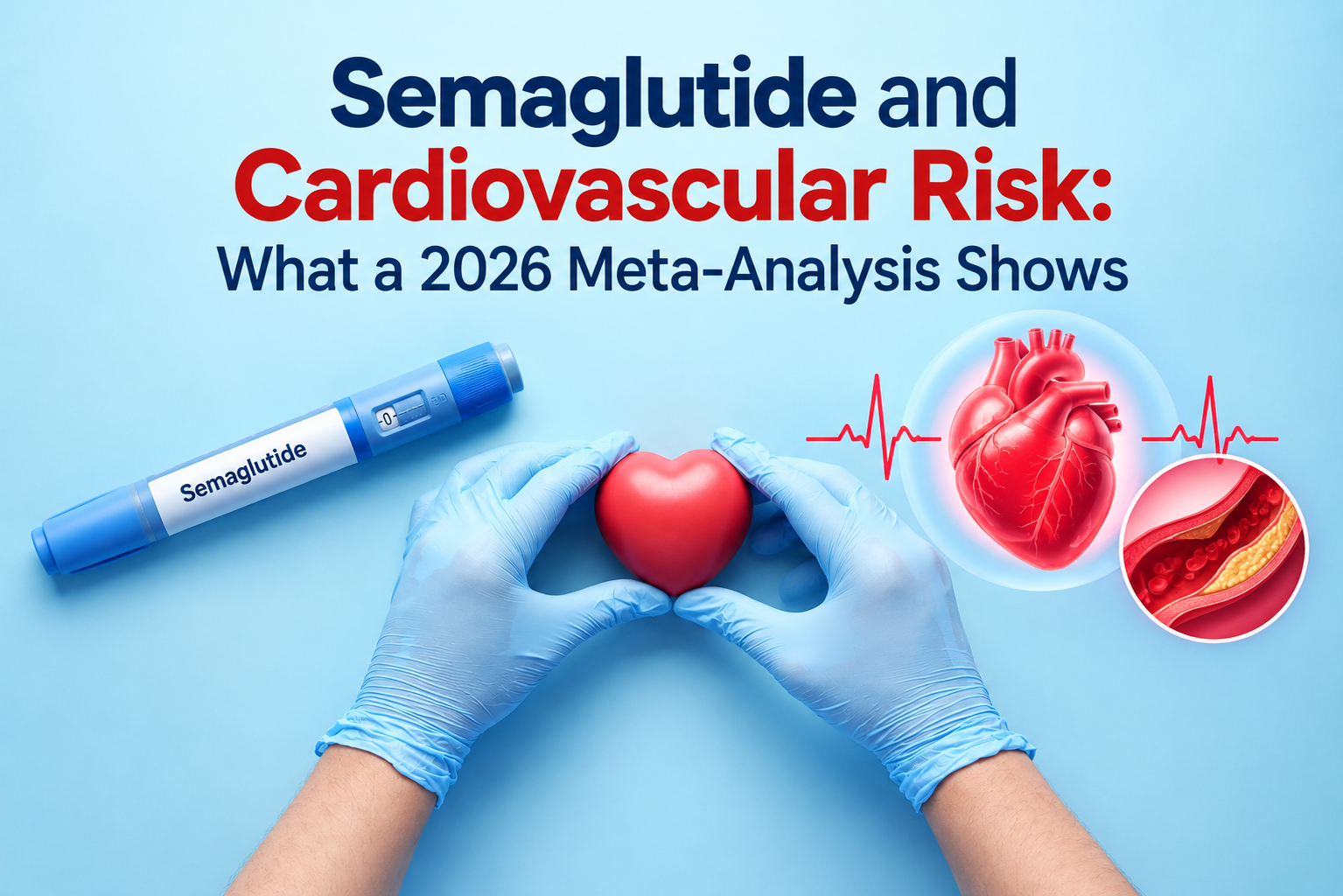
The SELECT trial established that semaglutide 2.4 mg once weekly can reduce cardiovascular events in a population for whom glycemic control is not the treatment indication. Participants had established atherosclerotic cardiovascular disease, a body mass index of at least 27, and no history of diabetes. Semaglutide lowered the risk of cardiovascular death, nonfatal myocardial infarction or nonfatal stroke by 20% relative to placebo.
The newer peer-reviewed analysis of inflammation and cardiovascular outcomes builds on that result. Its importance is not that it introduces a separate cardiovascular efficacy trial, but that it examines inflammatory activity within the randomized SELECT population. The analysis adds mechanistic context to an outcome already demonstrated in the parent trial.
That distinction matters. Obesity is associated with chronic low-grade inflammation and elevated cardiovascular risk, but a biomarker association alone cannot show why a therapy prevents events. Randomization supports a causal conclusion about assignment to semaglutide and the reduction in major adverse cardiovascular events. It does not, by itself, prove that changes in inflammation mediated that benefit.
How SELECT tested semaglutide
SELECT was a randomized, double-blind, placebo-controlled cardiovascular outcomes trial involving 17,604 adults aged 45 years or older. Participants had overweight or obesity and established cardiovascular disease—prior myocardial infarction, prior stroke or symptomatic peripheral artery disease—but did not have diabetes at enrollment.
Participants received once-weekly subcutaneous semaglutide, with a target dose of 2.4 mg, or matching placebo in addition to usual care. Median follow-up was approximately 39.8 months. The primary endpoint was a three-component composite of cardiovascular death, nonfatal myocardial infarction or nonfatal stroke.
| Outcome | Semaglutide | Placebo | Comparative result |
|---|---|---|---|
| Primary cardiovascular endpoint | 569 of 8,803 participants (6.5%) | 701 of 8,801 participants (8.0%) | Hazard ratio 0.80; 95% CI, 0.72–0.90; P<0.001 |
| Absolute difference in observed event proportions | 1.5 percentage points | ||
| Adverse events leading to permanent discontinuation | 16.6% | 8.2% | More frequent with semaglutide |
The absolute difference places the relative effect in context. Over roughly 40 months, the observed primary-event proportion was 1.5 percentage points lower with semaglutide. The magnitude relevant to an individual or health system will depend on baseline cardiovascular risk, treatment persistence and follow-up duration.
The inflammation analysis should be interpreted as a secondary investigation within this large randomized program. Comparisons between assigned treatment groups retain the value of randomization, but analyses connecting post-randomization biomarker changes with later outcomes are more vulnerable to confounding. Changes in body weight, medication exposure, underlying illness and adherence may all influence both inflammation and cardiovascular risk.
Implications for cardiovascular prevention
SELECT changes the clinical framing of semaglutide for this population. The evidence is not limited to prevention of diabetes or improvement in weight-related measures. It supports semaglutide as a cardiovascular risk-reduction option for selected adults with established atherosclerotic cardiovascular disease and overweight or obesity, even when lowering blood glucose is not an objective.
This places obesity treatment more directly within secondary cardiovascular prevention. Weight management has often been discussed through kilograms lost, waist circumference or progression to diabetes. SELECT provides a harder endpoint: fewer major cardiovascular events. In practice, that allows clinicians and policymakers to evaluate treatment against outcomes that already drive decisions about lipid lowering, blood pressure management, antiplatelet therapy and smoking cessation.
The result does not make semaglutide a replacement for those established therapies. Participants received treatment in addition to usual cardiovascular care, and the trial tested the incremental effect of semaglutide rather than an alternative prevention strategy. Comprehensive risk management remains the relevant clinical context.
The inflammatory findings may help explain why cardiovascular benefit appeared before or beyond what might be predicted from glucose lowering, since participants did not have diabetes. Plausible contributors include weight loss and changes in inflammation, blood pressure, lipids, vascular function and other metabolic pathways. SELECT was not designed to assign the observed benefit to one pathway, however, and no single biomarker should be treated as a validated surrogate for cardiovascular benefit.
For coverage and policy decisions, the population definition is central. SELECT studied people with established cardiovascular disease, not obesity alone. Its findings therefore provide direct evidence for secondary prevention in a high-risk group, while leaving the balance of benefit, cost and treatment burden less certain in people without prior atherosclerotic events.
Boundaries of the evidence
Generalizability is the main limitation. Participants were at least 45 years old and already had cardiovascular disease. The trial does not directly establish cardiovascular event reduction in younger adults, people with lower body mass index, or those receiving semaglutide solely for primary prevention.
People with diabetes were excluded, so SELECT should not be used to estimate benefit specifically in that population; other cardiovascular outcomes trials address glucagon-like peptide-1 receptor agonists in type 2 diabetes. Conversely, the absence of diabetes is a strength for the question SELECT asked because it separates cardiovascular benefit from an indication centered on glycemic treatment.
Treatment burden also matters. Adverse events leading to permanent discontinuation were more common with semaglutide, predominantly reflecting gastrointestinal tolerability reported in the trial. Event reduction under trial conditions may not be fully reproduced when access, adherence or persistence is poorer.
Finally, the SELECT program was funded by Novo Nordisk, the manufacturer of semaglutide. Industry sponsorship and author financial relationships warrant scrutiny of trial conduct and reporting, although they do not negate the protection against measured and unmeasured baseline confounding provided by randomization. The inflammation work remains secondary and cannot establish mediation with the same certainty as the primary randomized treatment comparison.
Questions clinicians ask
Does this evidence apply to primary prevention?
Not directly. SELECT enrolled adults with established atherosclerotic cardiovascular disease, making it a secondary-prevention trial. Extrapolating its event reduction to people with overweight or obesity but no prior cardiovascular disease would require assumptions about baseline risk and treatment effect that the trial did not test.
Was the benefit simply a consequence of weight loss?
SELECT shows that assignment to semaglutide reduced cardiovascular events, but it does not prove that weight loss was the sole mediator. Changes in inflammation and several cardiometabolic measures may contribute. Analyses based on changes after randomization can generate mechanistic hypotheses, but they cannot cleanly isolate one causal pathway.
Should inflammatory biomarkers guide treatment selection?
The evidence does not establish an inflammatory biomarker threshold for selecting patients or monitoring cardiovascular response to semaglutide. Biomarker findings provide biological context at the population level. They should not be interpreted as a validated substitute for clinical risk assessment or cardiovascular outcomes.
How should the benefit be discussed when diabetes is absent?
The relevant discussion is secondary cardiovascular prevention alongside obesity treatment, not glucose lowering. For patients resembling SELECT participants, clinicians can describe a reduction in major cardiovascular events while also addressing gastrointestinal tolerability, treatment persistence, access and the continuing need for standard cardiovascular preventive therapies.
References
1. Semaglutide, inflammation, and cardiovascular outcomes in SELECT — PubMed, 2026 2. Semaglutide and Cardiovascular Outcomes in Obesity without Diabetes — The New England Journal of Medicine, 2023 3. Semaglutide Effects on Cardiovascular Outcomes in People With Overweight or Obesity (SELECT) — ClinicalTrials.gov, 2023
One story a day
The story of the day, in your inbox
One health journey each morning — no advice, no alarm, just company for the road.